Exploring Derinkuyu Underground City: Cappadocia’s Hidden Marvel
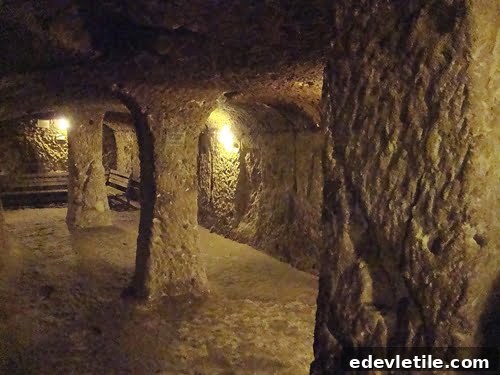
The ancient Derinkuyu underground city stands as a remarkable example of human ingenuity when lives were at risk. Located in Turkey’s Cappadocia region, this vast network of tunnels and chambers extends roughly 100 meters below the surface. Centuries ago, when invaders threatened the area, residents retreated underground and remained there until it was safe to return above. Today, Derinkuyu is one of Cappadocia’s most visited sites. However, it is not recommended for those with claustrophobia, high blood pressure, heart conditions, or panic disorders.
Visiting Derinkuyu Underground City
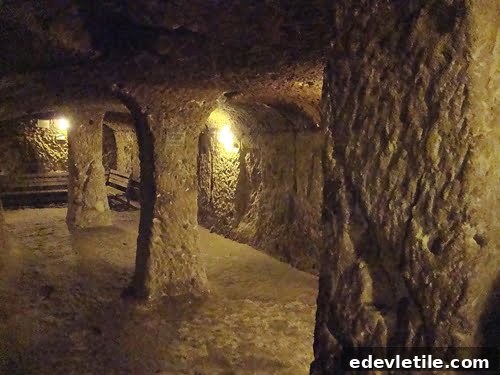
During my visit to Cappadocia, I explored the Derinkuyu complex and descended through eight accessible levels. The stairways and passages can become very narrow, and at times I had to lower my head as the confined spaces felt stifling. To avoid getting lost in the maze of corridors, follow the colored arrows placed by the site’s management: red arrows lead deeper into the city, while blue arrows indicate the route back up to the surface.
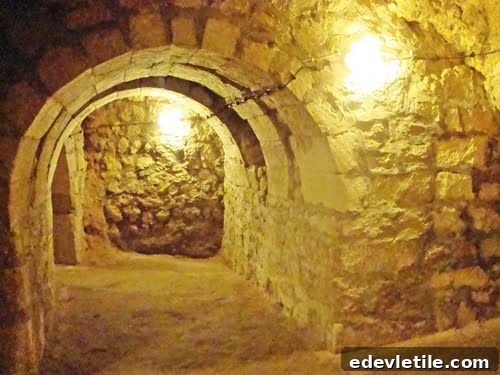
The overall layout of Derinkuyu is logical and practical. Livestock were kept on the upper levels, kitchens were located below them, living quarters and storage followed on deeper levels, and communal spaces were placed where they best served the inhabitants. The builders clearly planned the complex with attention to daily needs. Derinkuyu was not designed for permanent settlement, but families could live there for weeks or months until it was safe to return above ground.
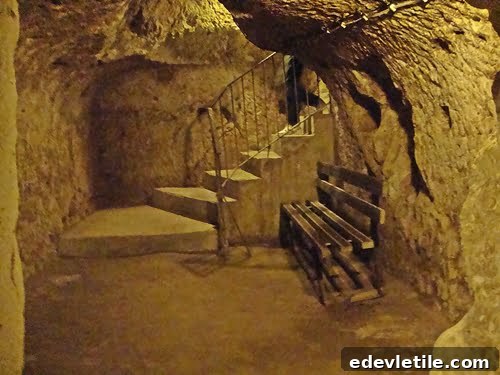
Facts about Derinkuyu
- Prolonged periods without sunlight and fresh air could affect people’s mental health. In some cases, those who became a danger to themselves or others were restrained by tying them to carved stone slots to prevent escape or violence.
- To protect the community and keep the underground settlement secret, anyone caught attempting to flee could face severe punishment. Bodies of the punished were kept separate to reduce the risk of disease.
- Large stone doors—circular stone wheels—could be rolled across entrances and sealed from the inside, making the city defensible against intruders.
- An internal well supplied fresh water to several levels, while a network of ventilation shafts maintained airflow throughout the complex.
- Communal life included a church for weekly worship, storage rooms for wheat and grain, and a winery where wine was produced, helping residents endure long periods underground.
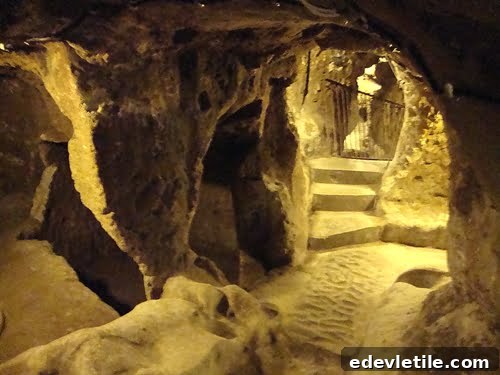
Emerging into open air after an hour underground felt like a relief; it is hard to imagine the strain of living below ground for months at a time. Expect to encounter souvenir sellers near the exit, a common feature at many tourist sites. If exploring subterranean cities appeals to you, allow ample time in Cappadocia—archaeologists and historians have identified more than 40 such underground complexes across the region.
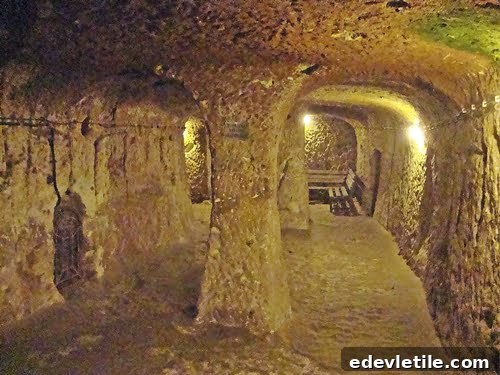
More Attractions in Cappadocia
Derinkuyu is only one highlight of Cappadocia’s rich landscape. The region offers distinctive rock formations, ancient churches carved into soft stone, and numerous archaeological sites. Plan a longer stay if you want to visit multiple underground cities and fully experience the area’s natural and historical attractions. Turkey as a whole presents diverse destinations across its east, west, north, and south—each with unique cultural and scenic offerings.