Beekeeping in Turkey: How to Produce Rich, Golden Honey
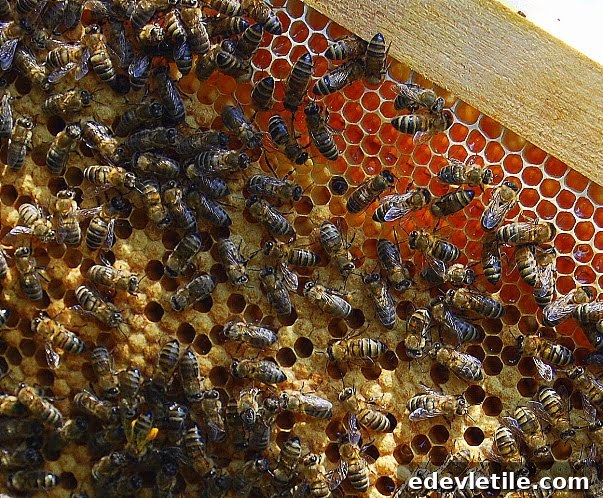
Turkey is the world’s third-largest honey producer, and after an unexpected encounter with a local beekeeper in Maral, I was surprised they aren’t first. Beekeeping here is straightforward but deeply effective. The methods may look unorthodox to an outsider, yet Turkish honey—particularly from this region—is among the sweetest and highest quality you can find.
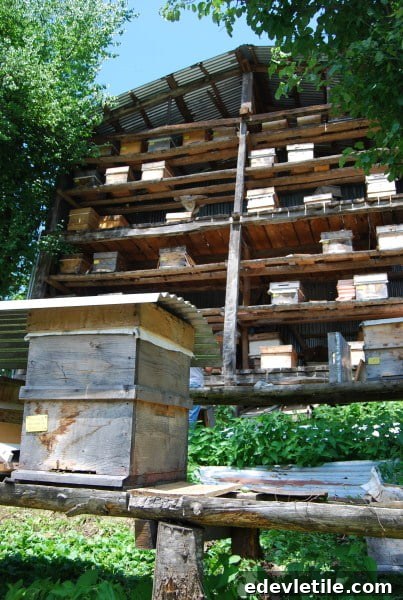
At first glance, there is nothing elaborate about beekeeping in this part of Turkey. Locals build open wooden sheds with shelves to keep hives off the ground, protecting them from animals and moisture. But the bees themselves are special, and the surrounding landscape—rich in wildflowers and native plants—plays a major role in creating superior honey.
The Pure Caucasian Queen Bee of Maçahel
Maral lies within the Maçahel region, a border area split between Turkey and Georgia. Studies in 1998 investigated why Maçahel consistently produced higher yields and superior honey. The key finding was that many hives there were home to pure Caucasian bees.
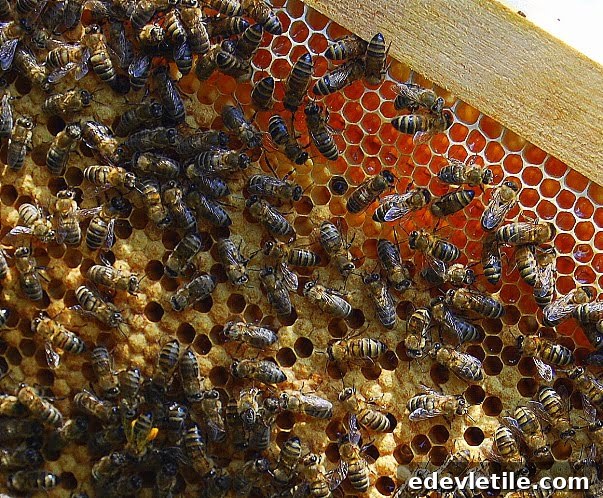
Caucasian queen bees have a longer proboscis, allowing them to reach nectar in deeper flowers, and they tend to be productive workers. Paired with the region’s diverse and abundant flora, these traits create an ideal environment for producing high-quality honey. In response, the Tema project was launched to preserve and propagate these bees.
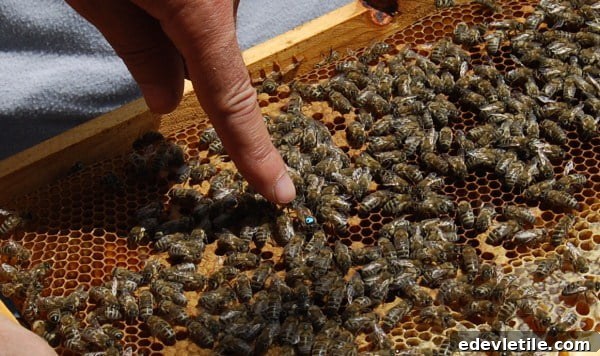
Local beekeepers can obtain Caucasian queens through the Tema project, which breeds them using controlled insemination to maintain genetic purity. When introducing a new queen to a hive, beekeepers often use a small cage and a piece of fondant or similar sweet between the workers and the queen. As the fondant is gradually eaten, the workers become accustomed to the queen and eventually accept her into the colony.
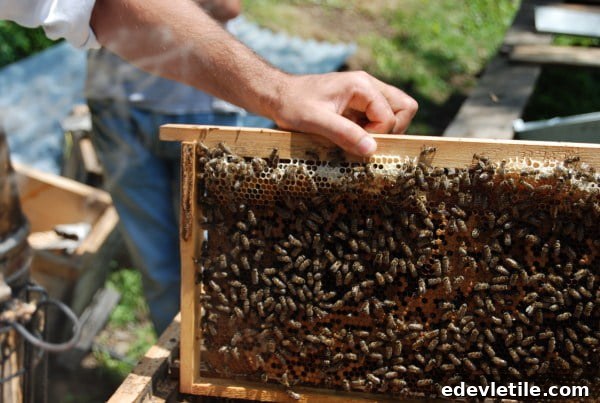
Thanks to the success of these breeding efforts, Tema also offers beekeeping courses that help locals start or expand beekeeping as a livelihood. Honey from Maçahel carries a reputation for quality and can command higher prices—some jars sell for around 40 Turkish liras or more—supporting local economies and encouraging sustainable practices.
Equipment Needed For Beekeeping in Turkey
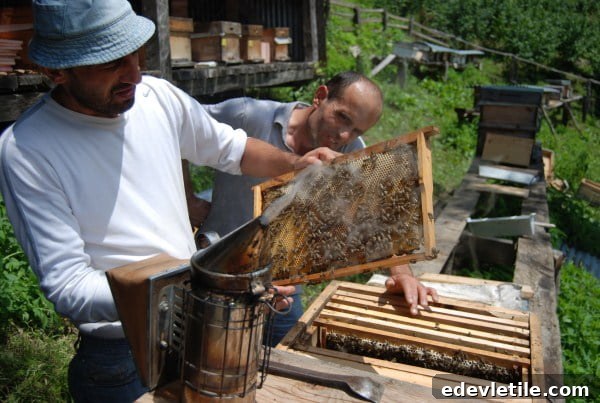
Surprisingly little protective gear is sometimes used in rural Maçahel. When I visited, the beekeeper worked without the full protective suit many outsiders expect. Wearing only everyday clothing, he handled bees calmly, even picking some up gently by the wings. While this approach might seem risky, experienced beekeepers develop a steady technique and deep familiarity with their colonies.
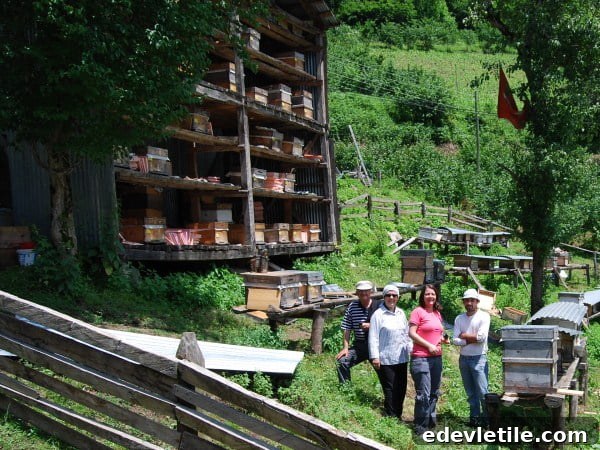
A key tool in beekeeping across the world, including Maçahel, is the smoker. Applying gentle smoke calms the bees, masking alarm pheromones so the colony is less likely to react defensively during inspections. Most local beekeepers emphasized confidence and careful movement rather than heavy protective clothing; many have years without serious stings.
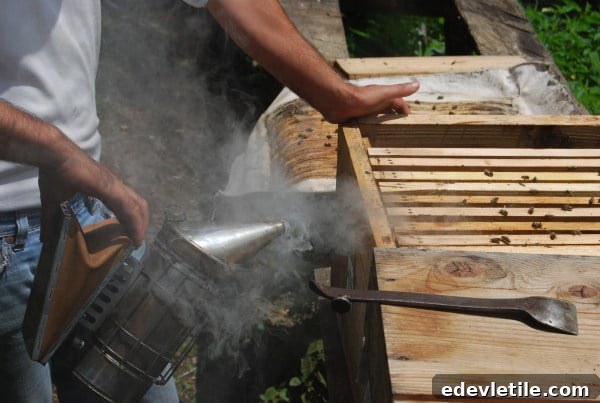
If you travel to Maçahel, make time to meet a beekeeper. I stumbled upon one while walking the rural roads with no appointment, and he welcomed us warmly. Hospitality is common in Turkish villages, and local beekeepers are often proud to show how they care for their bees and produce honey.
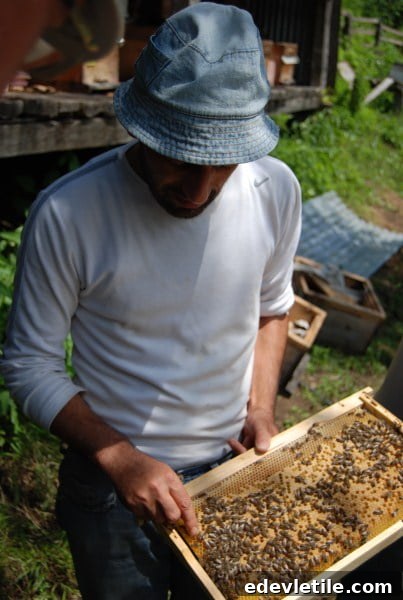
For anyone interested in the region’s beekeeping tradition and why Maçahel excels, searching accounts and studies about its Caucasian bees and local initiatives will offer more detail. Visiting in person provides the best insight into how traditional practices and targeted breeding projects combine to produce exceptional honey.