Cavuşin Village and the Historic Church of Saint John, Cappadocia
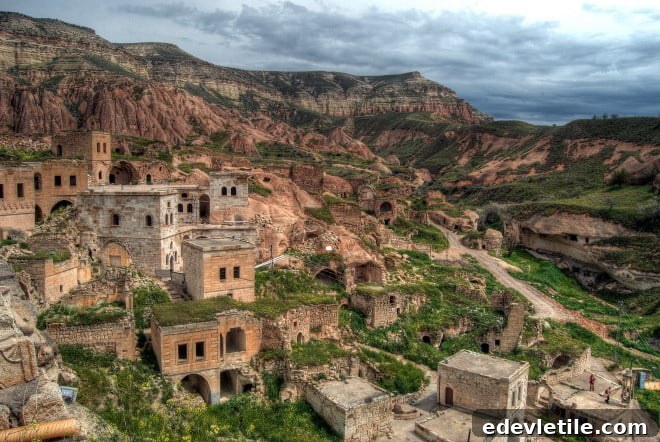
Cavusin, the old Greek village in Cappadocia, Turkey, is often overlooked in travel writing. When it is mentioned, it typically receives only a few sentences before attention shifts to better-known hubs such as Göreme. Despite two previous visits to Cappadocia, I had never gone to Cavusin until my third trip, when a local guide suggested we detour for an hour to see the 5th-century Church of Saint John the Baptist tucked into the old village.
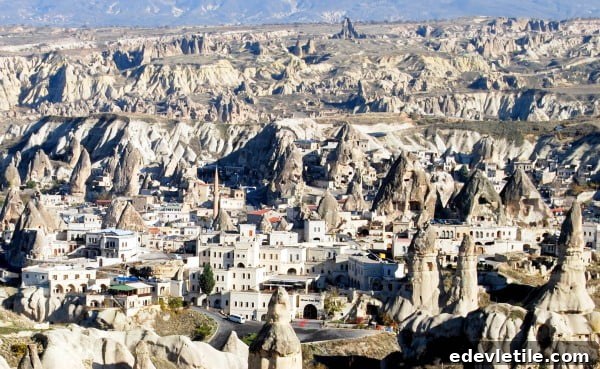
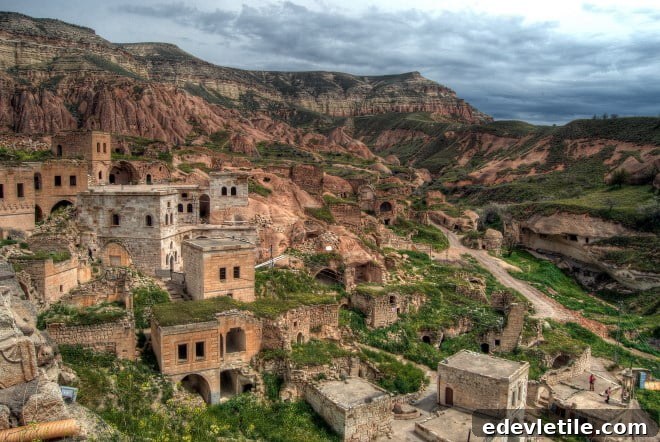
The village is divided into a newer settlement and the abandoned old Greek quarter. We arrived at the large rock face that looms over the deserted homes—an unstable cliff that had forced Muslim residents to move in the 1960s after falling boulders became dangerous. The Christian population had departed earlier, following population exchanges after the Treaty of Lausanne in the 1920s.
Arriving in Cavusin Old Greek Village
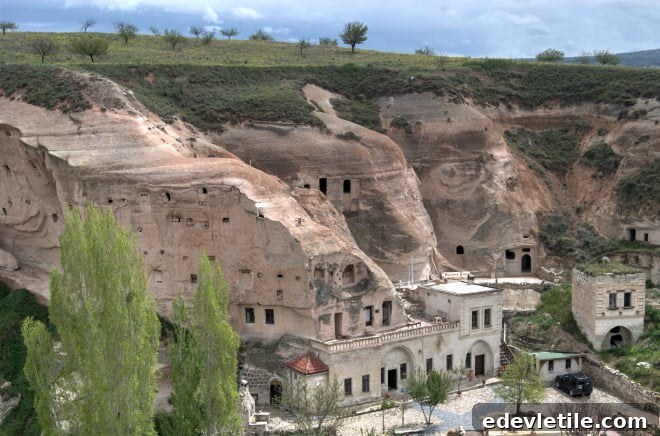
A narrow, winding path led up the hill toward the church. Along the route we passed a small mosque built into the hillside with a flat roof that visitors can climb. A young woman stood on the roof posing beside the minaret—likely for a photo—which felt slightly irreverent to me, though no one else seemed concerned.
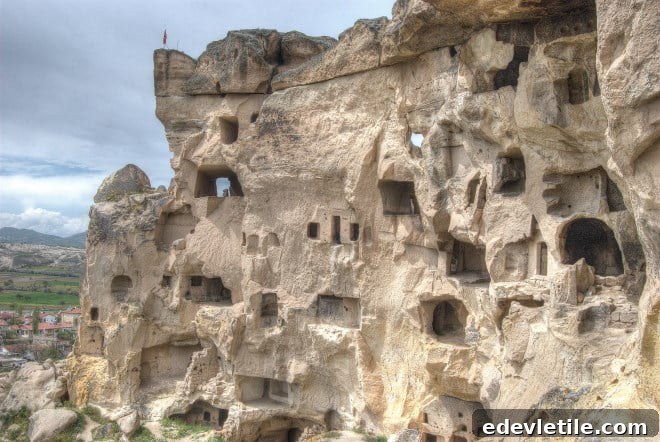
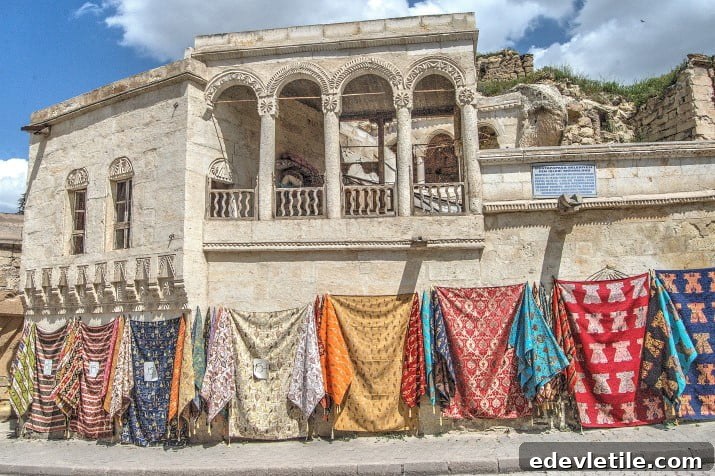
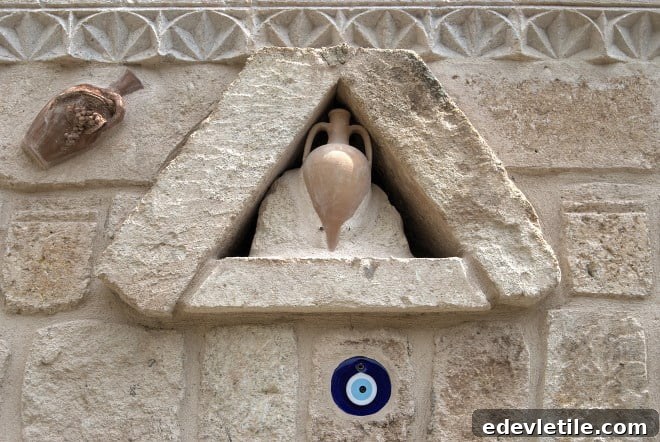
As we climbed, many of the old cave houses revealed traces of Greek architectural detail. Some are being restored, while others display “For Sale” signs. Authorities have taken measures to reduce rockfall risk, and a number of abandoned homes have been put on the market. Restored cave dwellings—quirky and unique—can command high prices, attracting buyers within a limited circle rather than appearing widely online.
Near the summit the path narrowed further, and then the view opened up. The panorama overlooks the old town with Rose and Red Valleys in the distance—popular trails for hikers. From that vantage the houses looked like miniatures and people like tiny figures. Whether it was the weather, the light, or simply my mood, I recall it as one of the most memorable views in the region.
The Cavusin Church of Saint John the Baptist
We crossed a rickety wooden footbridge to reach the interior of the 5th-century church. The frescoes, once vivid scenes from the Bible, were faded and in places blackened. After the Christian community left, parts of the church were used as a pigeon shelter, yet the space still conveyed a quiet, almost sacred atmosphere even to someone who is not particularly religious.
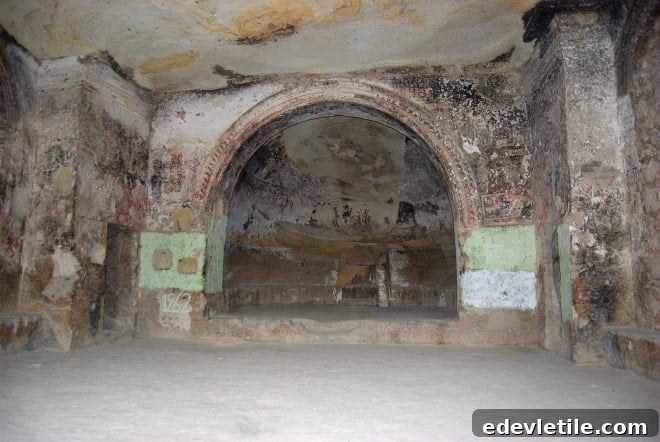
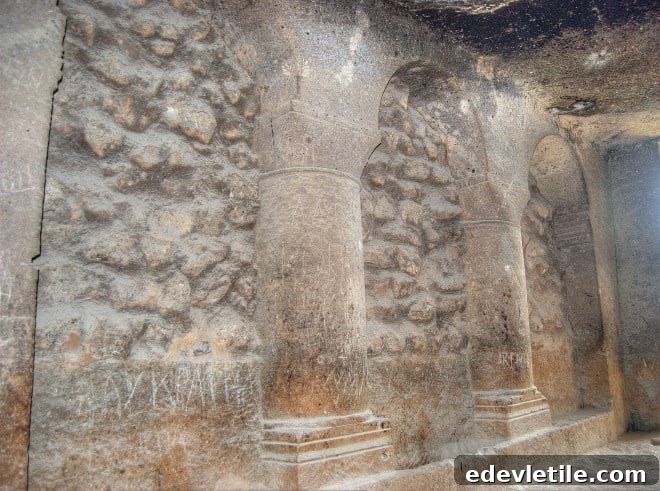
The church’s scale likely adds to that feeling. Originally a single large room, renovations in the 10th century strengthened supporting columns by incorporating them into new walls, creating three distinct sections. The result is a spacious, atmospheric interior that stands apart from many smaller cave churches across the region.
Perched precariously at the hilltop and reached by that shaky bridge, the church feels like a set piece from an apocalyptic film—both dramatic and fragile. Yet Cavusin’s story is not finished. Renovation efforts and property sales could revive the village, bringing new residents and visitors. Whether that will turn Cavusin into a bustling tourism center or simply restore a few stunning cave homes remains to be seen.
I left with a fondness for the place. Cavusin’s old Greek village is quietly charming, and I hope continued conservation and careful development will allow it to fulfill its potential without losing the character that makes it special.