Hagia Sophia Istanbul: History, Highlights, and Why Visit
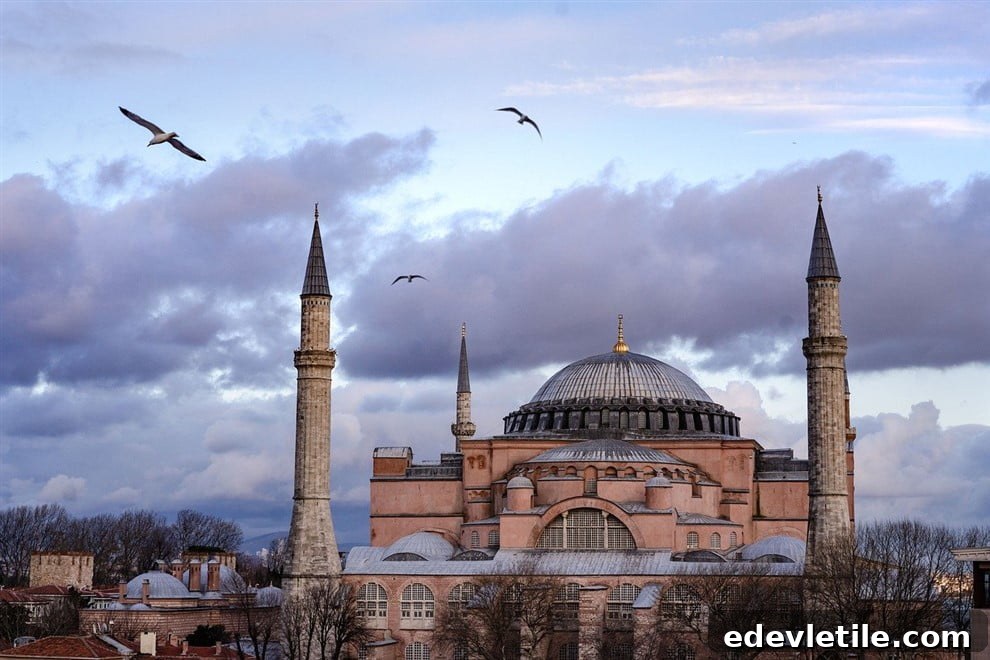
Ah, the Hagia Sophia, the grand mosque of Istanbul. This monumental building has served as a Byzantine cathedral, an Ottoman imperial mosque, a museum, and now a mosque again. Its atmosphere combines sacredness with a unique blend of Byzantine and Islamic architectural elements. Located in Sultanahmet in Istanbul’s historic district, Hagia Sophia stands among other UNESCO World Heritage monuments and bears witness to the layered histories of Byzantium, Constantinople, and modern Istanbul. Long visitor lines do nothing to diminish its power to inspire; few man-made works evoke respect as readily as this fusion of cultures and forms.
Table of Contents
About the Hagia Sophia Mosque of Istanbul
The Holy Wisdom Christian Church and Emperor Justinian
The Hagia Sophia that stands today is not the very first church on this site. Emperor Constantine built the original church in 360 AD, but fires damaged it twice early on. It was Emperor Justinian who commissioned the great reconstruction in the 6th century. Despite the era’s limited tools, some 10,000 workers completed the project in about five years, a remarkable achievement. Justinian’s workforce strategy and incentives accelerated the process, but the structure did face further destruction during the Nika revolts a little over a century later. Rebuilt once again, the church endured for centuries as a crowning example of Byzantine architecture.
The Hagia Sophia, the Ottoman Conquest and Rule
When Ottoman forces captured Constantinople in 1453, Sultan Mehmed II converted Hagia Sophia into the empire’s first imperial mosque. Over time, wear and structural issues required reinforcement; the famed Ottoman architect Mimar Sinan added buttresses and supporting walls that stabilized and enhanced the complex. Successive Ottoman sultans left their mark through additions such as monumental calligraphic panels and funerary complexes. Several Ottoman royals are buried near the site, including mausoleums and octagonal tombs that reflect the building’s evolving role in the city’s religious and political life.
Conversion into the Hagia Sophia Grand Mosque
Republican Turkey designated Hagia Sophia a museum in 1935 under Mustafa Kemal Atatürk. In July 2020, the Turkish government reclassified the site as a mosque, a move that drew debate both in Turkey and abroad over secularism and heritage preservation. Since the conversion, Hagia Sophia has resumed functioning as a mosque: prayer carpets are in place and it serves the Muslim community for worship. Visitors are still welcome outside prayer times, and virtual tours are available for those who cannot visit in person.
The Beautiful Interior Decor
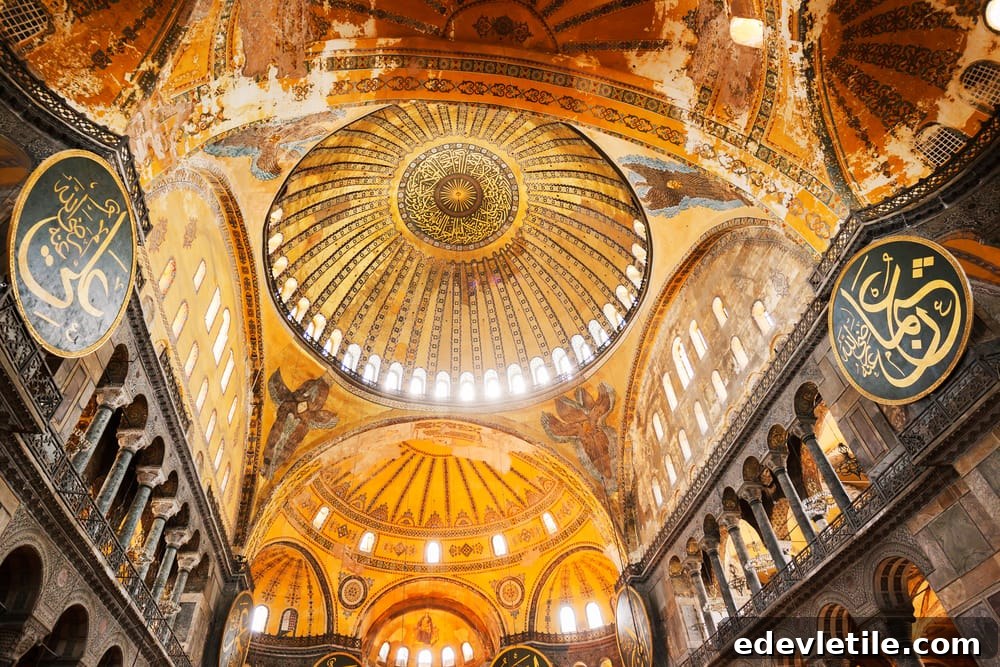
The interior of Hagia Sophia is as compelling as its history. The building has two levels—the ground floor and an upper gallery (often restricted)—and a massive central dome that rises about 56 metres above the floor. Forty windows at the dome’s base flood the space with natural light, creating a luminous effect that has fascinated visitors for centuries. The interplay of light, mosaics, marble, and calligraphy produces an atmosphere both serene and powerful.
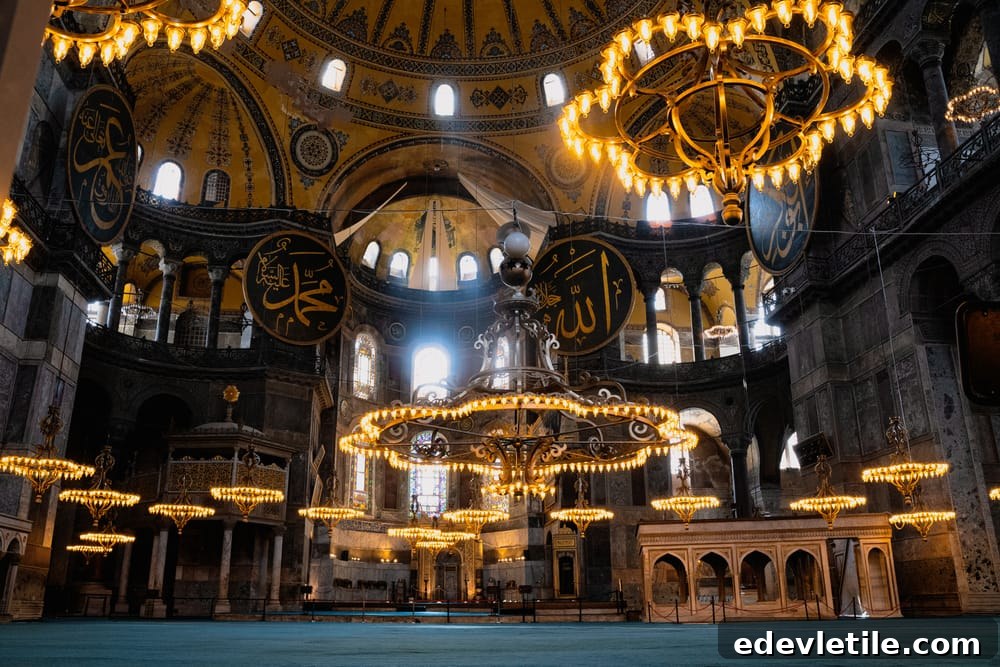
Once inside Hagia Sophia, I take off my hat. I am standing in a building that is a millennium and a half old. I want nothing to obstruct my vision. As I look up into the dome, which ancients saw as being suspended from heaven on a golden train.
I do not think much of the Mosque of St. Sophia. I suppose I lack appreciation… It is the rustiest old barn in Heathendom. I believe much of the interest stems from its being built as a Christian church and later converted into a mosque with relatively few alterations.
Marble Columns and Walls
Hagia Sophia’s interior features imposing marble columns and richly veined wall surfaces sourced from various regions of the empire. These marble elements support the dome and frame the interior spaces, often set into intricate patterns and occasionally carved with decorative motifs. Over centuries of use, repairs, and adaptations, some original surfaces were altered, but restoration efforts have aimed to conserve the building’s marble features and preserve its visual harmony.
The Four Minarets
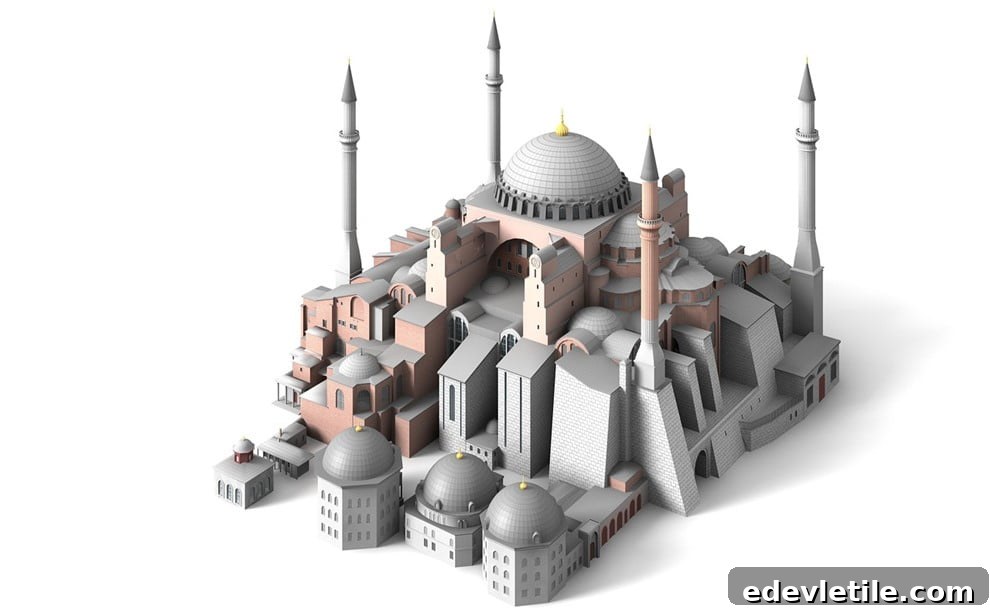
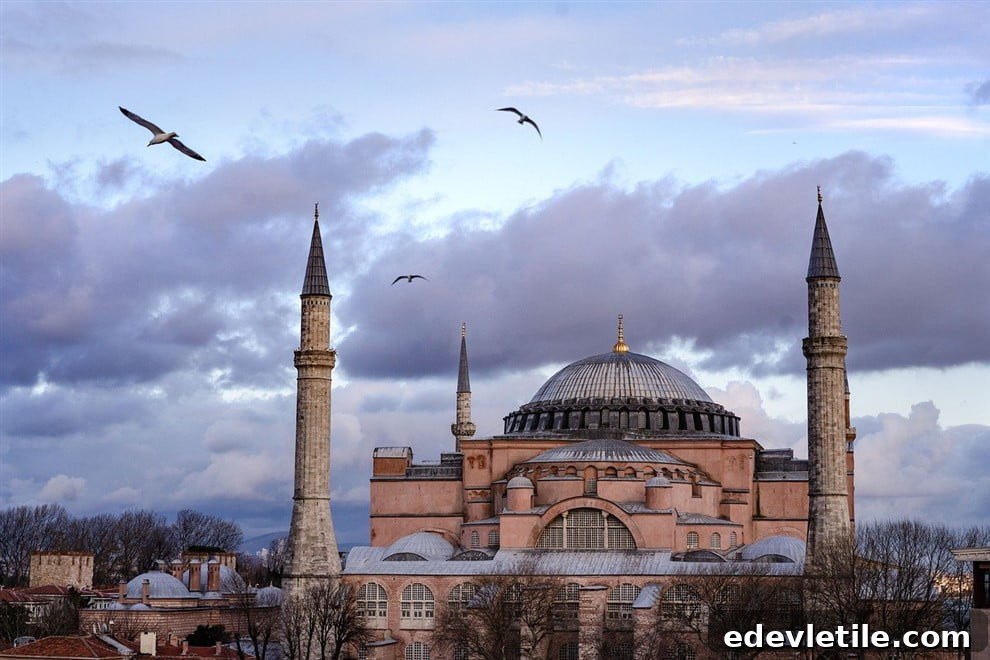
The Hagia Sophia now has four minarets, though it began life without any when built as a Byzantine cathedral. Ottoman additions began after the 1453 conquest. Mimar Sinan added two minarets in the 16th century, and two more were added in the 18th century during Sultan Mahmud I’s reign. The minarets became an integral visual and functional element after the building’s conversion to a mosque, reflecting common practice when churches were repurposed for Islamic worship.
Interesting Facts about the Hagia Sophia in Istanbul
- In Turkish, the landmark is called Ayasofya.
- The name Hagia Sophia means “Holy Wisdom” or “Divine Wisdom.”
- Large 19th-century Islamic calligraphy panels inside were crafted from wood and added during the Ottoman period.
- Hagia Sophia served as a Christian church for roughly 916 years before conversion.
- For centuries it was the world’s largest domed building and an architectural model for later structures.
Why is the Hagia Sophia so Important?
Hagia Sophia was the religious heart of the Byzantine Empire and functioned much as St. Peter’s does for the Catholic Church. Its conversion to a mosque after 1453 added another layer of meaning: the building embodies the meeting of Christian and Islamic histories in Istanbul. Architecturally and symbolically, it represents centuries of continuity and change in a city that has been a crossroads of civilizations.
What Does Hagia Sophia Mean?
The name Hagia Sophia is often translated as “Holy Wisdom” or “Divine Wisdom.” Historical accounts say that upon completion, Emperor Justinian praised the achievement and famously compared it to the Temple of Solomon, underlining the building’s intended grandeur.
Can Non-Muslims Visit the Hagia Sophia Mosque?
Yes. After the 2020 reconversion, the Turkish authorities have continued to allow visitors of all backgrounds to enter outside of prayer times. Hagia Sophia remains a major cultural and historical attraction where visitors can observe its architecture and layered heritage while respecting its status as a place of worship.
When is the Hagia Sophia Mosque Open?
The site is accessible throughout the day; however, it functions as a mosque with regular prayer times. Visitors should avoid peak prayer periods, especially Friday midday prayers, and observe the dress code: modest clothing, head coverings for women when required, and trousers for men. No advance booking is typically necessary, though a knowledgeable guide can enrich your visit by explaining the building’s history, art, and architecture.
What is the Difference Between the Blue Mosque and Hagia Sophia mosque?
The Blue Mosque (Sultan Ahmed Mosque) and Hagia Sophia stand opposite each other in Sultanahmet and offer contrasting experiences. The Blue Mosque was built as an Ottoman mosque and is renowned for its Iznik tilework, six minarets, and a harmonious cascade of domes rendered in blue tones inside. Hagia Sophia combines a vast Byzantine dome and original Christian mosaics with Ottoman-era Islamic additions, reflecting a longer, more complex history that spans both Christian and Islamic eras.
Summary: Why is the Hagia Sophia So Famous?
Architecture: Its 6th-century central dome and innovative structural solutions influenced Byzantine and Ottoman architecture for centuries.
Historical Significance: As the principal cathedral of the Byzantine Empire, then a major Ottoman mosque, it has been central to pivotal events and ceremonies across eras.
Blend of Cultures and Religions: The building uniquely displays Byzantine mosaics alongside Islamic features such as minarets and calligraphic panels, making it a living record of cultural exchange.
Symbolic Role: Hagia Sophia stands as an emblem of Istanbul’s layered identity, representing both continuity and transformation through time.
Also, Visit Nearby
Topkapi Palace: A short walk from Hagia Sophia, Topkapi Palace was the administrative heart and residence of Ottoman sultans for nearly 500 years and offers insight into imperial life.
Grand Bazaar: One of the world’s oldest and largest covered markets, the Grand Bazaar dates back to the 15th century and remains a lively center for traditional crafts, textiles, and souvenirs—still very much part of Istanbul’s daily rhythm.