How Residents of Mazi Underground City Maintained Their Sanity
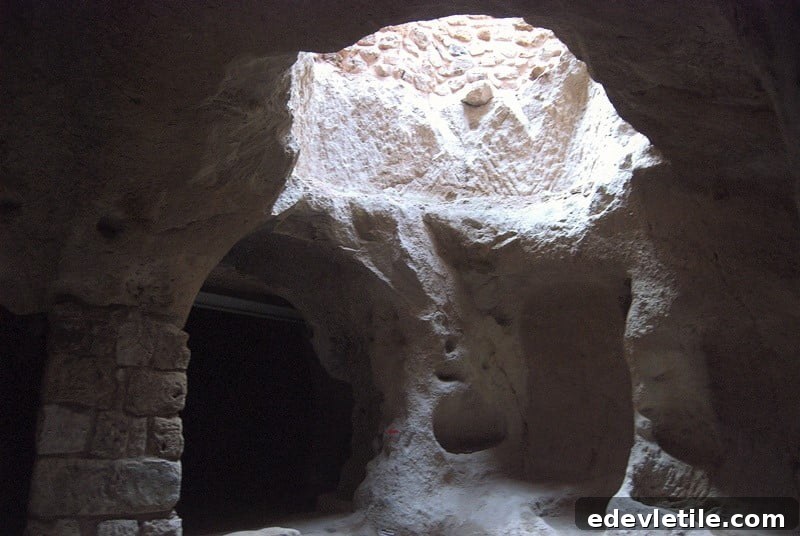
Mazi underground city is one of many subterranean settlements scattered across Cappadocia in central Turkey. Entering an underground city can feel dramatic at first, but after visiting a few it becomes clear that these complexes share common features. In times of invasion, local people retreated into these carved spaces and lived there for extended periods. They functioned as self-contained communities with chapels, schools, storage areas and rooms for livestock.
My first experience of an underground city was in 2010 at Derinkuyu, which remains the largest and most extensive of the region. Because Derinkuyu is so vast, smaller sites like Mazi feel less dramatic by comparison. I visited Mazi on the Blue Tour organized by Bridge of the World Travel out of Göreme. That tour is designed for visitors who have already seen Cappadocia’s main attractions and want to explore lesser-known locations.
A woman standing next to me on the tour was a first-time visitor to the area and had never been inside an underground city before. Her excitement was contagious. Before we descended, our guide gave the standard safety briefing, warning anyone with heart conditions or claustrophobia to consider carefully. Everyone in our group chose to go down, so we followed a long staircase into the subterranean levels.
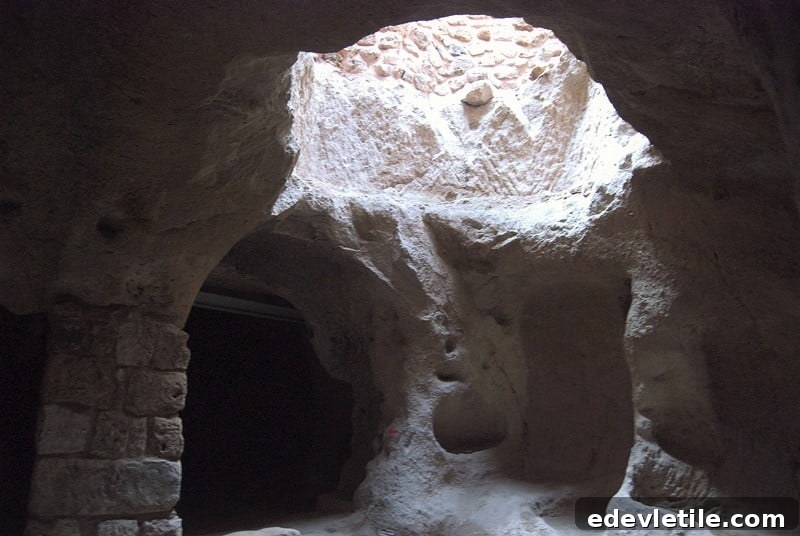
Mazi is not as deep as Derinkuyu, so it is generally less oppressive; the sense of confinement is easier to manage. Still, the air inside felt damp and heavy, and as a smoker I felt my chest tighten. It’s easy to imagine how difficult long-term life underground would have been, and how people must have coped with the psychological strain.
Mazi Underground City
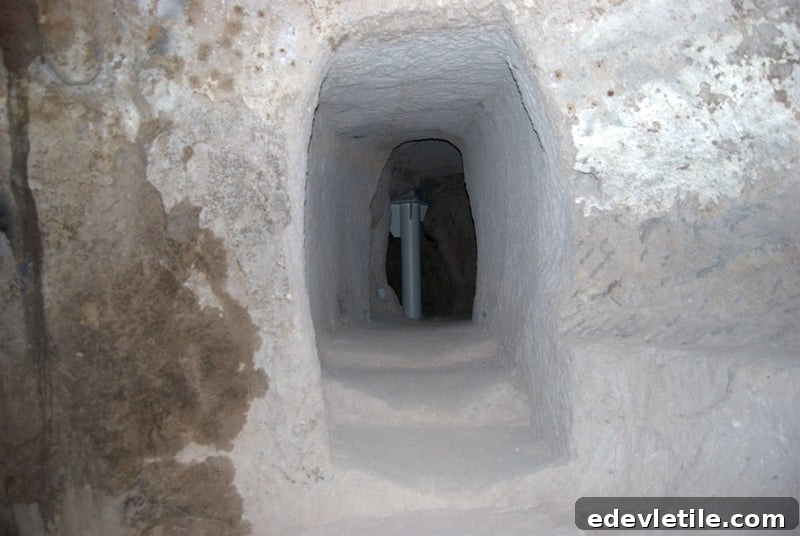
Historical accounts suggest that the stress of prolonged confinement sometimes led to mental breakdowns. If I had lived in that era, I can easily imagine being one of those who struggled to remain calm. The need to keep people from bolting for the surface was a constant concern, because any escape attempt could expose the entrances and endanger everyone below.
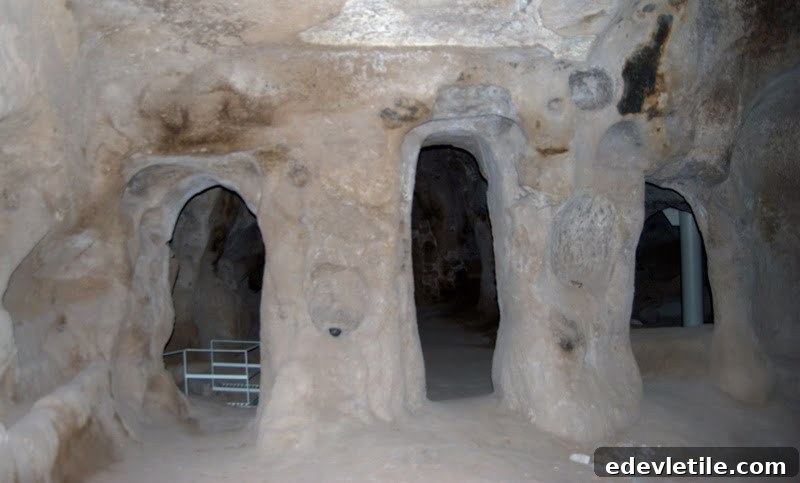
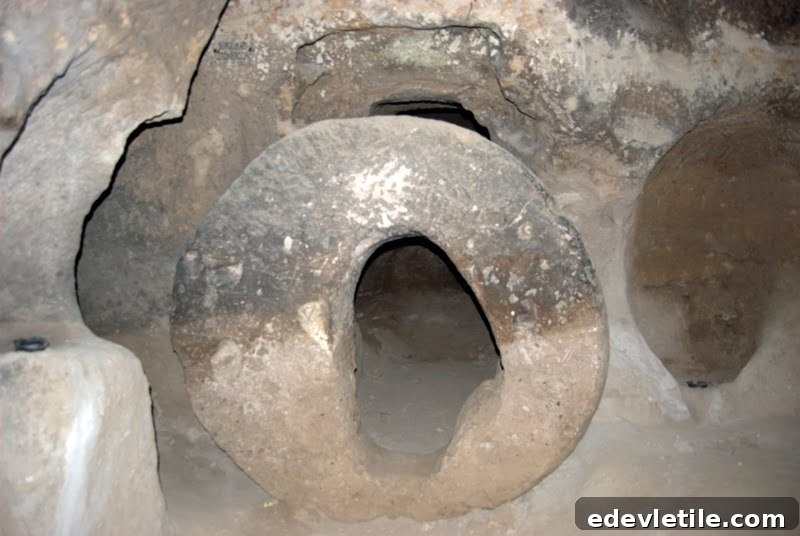
Historically known as Mataza, Mazi had several entrances that were secured with heavy rolling stones; these could be operated from the inside to seal the city against attackers. One feature that stood out during my visit was a vertical shaft used to drop grapes down into an underground winery. Perhaps small comforts like wine helped people endure the long periods spent underground.
Visiting Mazi gives a clearer, more intimate sense of daily life in Cappadocia’s subterranean refuges. While it may lack the scale of Derinkuyu, Mazi preserves many of the practical and human details that explain how communities adapted to the constant threat of invasion. For anyone who has seen the larger sites, a stop at Mazi offers a quieter, more personal perspective on this remarkable aspect of regional history.