Inside Gaziantep Coffee Houses: Culture, Drinks, and Traditions
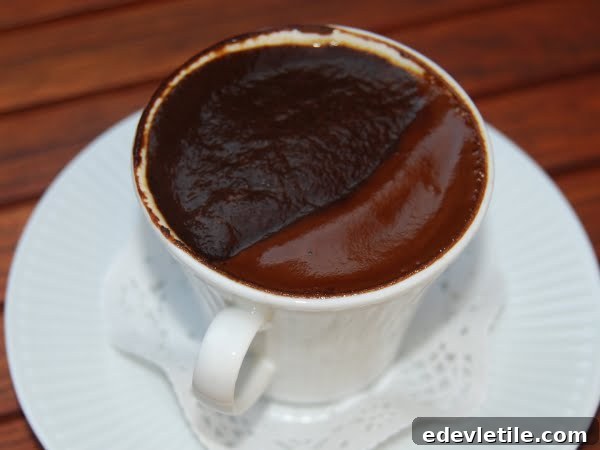
I love caffeine. I drink it often and sometimes have more than six cups of Nescafe in a day. I’ll top that off with a can of Red Bull on occasion, and when I overdo it I sometimes have to lie down with a caffeine headache.
I once tried to quit caffeine and found I simply could not function; two hours into the day I gave up. So it surprises many that I strongly dislike Turkish coffee.
To me it is the most unpleasant drink imaginable. I cannot understand how anyone can drink a cup without feeling nauseous.
My Turkish mother-in-law has tried repeatedly to convert me, but I still refuse the thick, muddy brew. (As a correction: I did drink a very milky cup in Beypazarı, but only because it was diluted with a large amount of milk.)
My husband is a lifelong fan of Turkish coffee, so when we visited the southeast of Turkey, I should have expected to be lined up for the ritual attempt to persuade me to drink a cup.
 The Coffee Houses of Gaziantep
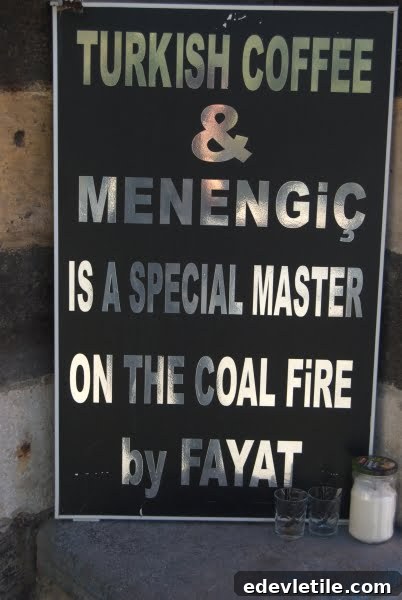 The Coffee Houses of Gaziantep
Everywhere in Turkey you see teahouses, but Gaziantep also has many coffee houses and several types of coffee that were new to me. Following my husband from one place to the next turned into a steep learning curve.
Menengic and Dibek Coffee
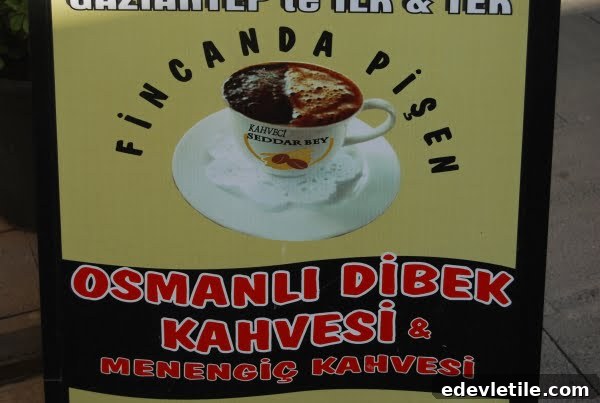
At one café I noticed a billboard advertising something unfamiliar. When I asked my husband what it was, he admitted he had never seen it either, and then went inside. He ordered two cups of coffee, and I quickly changed the order to one cup and a bottle of water — I refused to taste it.
Menengic coffee is made from the terebinth berry. The berry, a wild cousin of the pistachio, has no caffeine and some describe its flavor as “interesting,” so I felt I had not missed much.
But my husband had actually ordered Dibek coffee, and the waiter was keen to explain that this was not a typical cup. Dibek refers to a mortar: all the ingredients for this coffee are ground by hand in a mortar and pestle. “Fincanda pişen” indicates the coffee is brewed directly in the cup rather than in a traditional pot, while “Osmanlı” (Ottoman) refers to the age-old method used. Despite the description and the show of tradition, I still could not bring myself to enjoy it.
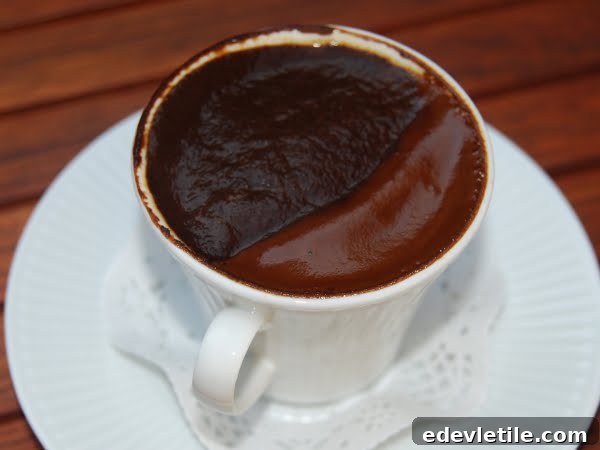
We were sitting in a place called Tarihi Gümrük Hanı, which specialized in “Fincanda Pişen Osmanlı Dibek Kahvesi.” The name was a mouthful, but the preparation and the history behind it were fascinating, even if I didn’t enjoy the taste.
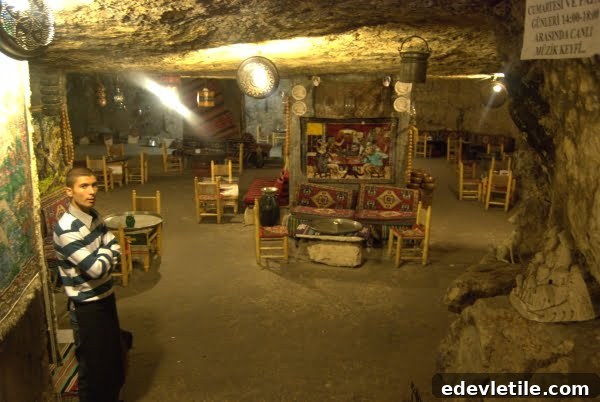
Tarihi Yenihan Coffee House in Gaziantep
I thought I had endured enough coffee rituals, but the next stop was Tarihi Yenihan. Inside the large courtyard of this historic building a small shop leads to steps down into a cave café. I’ve enjoyed cave spaces ever since staying in a cave hotel in Cappadocia, so this was a novelty I appreciated.
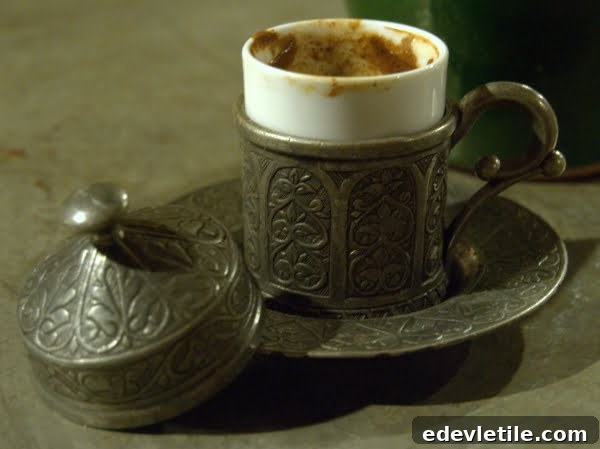
The café serves coffee in small silver cups, and while the setting was charming, it still wasn’t enough to get me to try the drink.
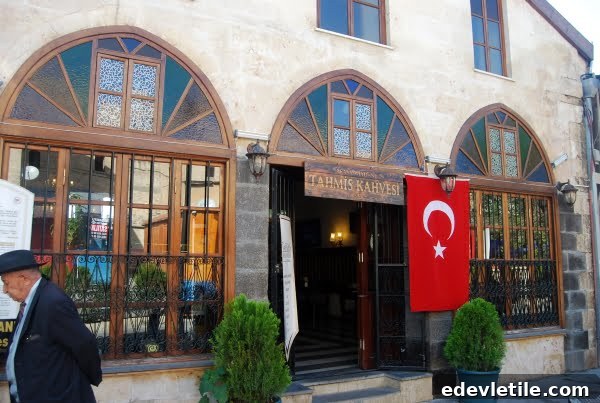
The Tahmis Coffee House
Historically, the Tahmis coffee house is one of the most significant. Built in 1635 to support the adjacent whirling dervish lodge, it was rebuilt after fires in 1901 and 1903. Even with its history and atmosphere, I still had no desire to sit down for a cup.
What I wanted instead was an ice-cold beer, but local customs discouraged women from visiting bars in Gaziantep, so I resorted to bringing Efes beers back to the hotel room discreetly.
My husband couldn’t understand my reluctance to embrace Gaziantep’s coffee culture given my caffeine habit. I won’t recommend readers try Turkish coffee if I won’t taste it myself, but I do encourage visiting at least one coffee house in Gaziantep to appreciate how important coffee is to the city’s social life and heritage.
Readers’ question: Turkish coffee — love it or hate it?
Further information: Tarihi Gümrük Hanı website
[wp_geo_map]