Pamukkale, Turkey: Thermal Terraces and Ancient Hierapolis Ruins
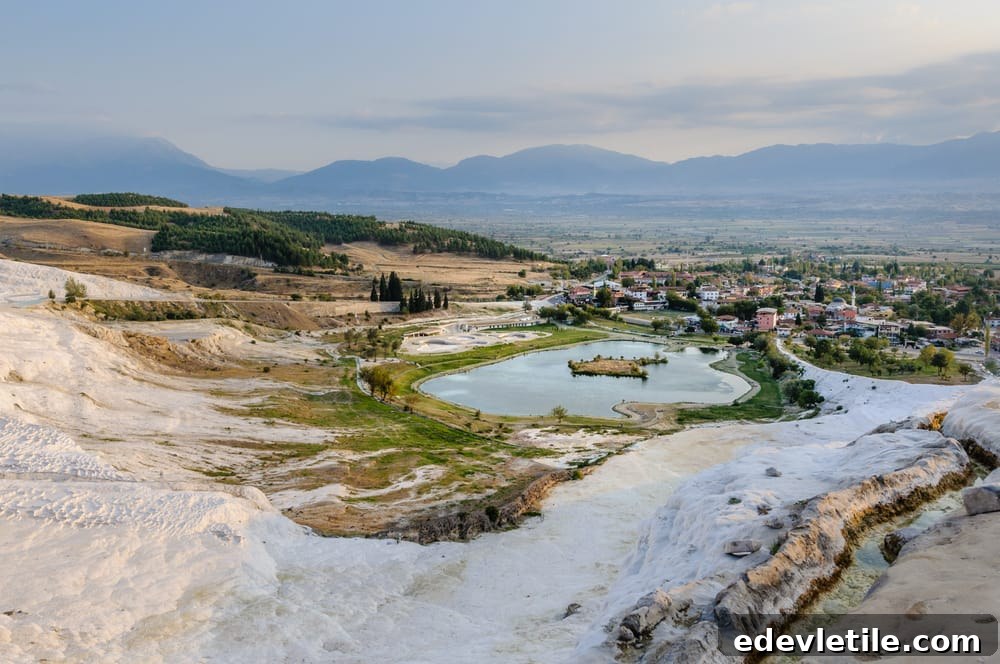
Pamukkale in Turkey is one of the country’s most visited attractions and a spectacular natural site. Located in Denizli province and designated a UNESCO World Heritage Site, Pamukkale—nicknamed the “Cotton Castle”—features terraces of white calcium deposits formed by thermal waters cascading down a hillside. On my first visit to Pamukkale and the adjacent ancient city of Hierapolis, I did not fully grasp the scale of the phenomenon. Years later, the memory had grown hazy, so I returned to see it again.
About Pamukkale in Turkey
Many visitors come to Pamukkale on day trips from nearby resort towns like Fethiye, Marmaris and Bodrum, while others stop overnight as part of longer itineraries. I chose to stay overnight to break up a long bus journey from Cappadocia. After a shuttle from Denizli, I checked into a modern hotel on the town’s edge—hotels closest to the terraces tend to be significantly more expensive.
The town around Pamukkale is lively and at times amusing: local women still wear traditional village dress, flocks of roosters wander the streets, and old farm equipment sits in backyards beside newer cars. This blend of old and new, where an aging Cortina shares the road with a modern Ford or Opel, illustrates a practical, ad-hoc side of Turkey’s character.
Tourist services are obvious and persistent. Loud ticket sellers tout guided tours and paragliding options near popular eateries. On first arrival the persistent sales pitches can overwhelm, but despite the commercial energy the village is charming and felt safe during my overnight stay.
Things to do at Pamukkale and Hierapolis
- Explore the ruins of ancient Hierapolis
- Paddle in the travertine pools
- Swim in Cleopatra’s Pool, rich in carbonate minerals
- Visit the Pamukkale Archaeology Museum
- Take a hot-air balloon flight
- Many visitors recommend entering through the south gate
Ancient Hierapolis City Ruins
Hierapolis, whose origins date to the 2nd century BC, is a sprawling archaeological site. The city’s name means “sacred city,” and the ruins include temples, gates and necropolises, though most surviving structures date from the Roman era. I was most keen to see the large theater, which required a steep walk up a small hill in the midday heat.
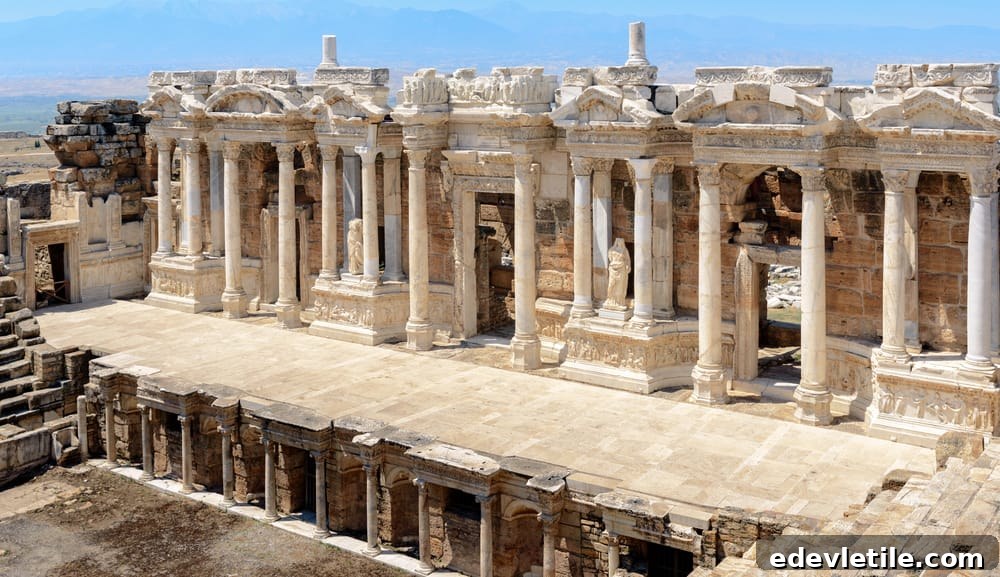
I entered through a lesser-used gate and spent some time sitting on the top steps, taking in the view. A barrier now blocks direct access to the front façade, but the panorama from behind the theater stretches far across the landscape. In my opinion the Hierapolis theater rivals other famous theaters in the region for its setting and preservation. Other notable remains include Byzantine gates, the necropolis and the Temple of Apollo, but the thermal terraces of Pamukkale are the main draw.
Pamukkale Hot Springs and Thermal Pools
Visiting the terraces this time felt different from my memory. There were noticeably more dry travertine areas than water-filled pools. Three main terrace sections spread across the hillside; the central section was full of visitors paddling in the milky water, which averaged around 33°C. Rust-colored rock contrasted with the white calcite formations. Staff periodically reminded visitors, via whistle, to remove their shoes before walking on the terraces.
Staff explained that some terraces were temporarily dry for cleaning. Still, it raised questions: this landscape has formed over thousands of years from calcium-carbonate deposits fed by hot springs. Roman visitors treated the waters as therapeutic spa springs centuries ago. Were recent changes the result of preservation efforts, prior pollution, or visitor impact? Historically, some nearby hotels polluted the flow and were later closed, and at other times access was restricted. Today Pamukkale and Hierapolis attract millions of visitors who contribute to the local economy through entrance fees, museum tickets, and paid access to Cleopatra’s Pool, as well as spending in shops and restaurants.
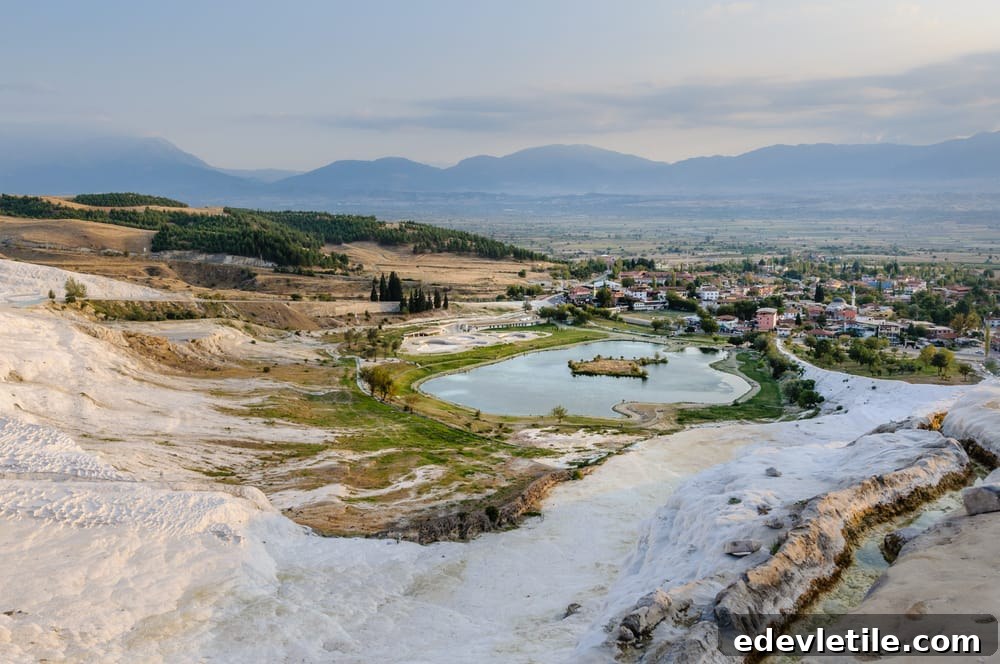
The balance between preserving the site and allowing public access is an ongoing challenge. While the terraces may not disappear immediately, maintaining them for future generations requires careful management and continued attention to environmental impacts.
Cleopatra’s Thermal Pool for an Extra Cost
After exploring the white terraces, I headed to Cleopatra’s Pool, partly to use facilities and partly to see the place where visitors can swim among submerged ancient columns. The pool is promoted for its therapeutic properties, claiming benefits for conditions such as acne and varicose veins. Admission to swim here requires a separate ticket, which is notably more expensive than general site entry.
On my visit the pool area felt incongruous: music played loudly, the atmosphere felt commercialized, and modern tourist trappings intruded on what should be a contemplative experience among ancient ruins. For some, swimming in thermal water amid relics of Hierapolis is a highlight; for others, the price and ambience reduce its appeal.
Pamukkale and Hierapolis Archaeology Museum
The Pamukkale Museum, set across three rooms and garden displays, houses artifacts from Hierapolis as well as finds from nearby ancient cities such as Laodicea and Aphrodisias. The sarcophagus room is particularly striking. When I visited, the museum was quiet compared with busier outdoor attractions, and there is a separate entrance fee to visit the museum.
Despite its popularity, Pamukkale and the ruins of Hierapolis remain essential visits for anyone interested in Turkey’s natural and historical heritage. For a richer experience, consider an overnight stay. Visitors can also book sunrise hot-air balloon flights or paragliding trips to see the travertines from above.
Practical note: there is no direct public transport from Cappadocia to Pamukkale. I travelled by bus to Denizli and then took a shuttle transfer to the town. Many travelers continue on to Ephesus afterwards. The nearest airport is Denizli Çardak Airport, which mainly handles domestic flights.
Historical Sites of Ancient Civilization Nearby
Aphrodisias: Not far from Pamukkale, Aphrodisias is famed for its sculpture workshops and well-preserved ancient city dedicated to the goddess Aphrodite. The archaeological site and museum showcase the city’s artistic heritage and its dramatic rise and fall.
Laodicea: Located a short drive from Pamukkale Natural Park, Laodicea is one of the Seven Churches mentioned in the New Testament. In antiquity it thrived as a trade and textile center, benefitting from fertile grazing plains that supported the wool industry.