Priene Ancient City: Discover Aegean Turkey’s Historic Treasures
According to history books, the ancient city of Priene in the Aegean region of Turkey is notable for two important items: the Priene Inscription and the Priene Calendar, both of which offer valuable information for later generations. While no single site can claim a legacy greater than all others, walking among Priene’s ruins sparked a genuine excitement in me, even if the site is smaller than better-known ancient cities like Ephesus.
I enjoy reading Turkish history as a hobby and have visited many archaeological sites, which helps me picture these places in their former glory as if I had once lived there. Strolling down the remains of the agora, I pictured shopkeepers and residents going about their daily lives.
Sitting among the stone remains of the theatre, I imagined music resonating against the walls or the solemn rituals that might have preceded public games. Standing in a simple stone courtyard, I could sense the atmosphere of a household long gone, primitive by modern standards but rich with lived experience.
Exploring Priene Ancient City
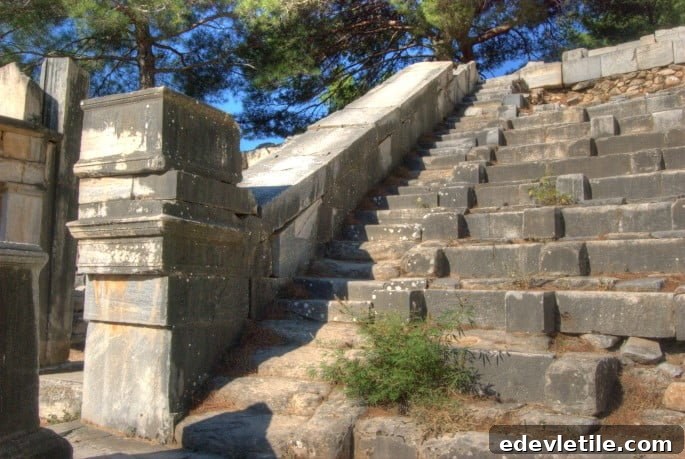
At Hellenistic Priene, imagination was useful but not necessary. The city’s devotion to Athenian ideals remained evident, creating an atmosphere that felt earnest and quietly proud. I visited with a group of photographers, and being among like-minded people lifted my spirits. My instructor pointed out striking shadows, symmetrical stone lines, and how the landscape framed compositions, so I experienced the ruins both as a historian and as a photographer. Either way, exploring Priene was an absorbing dive into the past.
The Priene Calendar and Inscription
The Priene calendar, dating from around the 1st century BC and preserved on stone fragments found in the old marketplace, marks the 23rd of September as the birth of Augustus and signals the start of a new era. The calendar has attracted debate among scholars and religious commentators online, but my greater interest lay with the Priene Inscription.
Carved around 330 BC, the Priene Inscription makes reference to Alexander the Great. Discovered in the 19th century and now held in the British Museum, the marble slab records, in ancient Greek, the dedication of the city’s temple to Athena Polias. Athena Polias—Athena as protector of the city—was celebrated for her role in civic life, and the inscription reflects the civic pride and religious devotion of Priene’s inhabitants.
Temple of Athena
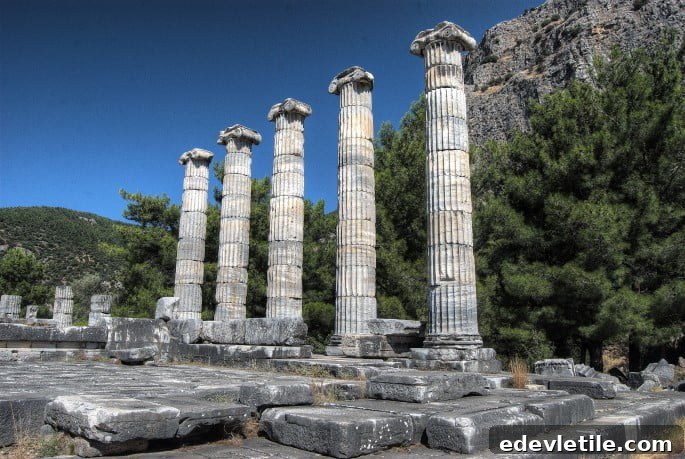
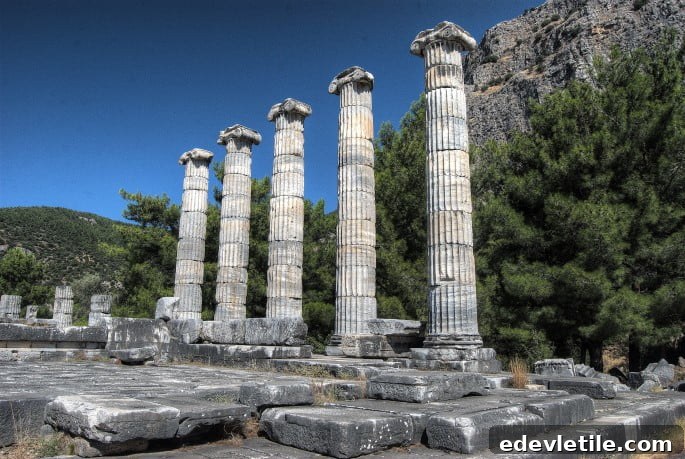
Only five tall columns and scattered large stones remain of Priene’s 4th-century BC Temple of Athena. Perched above the plains toward Söke, the temple’s backdrop—an imposing rock face—adds dramatic presence to the ruins. Traces of Greek inscriptions and carved patterns on the stone hint at the care and skill invested in its construction. In its original form the temple would have been an impressive structure, built without sparing expense.
The Theatre of Priene
Priene’s visible ruins include the bouleuterion, agora, gymnasium, and several houses—one of which is said to have hosted Alexander the Great. For me, the highlight was the small but dignified Hellenistic theatre. Its ground-level façade, which once had two tiers, now reveals straight-standing columns facing a semicircular orchestra. Light and shadow fall across the architecture, emphasizing the importance of performance and public life in that era.
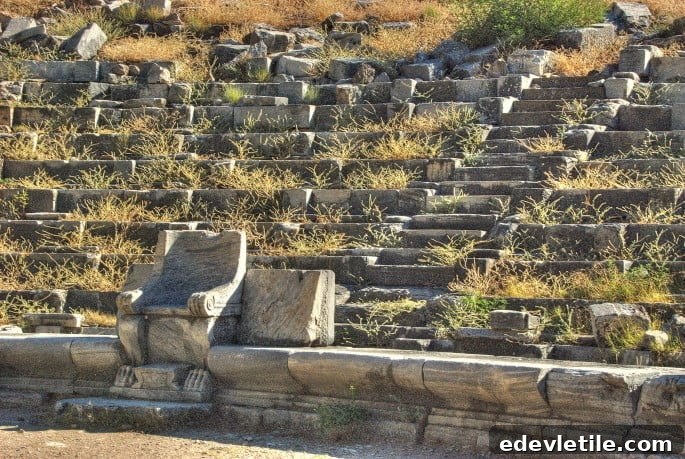
Seating carved into the hillside surrounds the orchestra and is now covered by a thin layer of grass. The front row contains five prominent marble seats that resemble thrones—likely reserved for dignitaries or priests. I felt tempted to sit in one, but I decided it would be disrespectful to the site’s preservation.
Leaving the theatre, I wandered into the gymnasium where a small team worked within a roped-off excavation area. Guided by university experts, the students carefully dusted an artifact embedded in hardened sediment. I wasn’t allowed past the rope, but watching them at work underscored how archaeological fieldwork connects people to history. Participating in such excavations would be an unforgettable experience.
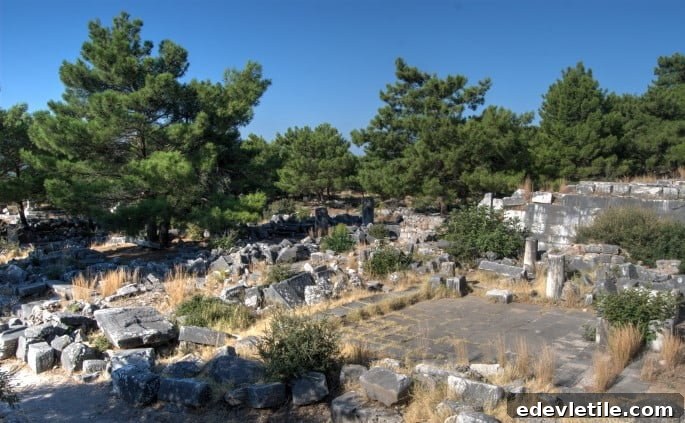
Tip: Combine a visit to Priene with nearby Miletus. The ruins of Miletus, once a thriving Ionian port, are close by and together with Priene make a fulfilling day trip in the Aegean region of Turkey.