Selçuk Travel Scam: How to Spot Fake Antique Coins
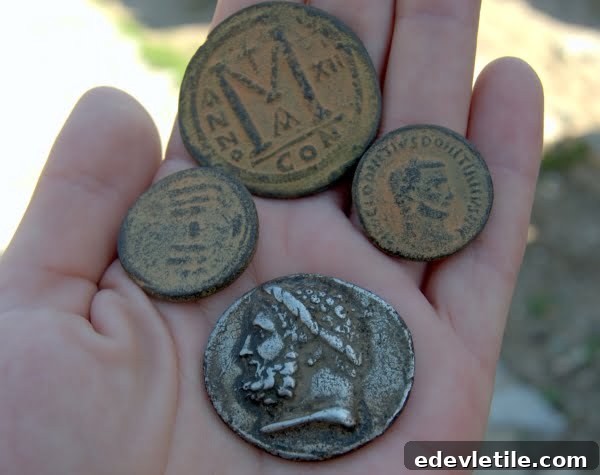
Last month I made a spontaneous decision to stay in Selcuk, close to the ruins of Ephesus. I hadn’t planned or researched much, yet the trip turned out to be wonderful: I made local friends, visited recommended sites, enjoyed good food, and drank plenty of beer. Unfortunately, my visit was marred by an aggressive travel scam aimed at foreign tourists. In fact, the same trick was attempted on me twice within two days.
The confidence of the scam artists was striking, and more worrying was the scale of the amounts they were trying to extract. This wasn’t a few coins — they were attempting to secure hundreds of euros, dollars, or pounds. Here’s what happened.
Travel Scam at Saint John’s Basilica and Temple of Artemis in Selcuk
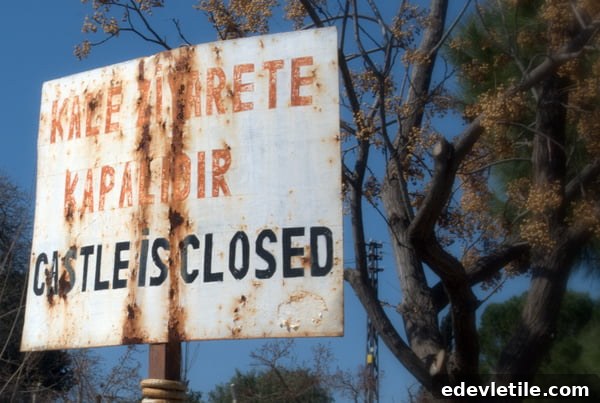
My hotel receptionist told me Selcuk castle was closed because of excavations, so I decided to visit Saint John’s Basilica. Walking up to the gate via a side path, I noticed a man loitering nearby, keeping out of staff sight. He was thin, casually dressed but neat, and though his appearance seemed ordinary, I felt uneasy.
A camera hung around my neck and I briefly thought he might try to steal it. Instead, in near-perfect English, he asked if I wanted to see the castle. I explained the castle was closed for excavations. He then claimed, “I am staff working on the excavations; I will take you to the private entrance.”
I didn’t want trouble or illegal trouble entering a historical site, so I began to walk away. The man followed and produced four coins from his pocket, launching into a practiced sales pitch with a straight face: “These coins are very old, from Roman times. Because you are a pretty lady, I will sell you one coin for 100 euros. You can sell it for much more when you go home.”
He sounded knowledgeable and pointed at one coin, saying it showed Emperor Constantine. However, his claim was inconsistent — Constantine is traditionally shown without a beard, and the portraits he pointed to didn’t match known examples. One other portrait even looked cartoonish. I told him they looked like souvenirs rather than genuine antiques and advised he shouldn’t sell them as authentic.
He reacted with insult and then anger at being accused of lying. As I started to walk away again, he followed and swore on his mother’s name that they were real and that he had taken them from the excavation site where he worked. I pointed out that if that were true, they would legally belong to the state and buying them would be participating in theft. A heated exchange followed, including personal stories about debts and an ill mother, and the asking price gradually dropped from 100 euros per coin.
Ultimately I bought all four coins for 6 euros.
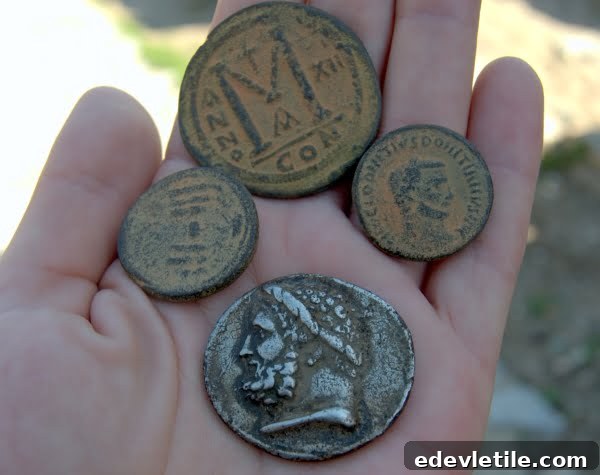
I considered them souvenirs, paid, and intended to forget the encounter. The following day, while photographing the Temple of Artemis at the far end of town, another local approached and struck up conversation. After a brief chat he produced three coins and used the same rehearsed approach, claiming to be an excavation worker selling items he had found.
Later that day I spoke with locals about the scheme. One person said he had tried the line for a week but couldn’t keep a straight face, so he made nothing. Another admitted a friend had once sold a fake coin to an American tourist for 500 USD. These conversations made it clear this scam has been around for years and comes in several variations, all designed to part tourists from large sums of money.
The Law Regarding Antiques and Artefacts in Turkey
- Work on excavation sites in Turkey is limited and tightly controlled. Such projects are usually funded by universities, institutions, or government bodies, and positions are typically reserved for qualified archaeologists, affiliated staff, or history students. Unofficial workers do not have legal rights to claim finds, so buying items presented as excavation discoveries may mean participating in theft.
- Turkish law prohibits taking antiques or artefacts over 100 years old out of the country without proper certification and licenses. Items discovered by the public should be handed to the nearest museum or relevant authority.
- The authorities do enforce these rules. There have been arrests in other cases where people were found buying or attempting to export alleged antiquities without the necessary documentation.
After returning home I researched the matter and found reports of similar scams in Selcuk dating back many years. The cons vary, but the aim is consistent: to extract large sums from unsuspecting visitors who love history. If you plan to visit Selcuk, be alert for sellers offering coins or artefacts, especially if they claim to have taken them from excavation sites. Warn friends and fellow travelers as well — nobody should be pressured into paying hundreds of dollars for items that may be fake or illegally obtained.
Update
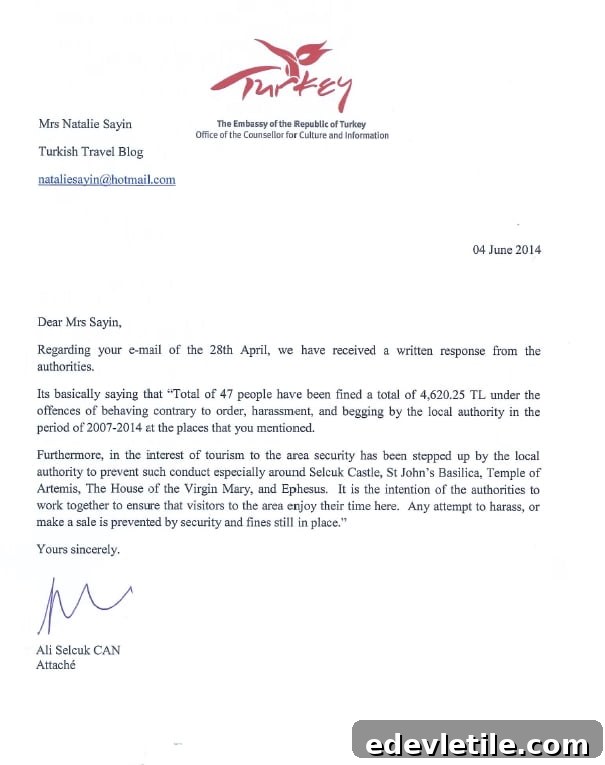
After this article was published, I received a response from local authorities regarding the issue.