Ephesus Ruins: Explore the Ancient City of Ephesus
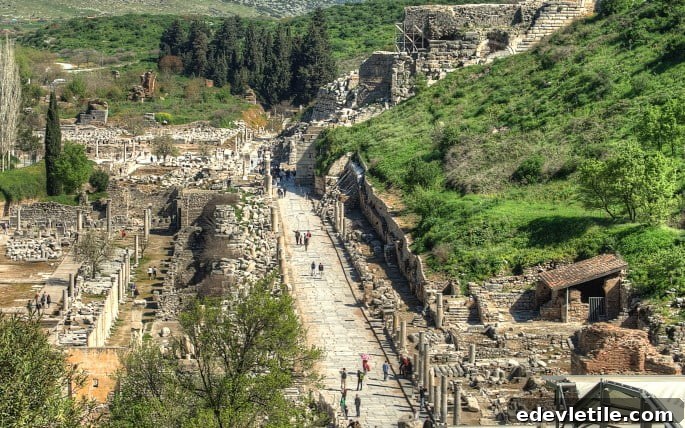
To visit the ancient city of Ephesus in Turkey is to explore one of the largest and most impressive Roman archaeological sites in the world. Turkey’s layered history means the country is rich in ruins from many civilizations, but Ephesus stands out on the Aegean shore. Attracting thousands of visitors daily, Ephesus is to western Turkey what the pyramids are to Egypt or the Colosseum to Rome, with about three million people passing through its gates each year.
Table of Contents
Toggle
As a key centre of the early Christian Church, Ephesus began as an ancient Greek city and later became famous for the Temple of Artemis, one of the Seven Wonders of the Ancient World. The apostle Paul, Saint John and, according to tradition, the Virgin Mary all spent time in or near the city. Today the open-air museum presents extensive excavations that reveal the rise and fall of a once-great metropolis. For history lovers, architects, and curious travellers, Ephesus is an essential stop.
About Ephesus Ancient Ruins in Turkey
How Old is Ephesus?
Ephesus has a long and varied history. Archaeological evidence shows habitation from around the 10th century BCE when Ionian Greeks founded the coastal settlement. Over centuries the city thrived in trade, culture and intellectual life, contributing significantly to ancient architecture and learning. Ephesus later experienced Persian influence and became part of the Roman world in 129 BCE.
Ephesus and the Glory Days of the Roman Empire
Under Roman rule, Ephesus served as the capital of the province of Asia and enjoyed economic prosperity and cultural prominence in the eastern Mediterranean. Its port on the Aegean facilitated trade across the region, and the city became renowned for its public buildings, markets and religious sites. Early Christian communities took root here: Paul wrote to the Ephesians in the New Testament, and later traditions link the Virgin Mary and St. John to the area.
Over time the city declined as the harbour silted up and trade routes shifted. By the end of the Late Antiquity period much of Ephesus was abandoned and gradually covered until nineteenth-century excavations exposed its monumental remains.
My Visit to Ancient Ephesus City Ruins
Located near Selçuk and Kuşadası in the İzmir region, Ephesus is easily reached from popular Aegean resorts. This account reflects several visits over the years: initial curiosity on a first trip, growing appreciation on a second, and deep admiration by the third. The site’s scale and the quality of its remains become more impressive with each return.
Practical considerations: Ephesus is extremely popular and can be crowded—many cruise passengers and coach tours arrive mid-morning. To avoid crowds and capture clearer photos, aim for the site’s opening at 08:00. The main route through the ruins is linear, so independent visitors may end up walking the path twice; hiring a licensed guide or arranging transport at the far end makes the visit far more convenient.
Notable Landmarks, Temples and Statues
Signage across the site gives brief descriptions and dates for major finds. Highlights include:
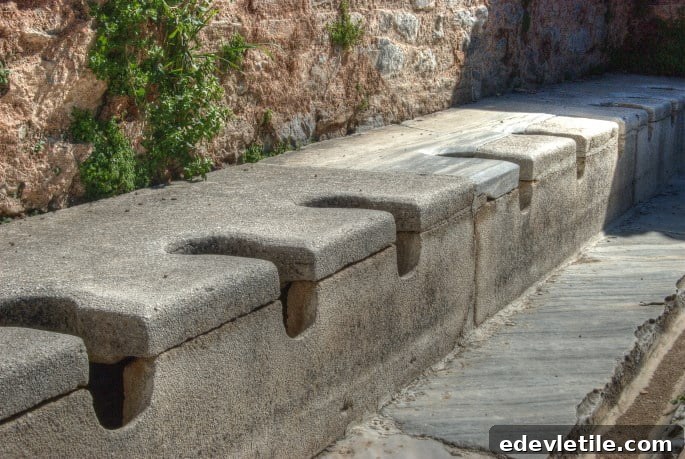
Public Latrines: Roman public latrines formed a social space around a small courtyard. Wealthy Romans once had attendants warm their seats; today the latrines are preserved and cordoned off for protection.
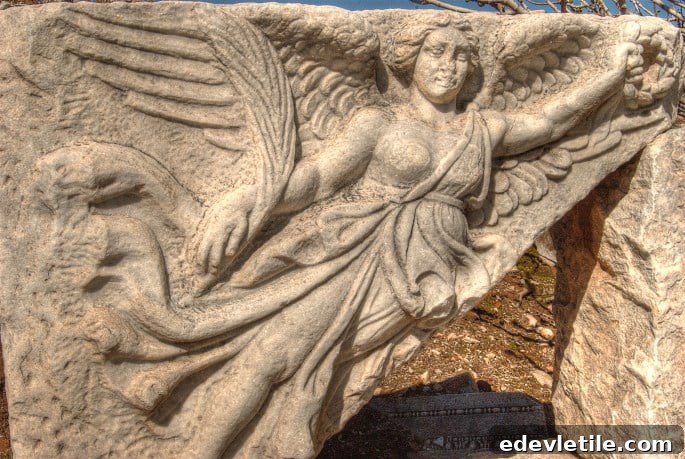
Nike, the Winged Victory: A small statue honoring the goddess of victory recalls a time when Greek and Roman deities were central to public life.
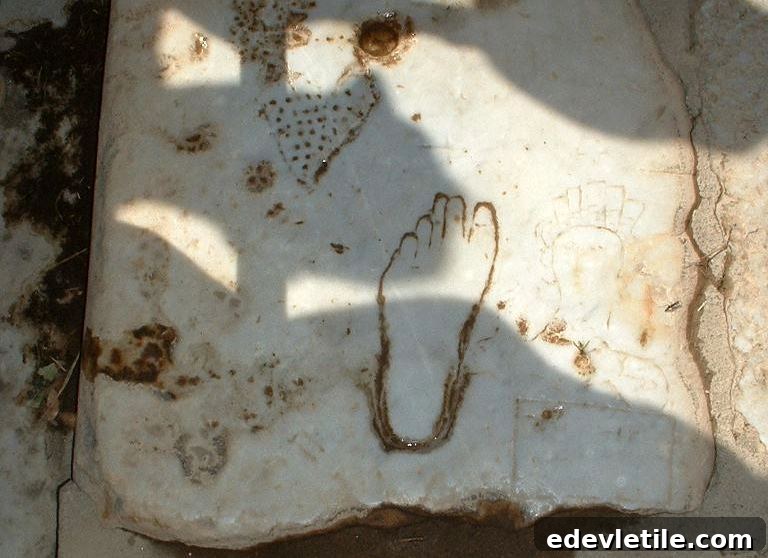
The Footprint: A carved footprint once guided visitors to the ancient brothel, a reminder of everyday life in Roman cities.
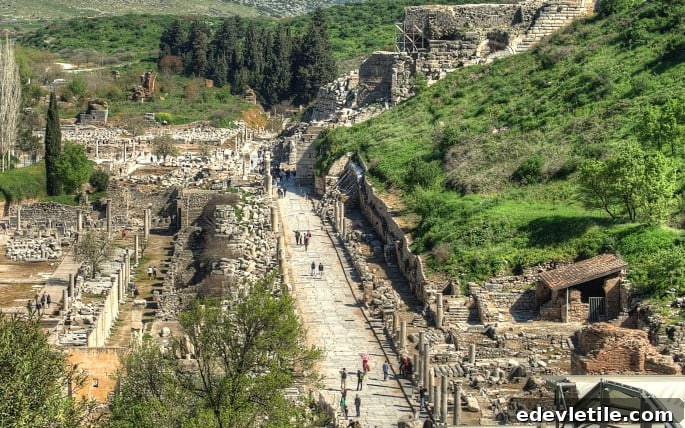
Marble Street and the Commercial Agora: Marble Street runs through the heart of Ephesus toward the Great Theatre and was a major ceremonial and commercial artery. The nearby agora served as a bustling market and meeting place.
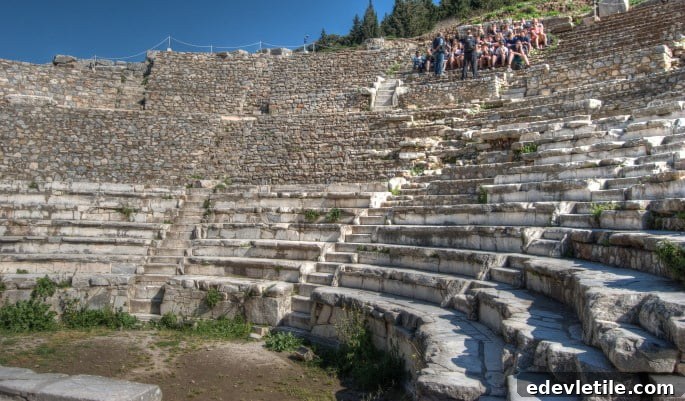
Bouleuterion (Odeon): This smaller, semicircular assembly building hosted civic and political gatherings for influential citizens.
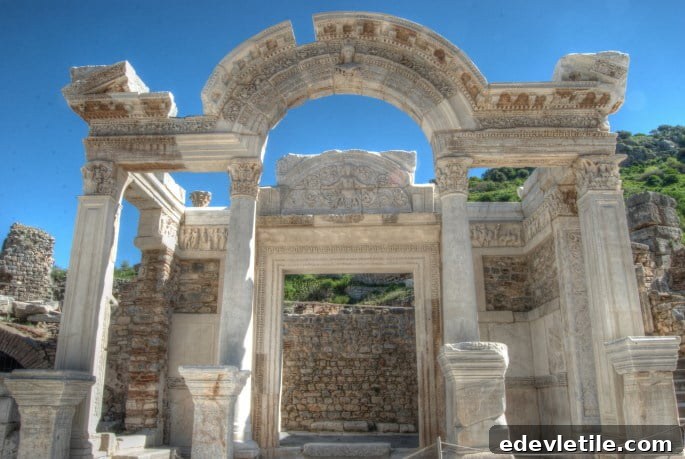
Hadrian’s Temple: Dating from around 138 AD, the Temple of Hadrian features sculpted reliefs and scenes tied to Ephesus’s founding myths and local legends.
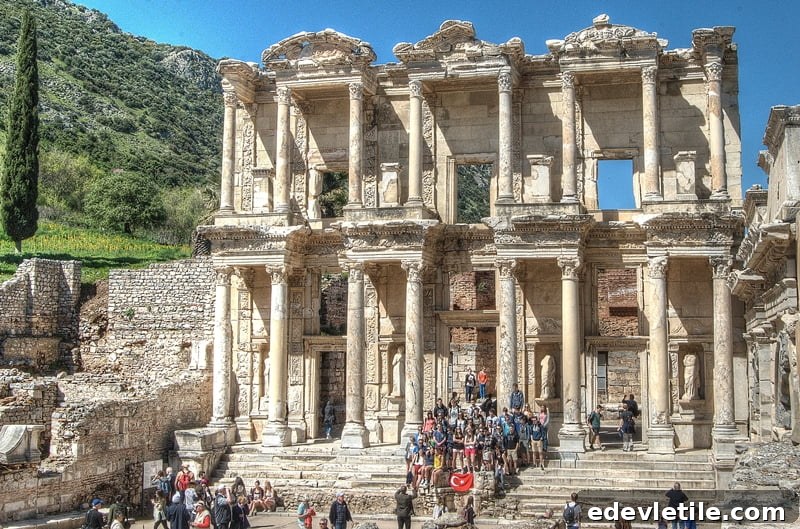
The Ancient Library of Celsius
The Library of Celsus, completed around 135 AD, once housed an estimated 12,000 scrolls and served as one of the most important repositories of knowledge in the Roman-Greek world. Built by Gaius Julius Aquila in honour of his father, the façade remains one of Ephesus’s most iconic sights.
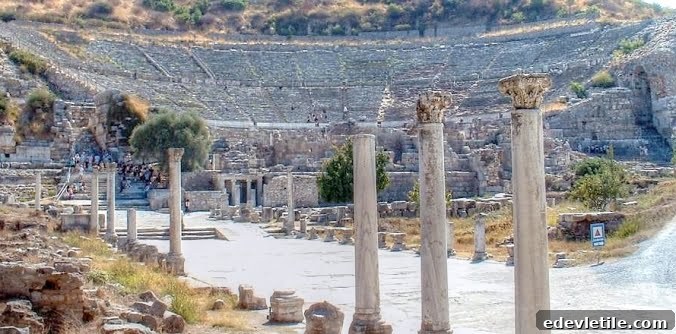
Ruins of the Great Theatre of Ephesus City
The Great Theatre dominates the lower city and once seated an estimated 24,000 spectators for performances, public assemblies and contests. From its upper steps the scale of the structure is striking and gives a vivid sense of how public life unfolded. Early Christian accounts also link the theatre to the riot against silversmiths associated with the worship of Artemis.
Roman City Houses on the Northern Slopes
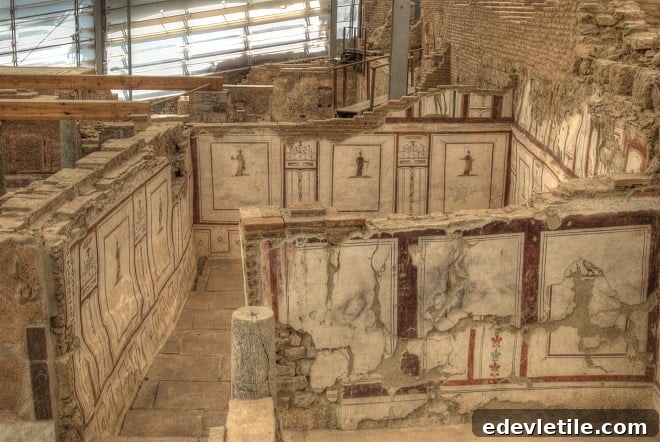
Purchasing the additional ticket grants access to six well-preserved terrace houses where wealthy residents lived. These houses display intricate mosaics, frescoes and features such as underfloor heating and private baths, offering a rare insight into elite domestic life in the first century.
The Famous Temple of Artemis
The Temple of Artemis, also called the Temple of Diana, was a major Greek sanctuary and one of the Seven Wonders of the Ancient World. Originally built in the 6th century BCE and rebuilt several times, its crowning Hellenistic phase included a vast colonnade and monumental statue of Artemis. The temple attracted pilgrims and offerings for centuries until it fell into disuse and was dismantled through late antiquity. Today its site lies near the modern town of Selçuk, accessible en route to Ephesus.
Cats of Ephesus Turkey
One charming feature of Ephesus is its resident cats. Sleeping on ancient stonework and Roman inscriptions, these animals add personality to the ruins and are a beloved sight for many visitors.
Summary and Reasons to Visit Ephesus
- Historical significance: Ephesus offers a unique chance to walk through a city that played central roles in ancient Greek, Roman and early Christian history.
- Well-preserved ruins: Landmarks such as the Library of Celsus, the Great Theatre, the Temple of Artemis and the Terrace Houses remain remarkably intact.
- Religious importance: The site connects to early Christian figures like Paul and John and nearby devotional sites related to the Virgin Mary.
- Accessible location: Ephesus is easy to reach from Aegean resorts; many tours and local transport options make day trips straightforward.
Should you go on a Guided Tour of Ephesus City?
Licensed Turkish guides bring historical context to the site and can significantly enhance your visit. Their training and examinations ensure accurate information and useful storytelling. If you prefer to explore independently, consider renting an audio guide at the entrance or bring a good guidebook so you understand the significance of what you see.
See Artefacts in the British Museum
For those who cannot travel to Turkey, collections in major museums preserve architectural fragments and artefacts from Ephesus. Exhibits commonly include remnants from the Temple of Artemis, sculptures, inscriptions, coins, pottery and reconstructions that shed light on the city’s civic and domestic life.
Was Ephesus in Greece or Turkey?
Ephesus is located in modern-day Turkey. Founded and developed by Ionian Greeks in the first millennium BCE, it later became a vital Roman provincial capital. Its Greek origins and Roman prosperity both contribute to the mixed cultural heritage visible in the ruins.
Also, Visit Nearby
Nearby attractions complement a trip to Ephesus:
Virgin Mary’s House: Situated near Selçuk, this site is a pilgrimage destination traditionally associated with the Virgin Mary and visited by several popes. It is maintained by caretakers and open to pilgrims and tourists.
Saint John’s Basilica: Located on Ayasuluk Hill in Selçuk, the basilica and the site associated with Saint John offer insight into early Christian history in the region and remain an intriguing stop for visitors.