Secrets of Yüksek Monastery and Church — Hidden History Revealed
Whenever locals tell me about a little-known attraction that isn’t in guidebooks, I get excited and feel an urgent need to visit. That was my reaction when I first heard about Yüksek Monastery and Church.
On this trip my private guide and driver took me to the small district of Güzelyurt in Cappadocia. I had wanted to visit for a long time because of the town’s rich Greek history—Güzelyurt is considered one of the region’s most evocative Greek settlements.
The drive was long, but my guide Cansu filled the time with local stories and historical details that made the journey fly by. It was spring, and the flat plains of Cappadocia were a patchwork of colour, dominated in the distance by Mount Hassan.
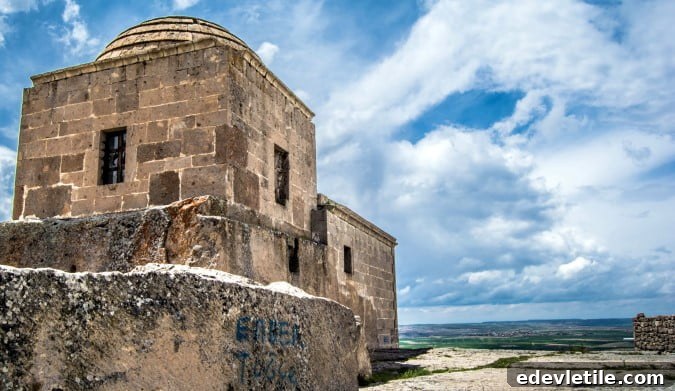
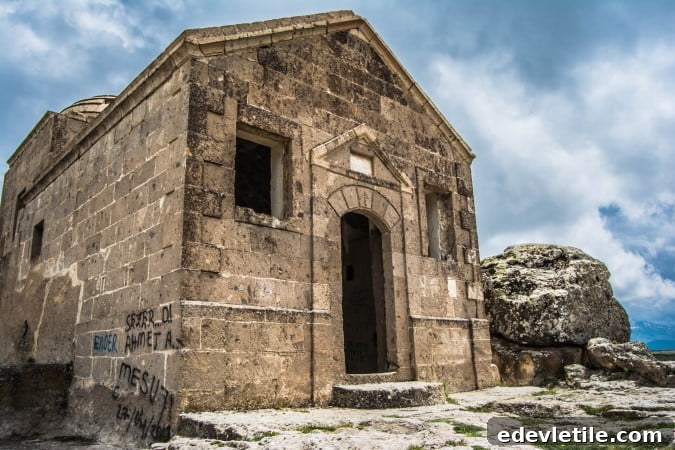
Suddenly Cansu braked, pulled over, and reversed down a narrow rocky track that looked as if it led nowhere. He told me there was a small old church nearby that I might like to see. As we drove down the path a lake and a large rock face came into view, and on top of the rock were the ruins of a small building.
Visiting Yüksek Church
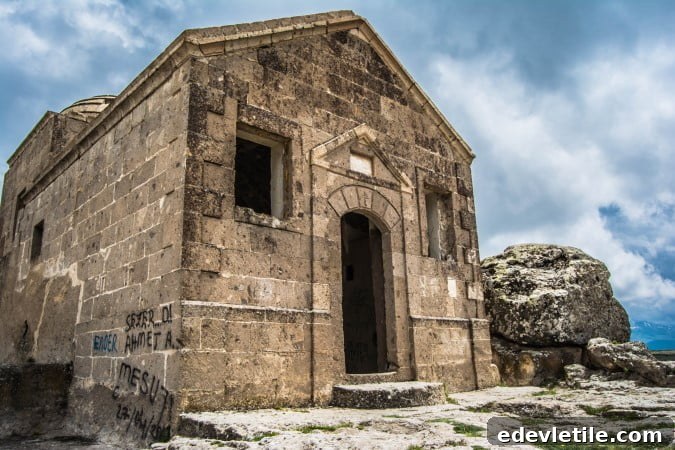
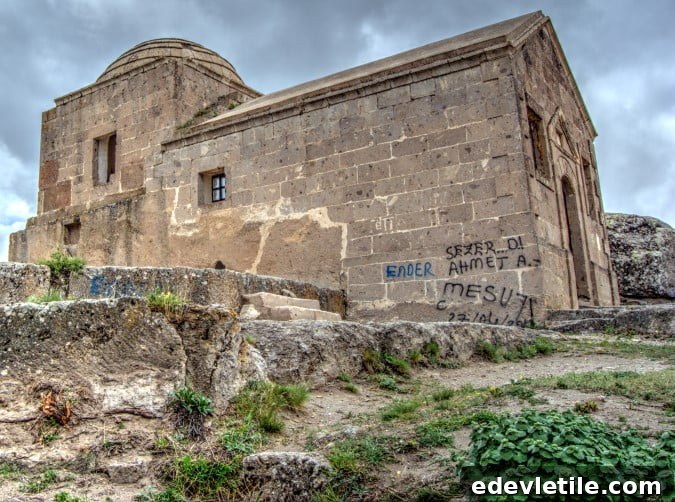
Known locally as Yüksek—literally “high” in Turkish—its original name was Analipsis, built by the Greek community in 1894. The church commands a clear view over the man-made Gelveri Lake; Gelveri was also the town’s name when Greeks lived here. Most of the Greek residents were forced to leave in 1924 after the Treaty of Lausanne, exchanged for Turks sent to Greece.
Many descendants of those deported still return to Güzelyurt every year. I wondered what they would think if they came here and found the interior covered in childish graffiti—signatures carved and painted as if to announce “someone was here.” It was disappointing, but sadly I have seen similar damage in other historic sites across Turkey, a result of ignorance and a lack of interest in preservation.
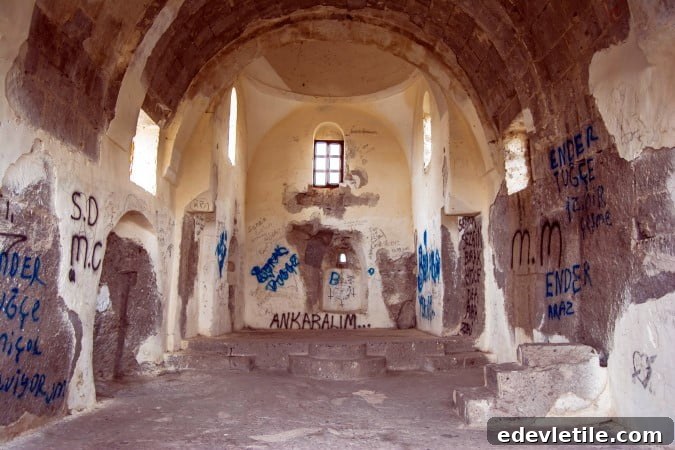
Inside, grooves in the walls mark where a wooden partition once separated the nave and congregation from the pulpit. This building is far simpler than the grand churches of Europe or Constantinople—modest and plain, clearly designed for a community of monks pursuing a life of spiritual discipline. Whether the monks embraced simplicity as devotion or privation is hard to say.
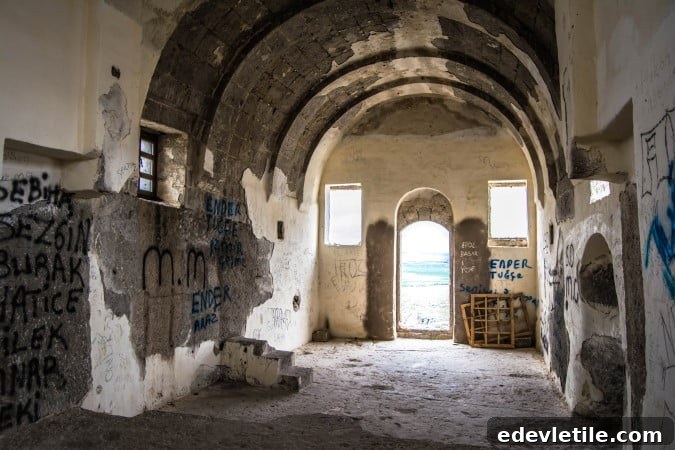
Inside Yüksek Monastery
To the right of the church sits a small complex that once served as the monks’ living quarters. Calling them bedrooms feels generous—these were cells: four bare walls with a raised stone platform by the window where a monk’s simple bedding would have been placed. The austere rooms felt more like prison cells than restful retreats.
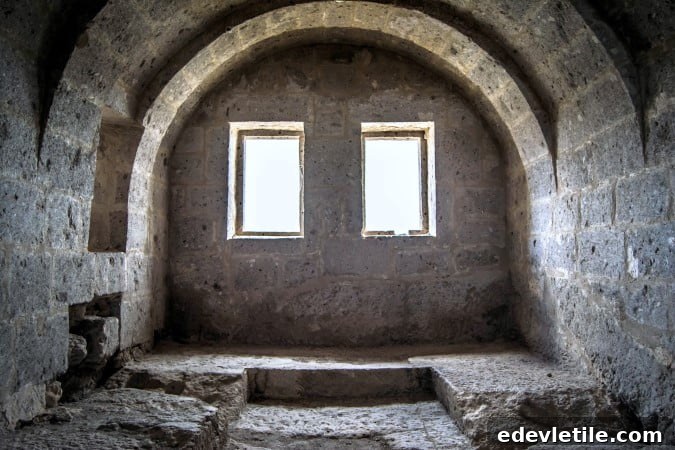
Imagining anyone living that way, isolated in the middle of nowhere, was unsettling. I wanted to believe they had a deep faith that sustained them, because otherwise the life would have seemed unbearably bleak.
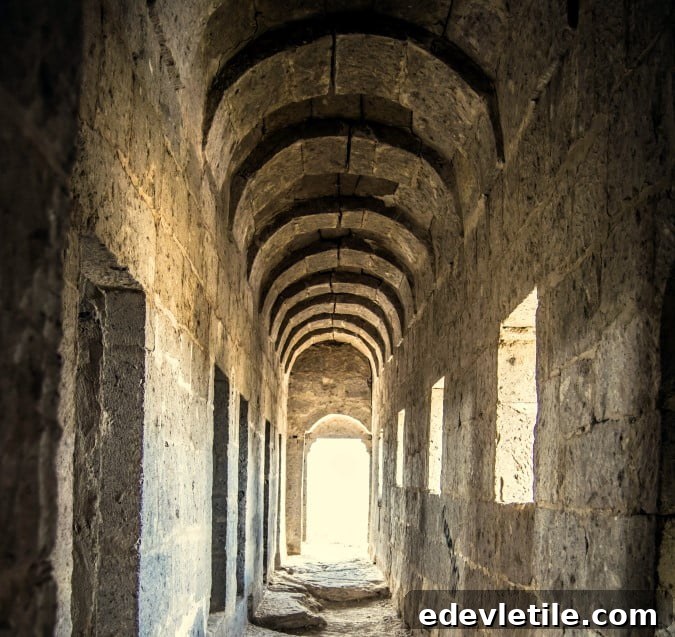
The uneasy feeling stayed with me, as though I were an uninvited guest in a private home. I hurried through the narrow corridor to the exit and climbed the compound wall to walk around the site and breathe in the open air.
Then I stopped. In front of me stretched a breathtaking view: Mount Hassan rising above flat green fields. Perhaps this landscape is why the monks chose this location—the mountain’s majesty might have helped them feel closer to the divine. For me the scene required no spiritual context; it was simply stunning natural beauty. I found myself unable to do anything but say “wow” repeatedly.
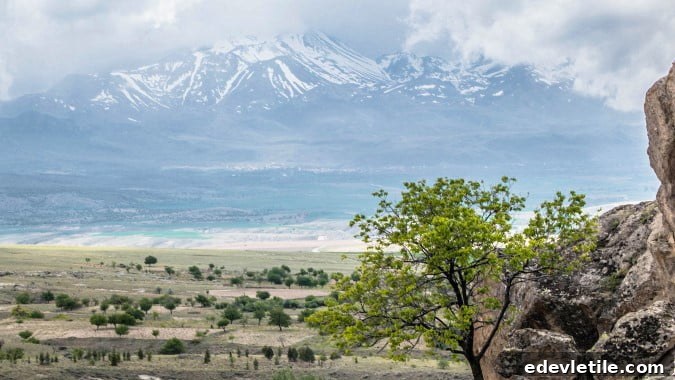
I left soon after. I would return to admire Mount Hassan’s view, but I have no desire to revisit the bleak interior of the monastery. Still, the site would make an evocative backdrop for a post-apocalyptic film: its empty rooms and weathered walls suggest secrets and stories waiting to be uncovered. The word apocalypse also carries the older meaning of revelation—perhaps this lonely monastery holds untold tales.