Was John the Apostle Really Buried at Selçuk’s Basilica?
Saint John’s Basilica in Selçuk remains a compelling site long after a visit. The wider area around Selçuk is rich in early Christian history: the nearby grand theatre of Ephesus is the scene in the New Testament where Paul faced the angry silversmiths for challenging the worship of Artemis, and the hill above the town is home to the location traditionally identified as the final home of the Virgin Mary. For anyone interested in biblical history, Selçuk and its surroundings form an essential stop.
The evidence linking Saint John personally to Selçuk is largely historical rather than definitive archaeological proof. Historical sources indicate that John spent significant time in the Ephesus region and is said to have died there at an advanced age, near a century old. Tradition places his burial on Ayasuluk Hill. As Christianity grew, a memorial and later a monumental tomb were erected on the site; in about 565 CE Emperor Justinian I commissioned a church over that tomb, establishing the basilica that visitors see today.
Visiting Saint John’s Basilica in Selçuk
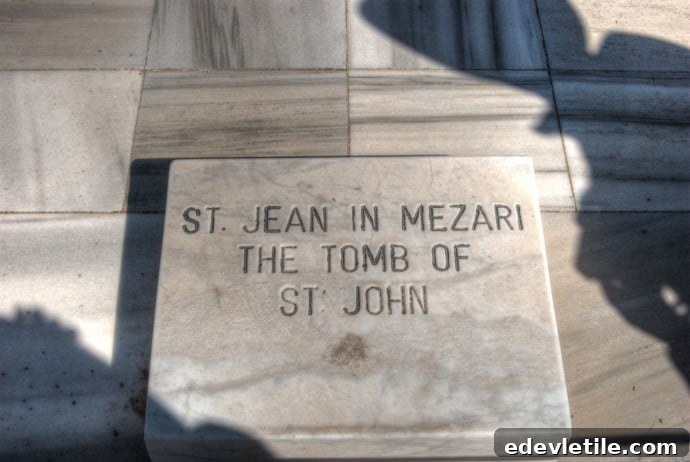
The present ruins are modest. Approaching the site from the shadow of Selçuk Castle, the first thing that catches the eye is a simple stone marker inscribed “The Tomb of Saint John.” The memorial’s unadorned appearance underlines how different the lived past must have been from what remains today.
On a busy day the site can feel more like a tourist stop than a place of quiet pilgrimage. During my visit, groups of tourists circulated through the ruins, and there was little sense of solemnity or supernatural presence. That said, the scale and layers of the complex still relay its historical importance.
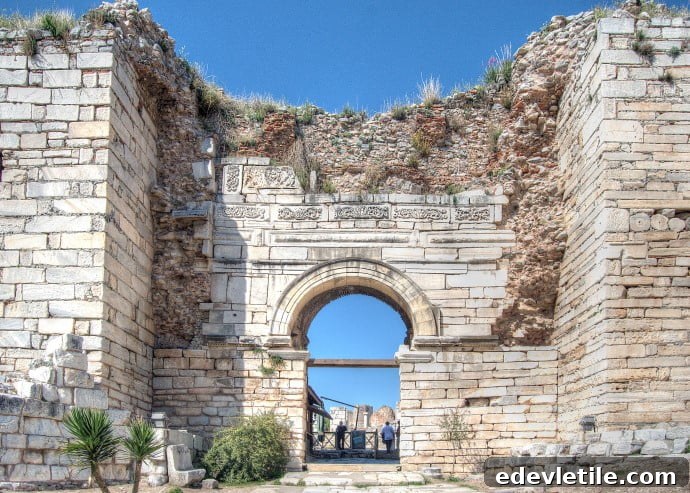
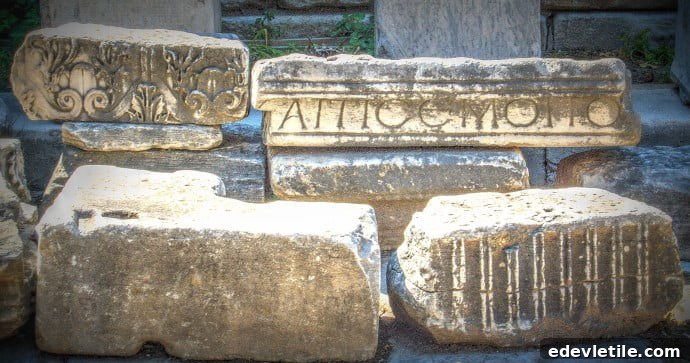
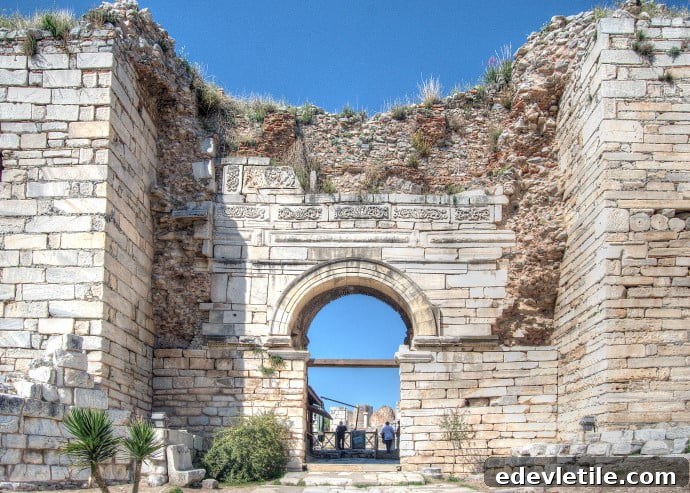
From the central tomb area, brick and stone walls, fragmentary columns and the remains of vaulted spaces invite the imagination to reconstruct the basilica’s original grandeur. Ongoing excavations mean some sections remain cordoned off, while other parts present as clustered ruins or scattered architectural fragments rather than intact structures.
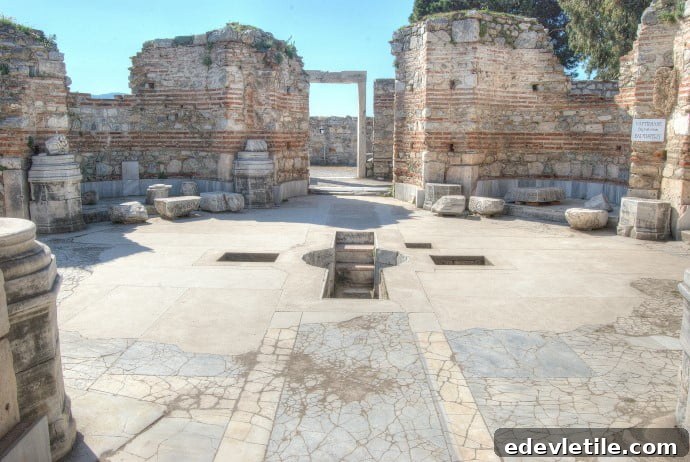
A highlight is the area interpreted as the baptistry. Here a central pool is still visible, and a small adjacent niche suggests where important rites once took place. While the famous frescoes and decorated ceilings have not survived, the baptistry’s layout makes it easy to picture the baptismal ceremonies that would once have been central to community life.
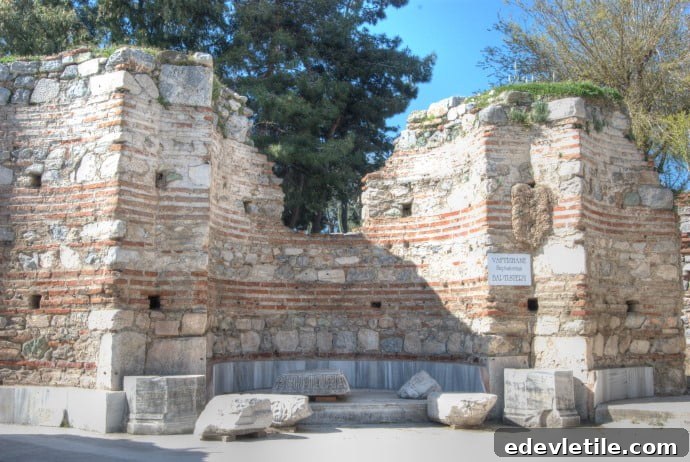
Following the designated visitor path offers pleasant views across the surrounding landscape. From one vantage point the Isa Bey mosque sits down the slope, forming an evocative scene of overlapping religious histories. The typical self-guided visit through the basilica can be completed in around an hour, though a guided tour or a detailed guidebook will enrich understanding by supplying historical context and architectural interpretation.
Is Saint John really buried here?
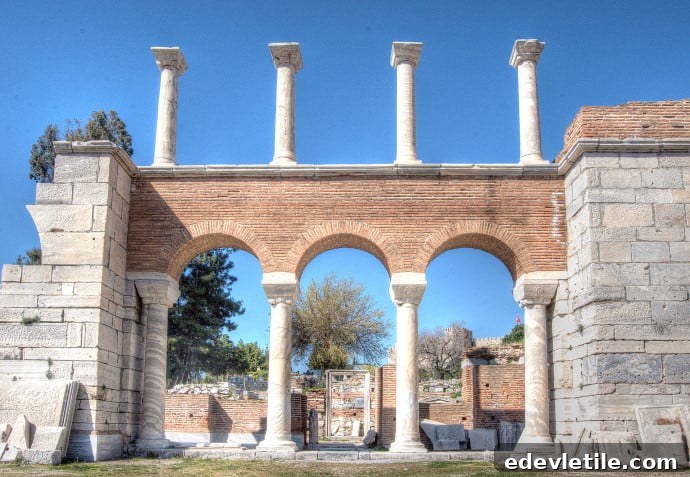
The question of whether the apostle John’s remains are actually here is not conclusively settled. Tradition and historical accounts support the idea that John lived and died in the region and that an early Christian community revered a tomb at Ayasuluk Hill. Archaeological work has revealed a tomb within the basilica complex identified as John’s, but reports indicate that the grave itself is empty and the ultimate fate of any relics or remains is unknown.
Saint John’s Basilica has attracted moments of renewed attention, including a papal visit in 1967 when Pope Paul VI prayed at the site, commemorated by an inscription in Turkish and Latin. Yet, unlike other well-established pilgrimage centers, Selçuk’s basilica has not developed into a major pilgrimage destination in modern times. Signage on site is often brief, and many visitors find that a knowledgeable guide or supplemental reading improves the visit.
The lack of definitive archaeological proof naming the basilica as John’s final resting place leaves the question open. For visitors, the value of the site is twofold: it is both a tangible link to the early Christian world around Ephesus and a place that encourages reflection on how history, tradition, and archaeology intersect.