If a building could hold untold stories, Topkapi Palace Museum in Istanbul’s Fatih district would be one of them. Founded in the 15th century after the Ottoman conquest of Constantinople, Topkapi served as the administrative heart and family residence of the Ottoman sultans for nearly four centuries. Within its walls were political intrigues, fierce struggles over succession, the complex world of the imperial harem, and a court shaped by eunuchs, princes, and viziers. Today the palace is a museum and UNESCO World Heritage site that reveals not only opulent rooms and priceless artifacts but also the human dramas that shaped Ottoman history and influenced millions of lives.
Table of Contents
About Topkapi Palace Museum in Istanbul
Topkapi Palace was the residence of Ottoman sultans from the 15th century until the 19th century and remained a key symbol of imperial authority into the early 20th century. Far from a simple royal home, the complex functioned as a miniature city inside Constantinople: administration, barracks, workshops, kitchens, and living quarters housed thousands of people. Its role in governing a vast empire and its architectural legacy make Topkapi Palace one of Istanbul’s most important heritage sites.
The First Ottoman Sultan Mehmed II
Sultan Mehmed II, the Conqueror, left an indelible mark on Topkapi. After capturing Constantinople in 1453 and ending the Byzantine Empire, Mehmed II selected the city as his capital and established Topkapi Palace as his principal residence and administrative center. Built on the old Byzantine acropolis, the palace commands views of the Golden Horn and the Sea of Marmara and became the nerve center of the expanding Ottoman state.
Topkapi Palace During the 18th Century
In the 18th century, the palace underwent significant renovations and additions. Sultan Ahmed III sponsored new pavilions and courtyards influenced by Baroque and Rococo styles, which altered parts of the complex’s appearance. Although Topkapi remained the imperial residence, this period also marked the beginning of a slow shift in political power, as new institutions and external influences began to erode the palace’s exclusive role in state governance.
During the 19th Century
The 19th century brought dramatic change. Internal upheaval and external pressures affected the imperial court; notable tragedies, such as the killing of Sultan Selim III during a Janissary revolt in 1808, occurred within palace walls. European tastes and neoclassical influences also shaped later renovations, reflecting broader attempts to modernize the empire. By the late 19th century the sultans increasingly adopted ceremonial roles while decision-making shifted beyond Topkapi.
8 Interesting Facts about Topkapi Palace
- Sultan Ibrahim, often called “Ibrahim the Mad,” is reported to have ordered the removal and execution of many concubines he suspected of plotting against him.
- The “kafes” or cage was a secluded part of the palace where potential heirs were sometimes held to prevent lethal succession disputes. Some historians link lifelong confinement to the mental instability of certain sultans.
- Sultan Selim II was both born and died at Topkapi; his life was marked by excess and a reputation for indulgence.
- Roxelana, brought to the palace as a young slave, rose to become Hurrem Sultan and one of the most influential women in Ottoman history after marrying Suleiman the Magnificent.
- Male servants in the harem were often castrated to prevent relationships with concubines; eunuchs later took on important administrative and custodial roles.
- Sultan Murad III fathered a large number of children and early in his reign had several brothers executed to secure his throne, a brutal tactic not uncommon in palace succession struggles.
- Many harem women were trained in languages, music, and courtly arts; for some, life in the palace offered social mobility and education.
- Murad IV had a violent reputation and died young; multiple accounts describe harsh punishments and extreme behavior during his reign.
The Imperial Gate and First Courtyard
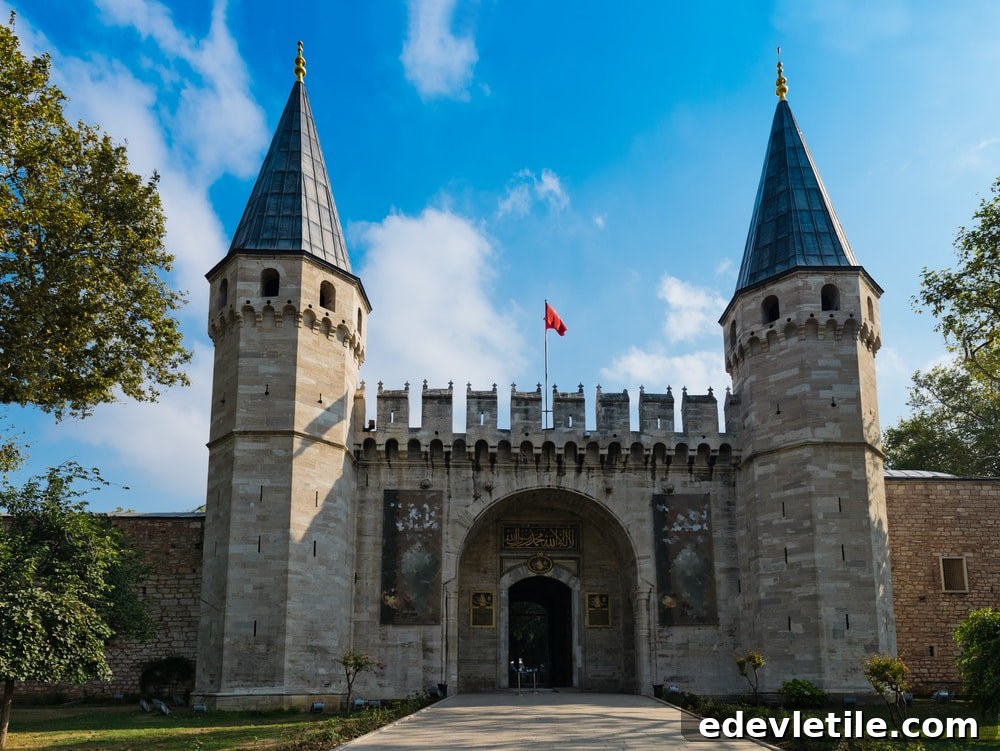
Visitors enter the complex through the Imperial Gate, which faces Sultanahmet Square. The First Courtyard, also called the Court of the Janissaries, served as a public space for gatherings, ceremonies, and military displays. It contained barracks and support buildings for the elite Janissary corps and reinforced the visible power of the Ottoman military within the palace precincts.
Second Courtyard of Topkapi Palace
The Second Courtyard, known as Divan Square, functioned as the administrative heart of the palace. Entry was restricted to officials and authorized staff. Here you find the heavily guarded Imperial Treasury with its jewels and ceremonial objects, the imperial council chamber where state affairs were discussed, expansive palace kitchens responsible for feeding the court, and numerous administrative offices. The harem complex is also accessed from this courtyard for visitors who choose the separate tour.
Third Courtyard for the Ruling Elite
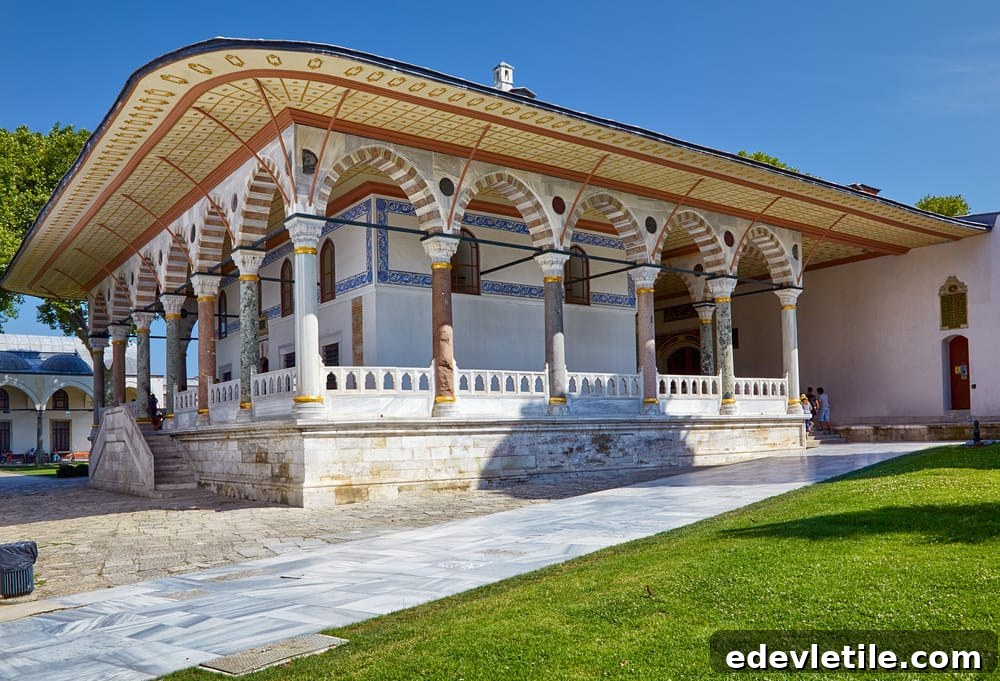
The Third Courtyard, or Enderun Courtyard, lies beyond the Gate of Felicity and served as the inner public zone where the sultan received dignitaries and conducted official duties. The Gate of Felicity marked the separation between public life and the private imperial domains and was guarded by elite troops. The third court also includes elegant gardens, pavilions, the audience chamber for official receptions, and an 18th-century library that houses manuscripts and rare books, as well as the chamber displaying sacred relics.
Fourth Courtyard For the Sultans Only
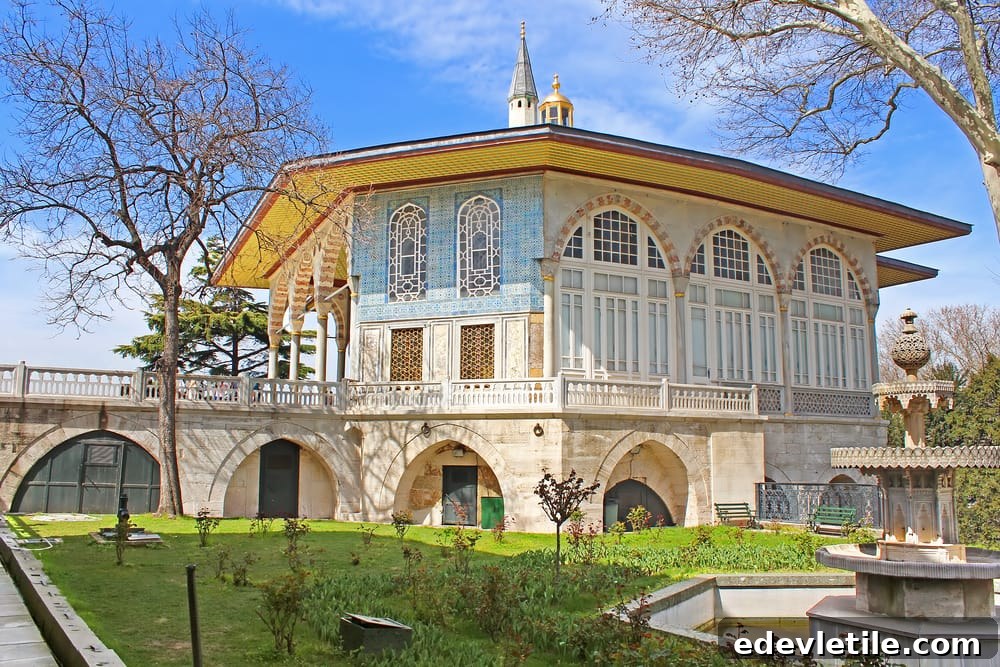
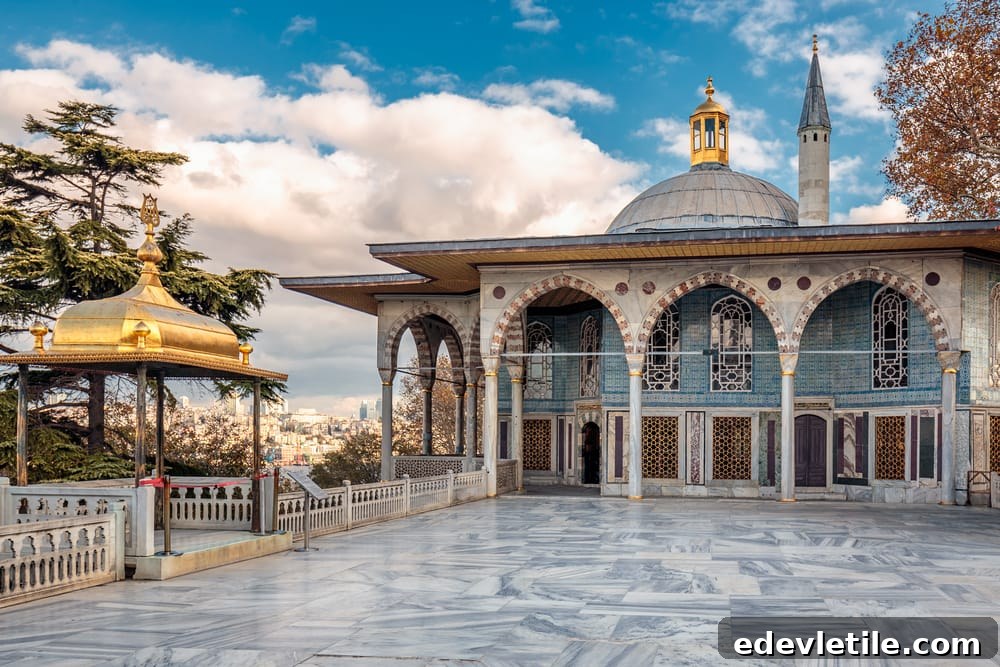
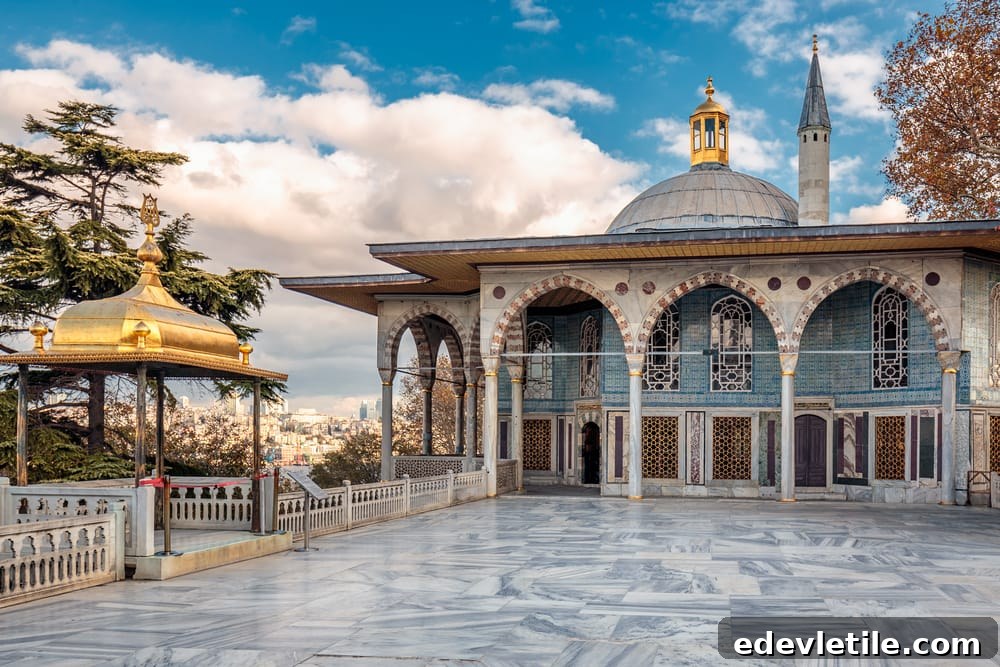
The Fourth Courtyard was reserved exclusively for the sultan and his closest circle. Notable structures here include the Baghdad Kiosk (a 17th-century pavilion named to commemorate campaigns in Iraq) and terraced gardens. Ritual spaces such as the circumcision room for princes are among the intimate ceremonial facilities in this private area.
The Privy Chamber of Topkapi Palace
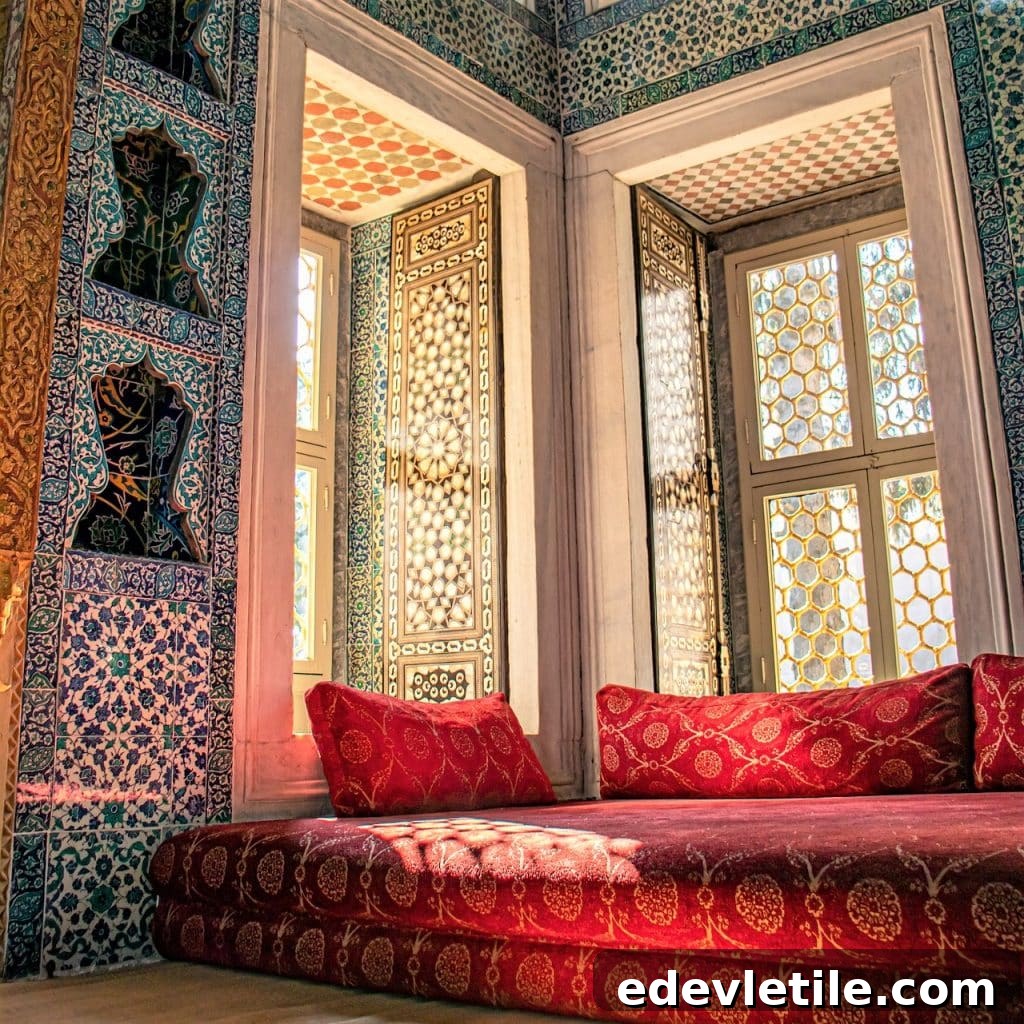
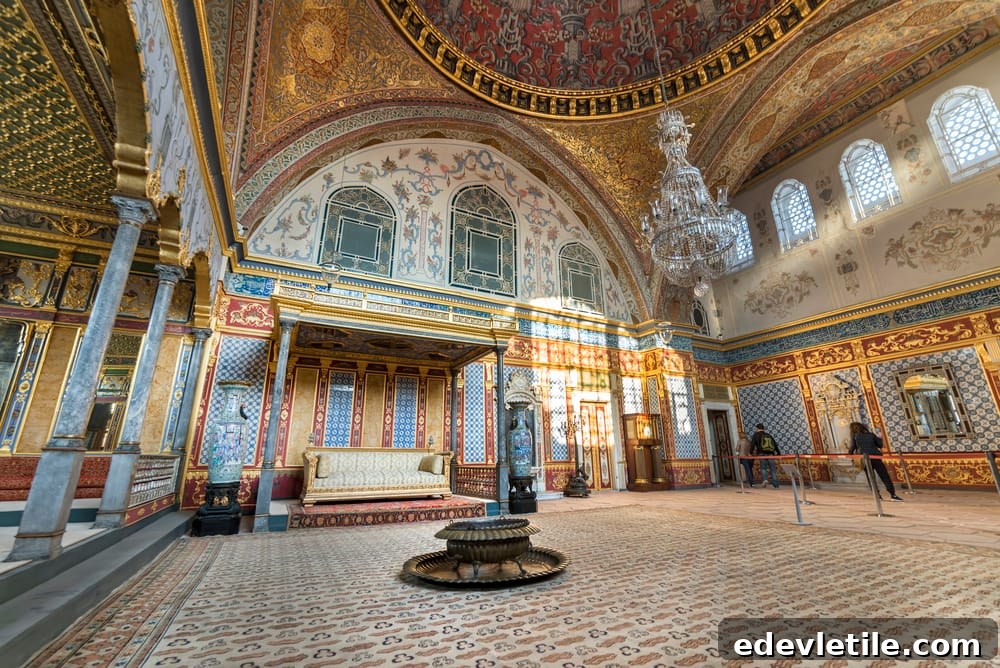
The Privy Chamber formed the most secluded section of the palace where the sultan and his family lived. This inner complex contained the sultan’s private apartments, study, sleeping chambers, and the living quarters of the Valide Sultan (the queen mother) and concubines. Thick walls and additional gates emphasized privacy and security, while richly decorated interiors reveal the luxury of court life.
Behind the Doors of The Imperial Treasury
The Imperial Treasury displays the wealth accumulated by the empire: gold and silver objects, jewelry, precious gemstones, ceremonial weaponry, and historical artifacts. Some items have dramatic stories attached, such as an 18th-century dagger set with diamonds and emeralds, made as a gift that never reached its recipient, and an enormous diamond whose origin is shrouded in legend. The treasury was—and is—carefully guarded, and its collections remain among the palace’s most compelling attractions.
Islamic Holy Relics and the Sacred Safekeeping Rooms
Topkapi houses sacred relics collected by Ottoman sultans over centuries. Stored in protected rooms within the third courtyard and the privy residence, these relics include items revered in Islamic tradition, such as the Prophet Muhammad’s belongings and other preserved objects. These artifacts were treated with deep reverence and remain on display under strict conservation rules.
The Imperial Harem of Topkapi Palace
The harem, a separate and highly organized world inside Topkapi, is well worth the additional ticket price. Far from merely being a place of seclusion, the harem was an educational and political institution where women learned languages, arts, and courtly etiquette. The Valide Sultan oversaw its administration and could wield substantial influence at court. A harem tour passes through the Eunuch Courtyard, baths, the queen mother’s apartments, and other intimate spaces, concluding near the third courtyard.
Role of the Royal Pages
Among the palace staff were royal pages chosen for talent and loyalty from diverse regions. They served the sultan and the court, received formal training in languages, etiquette, and martial skills, and often progressed into influential administrative or military careers. The palace school system cultivated these young men for service to the state.
Hagia Irene Church
Hagia Irene stands inside the outer courtyard near Hagia Sophia. While its foundations date to the early centuries of Byzantium, the current building largely reflects the 6th-century reconstruction by Emperor Justinian I. Historically an Eastern Orthodox church, Hagia Irene has also served as a cultural venue in modern times and remains an evocative part of the Topkapi complex.
Moving From Topkapi Palace to Dolmabahce Palace
In the mid-19th century the Ottoman court moved to Dolmabahce Palace, reflecting changing tastes and the empire’s drive to modernize. Dolmabahce’s European-inspired architecture and lavish interiors signaled an alignment with contemporary international styles and a desire to present a modern, centralized image of rule. The move marked the end of Topkapi’s primacy as the center of daily imperial governance.
Visit Topkapi Palace in Istanbul
Topkapi Palace Museum sits on the peninsula overlooking the Bosphorus, the Golden Horn, and the Sea of Marmara, in the Sultanahmet area of the Fatih district. Its location places it within walking distance of other major sites such as the Blue Mosque, Hagia Sophia, and the Basilica Cistern, making it easy to include in a day or two of sightseeing. Seasonal hours vary, so allow enough time to explore the courtyards, treasury, harem, and displays to appreciate the full sweep of Ottoman history.