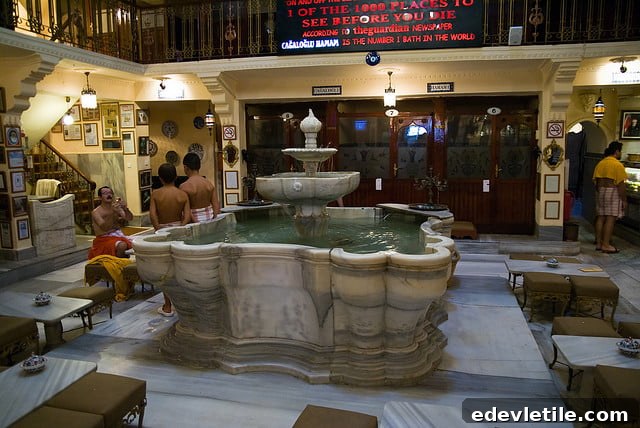
The Turkish bath experience is a familiar recommendation on many lists of things to do in Turkey. While it may not be my personal favorite, it is an important cultural experience worth mentioning for visitors planning a trip.
Many five-star hotels in Turkey include a Turkish bath in their spa facilities. These hotel hamams are often adapted for international guests and tend to be less traditional, catering to travelers who prefer familiar comforts. They can be convenient but often cost more than local options and may not provide the authentic atmosphere some visitors seek.
If you want a more traditional experience, visit a local hamam outside your hotel. Local bathhouses tend to be more authentic and are usually priced more reasonably. Staying in your hotel spa is fine if you prefer convenience, but expect a different pace and style compared with a community hamam.
Turkish Bath Experience for Ladies
 For women worried about modesty or being attended by a male attendant, reputable Turkish baths offer clear options. Many hamams separate men and women into different sessions or rooms, and women are usually attended by female staff. Another common option is “ladies’ days” when only female guests are allowed.
Top Tip for a Good Turkish Bath
A Turkish bath is sometimes mistaken for a sauna with water, but its distinctive feature is exfoliation. The attendant will lather you from head to toe and then use a kese (a rough mitt or loofah) to scrub away dead skin. Even people who shower daily are often surprised by how much skin is removed.
The exfoliated skin can look like tiny rubber shavings. A practical tip is to avoid scheduling a hamam on the last day of your holiday if you want to preserve a suntan—exfoliation can remove the top layer of tanned skin. Also remember that freshly exfoliated skin is more sensitive to the sun, so protect yourself afterward to avoid sunburn.
The Turkish Bath Process
When you arrive, you will be shown a private changing cubicle and provided with a towel or pestemal. Some people report entering the sauna areas unclothed in traditional hamams, but in many modern or tourist-friendly establishments wearing a swimsuit is perfectly acceptable and common.
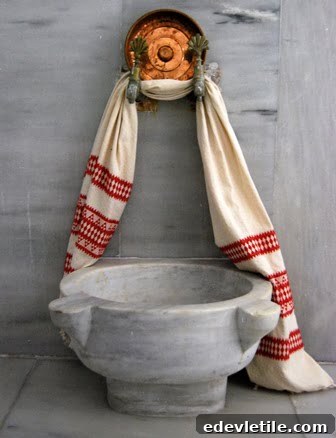
The main bathing room is usually a domed chamber with a heated central marble slab (gobektasi) and seating around the walls. Taps or bowls of cool water are available; if the heat becomes uncomfortable, you can pour cool water over yourself to refresh.
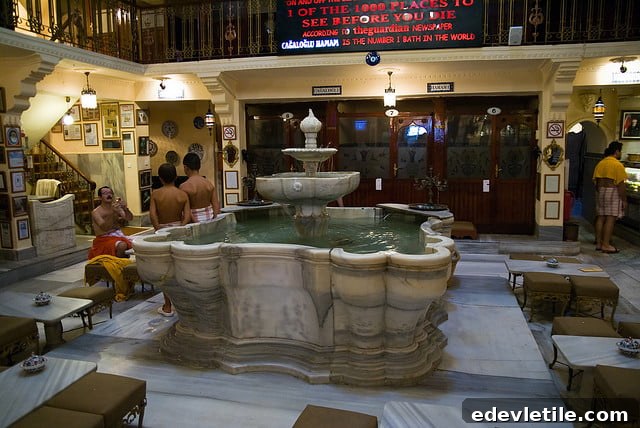
(Image: Cagaloglu Hamam in Istanbul. Built in 1741)
After 20–40 minutes in the heated room, attendants will invite you to lie on the central slab. They will apply soap and often use a bag-like foam application before performing the vigorous scrub with the kese. Once the scrubbing is finished you can rinse, then move to a relaxation area.
In the relaxation room you are typically offered a towel and a cup of warming apple tea. It is customary to sit and chat quietly, enjoying the calm after the treatment. Many hamams also offer additional services such as olive oil massages for an extra fee.
A word of caution: a Turkish bath is deeply relaxing and can leave you feeling sleepy for the rest of the day. Plan light activities afterward and give yourself time to rest and rehydrate.
Further Reading
There are several books and resources that explore the history and customs of Turkish baths, describing traditional etiquette and the remaining historic hamams, particularly in Istanbul. If you are interested in the cultural background, consider looking for illustrated guides and histories that cover traditional practices and notable bathhouses.