Exploring the Roman Terrace Houses of Ephesus: History & Highlights
When the Roman Terrace Houses in Ephesus opened to visitors I was excited. I had listened enviously to others describe the careful excavations and read travel blogs praising the new attraction. Finally, in March of this year, I returned to Ephesus determined to see them for myself.
In addition to the regular Ephesus entrance fee, there is a separate ticket for the terrace houses, which increases the overall cost. Even so, I was confident the visit would be worth it. After walking down the cobbled Curetes Street and passing the upper gymnasium baths and the Temple of Hadrian, I reached the terrace houses near the imposing Library of Celsus.
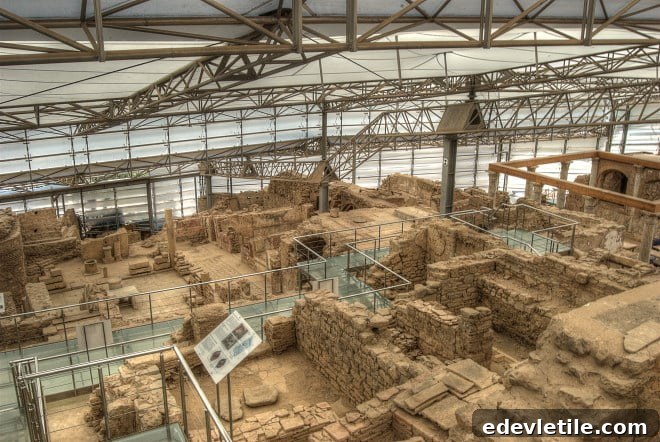
To my surprise there was no queue and I walked straight in. The houses lie beneath a large rectangular glass canopy, and I had expected to hear the low hum of other visitors. Instead, the space was quiet — remarkably, I had the place almost to myself.
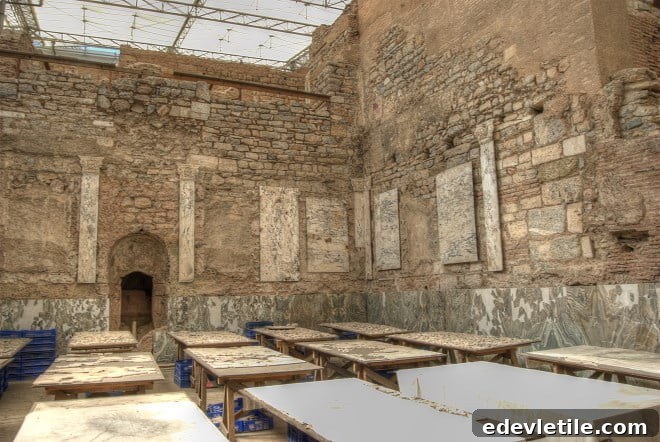
Inside the Roman Terrace Houses of Ephesus
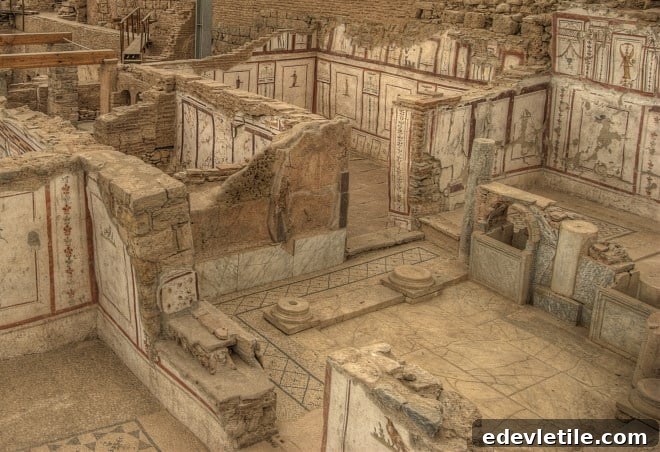
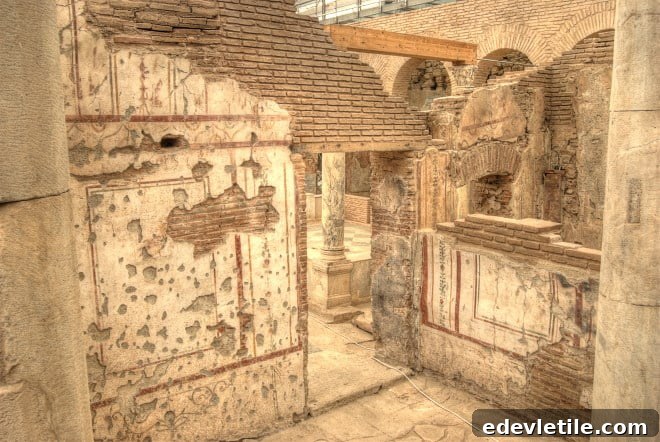
The lack of crowds was a clear advantage: I could move freely and take photographs without interruption. The site is arranged on terraces, with a viewing platform that leads visitors around the excavated apartments built into the hillside. From the lower level you can study mosaics and wall paintings closely, while the upper platform provides a clearer sense of the layout, showing narrow alleys separating the dwellings.
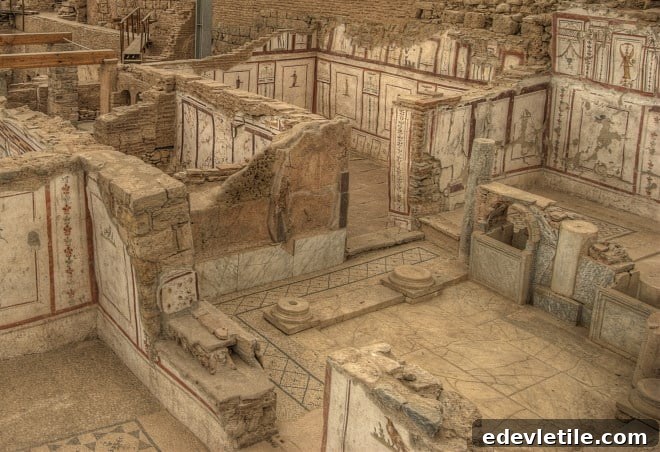
Most of the houses date to the 1st century and were built for very wealthy citizens. Their lavish design included comforts not commonly available to the wider population at the time: underfloor heating, running water and private latrines. These features underline the social differences in Roman urban life and make the site especially interesting for anyone curious about domestic architecture in antiquity.
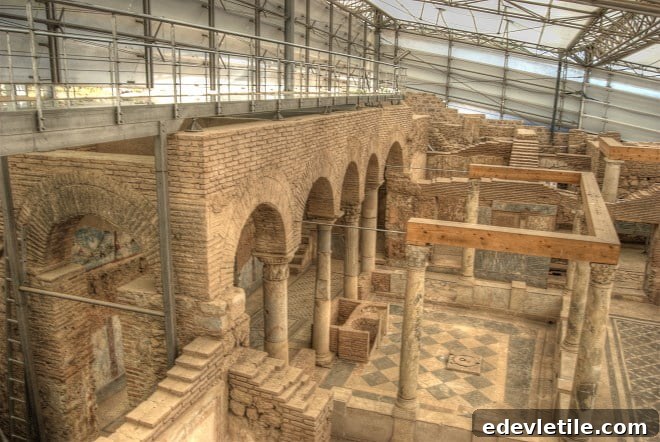
From the top platform, watching two young visitors hurry past, I realized reactions to the site vary. Some move quickly through, while others linger over details. For me, the terrace houses were worth the extra ticket: the preserved mosaics, painted walls and the overall ambience of these domestic spaces provide a vivid glimpse into elite life in ancient Ephesus.
Related articles about my visit to ancient Ephesus
- About the Celsus library
- Exploring the Grand Theatre, the site of the Artemis riots
- An overview of the ancient city of Ephesus