Explore Saruhan Caravanserai: Cappadocia’s Historic Trade Stop
Turkey’s travel scene used to be very different from what it is today. Leisure travel was once largely the privilege of the wealthy and the curious—figures such as Mark Twain, Gertrude Bell, and the Ottoman traveler Evliya Çelebi explored the region—while most people traveled for trade or necessity. A prime example is the ancient Silk Road, a major trading artery that passed through Anatolia on its way to Constantinople.
Merchants along these routes needed safe places to rest and protect their goods, and caravanserais provided that function. Known also as kervansaray, these roadside inns offered food, shelter, and protection from bandits, serving as vital hubs for traders moving long distances.
While many caravanserais dot Turkey, Central Anatolia is particularly rich in well-preserved examples, most of them built by the Seljuk Turks. Seljuk architecture is distinctive: functional, comfortable, and visually striking. Because of their historical and architectural significance, Seljuk caravanserais along routes from Denizli to Doğubeyazıt appear on Turkey’s tentative list for UNESCO World Heritage nomination, reflecting their roots in the nomadic traditions of Central Asian Turkish tribes.
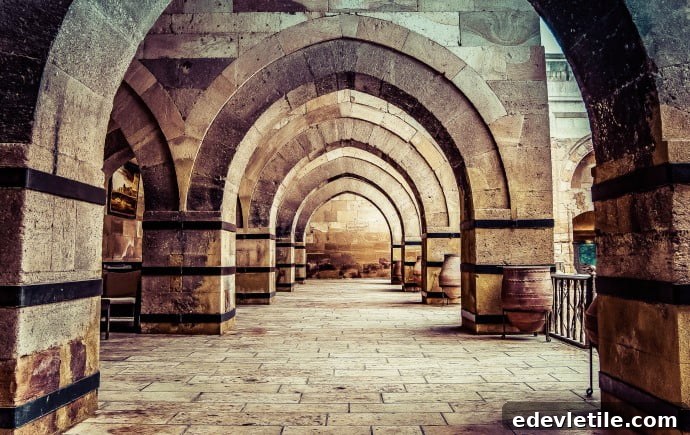
Many of the finest caravanserais are off the beaten path and difficult to reach by public transport. Local guides can make visiting them far easier. I was recommended Sarihan (Saruhan) near Avanos as an accessible example. It’s also known for evening performances of the Whirling Dervishes, though I chose a daytime visit so I could explore at my own pace.
About the Saruhan Caravanserai of Cappadocia
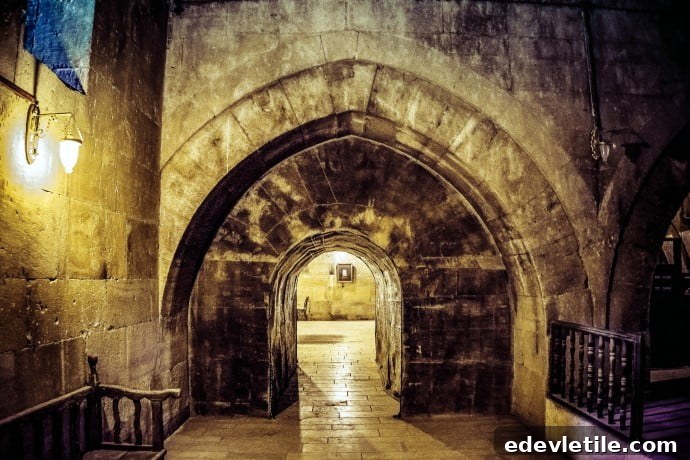
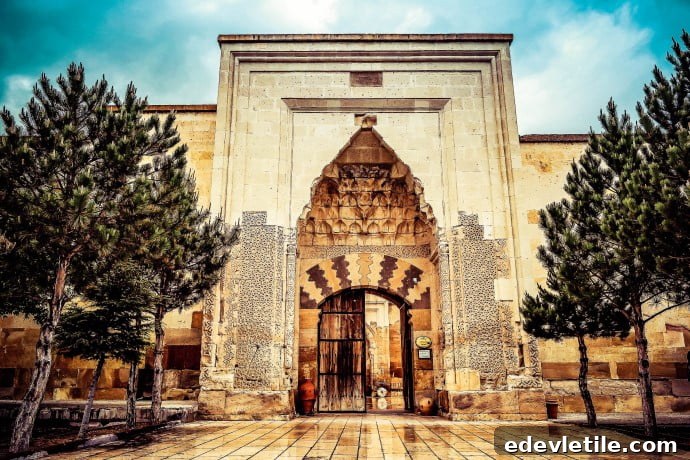
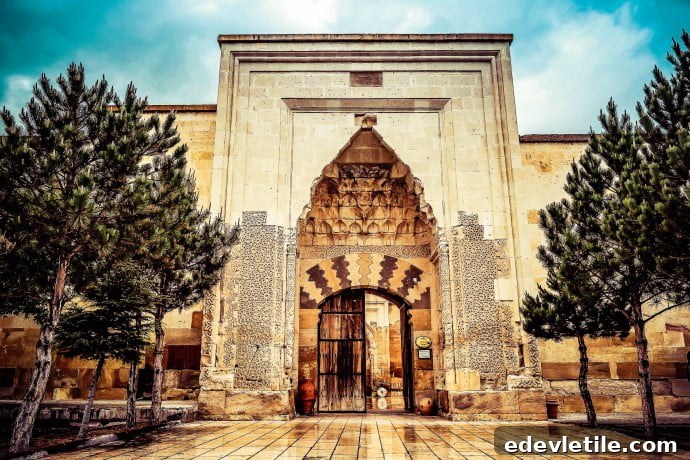
Sarihan, sometimes written Saruhan, was among the later caravanserais constructed in the region, dating to 1259. One immediately noticeable feature is the contrasting stonework: the lower sections are original, while the lighter upper sections are restorations. The word caravanserai itself blends the Persian caravan with saray, meaning dwelling or palace, and historically these buildings sheltered groups of traders, pilgrims, and travelers during long journeys.
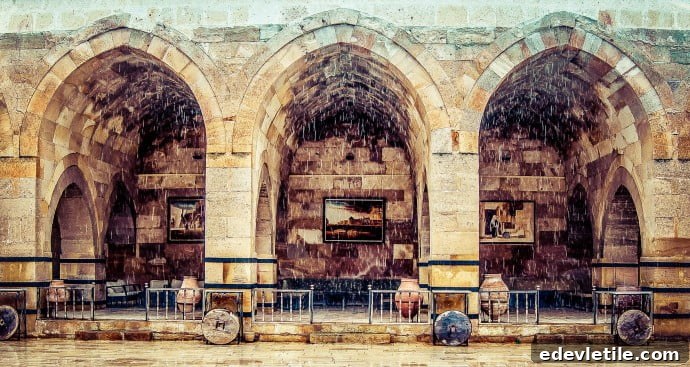
Entering through the grand gated portal, you step into a large central courtyard. Lack of signage makes it hard to identify the original uses of each space, but architectural clues remain: a domed seating area sits to one side while small chambers and doorways open off the courtyard where merchants once rested and stored their goods.
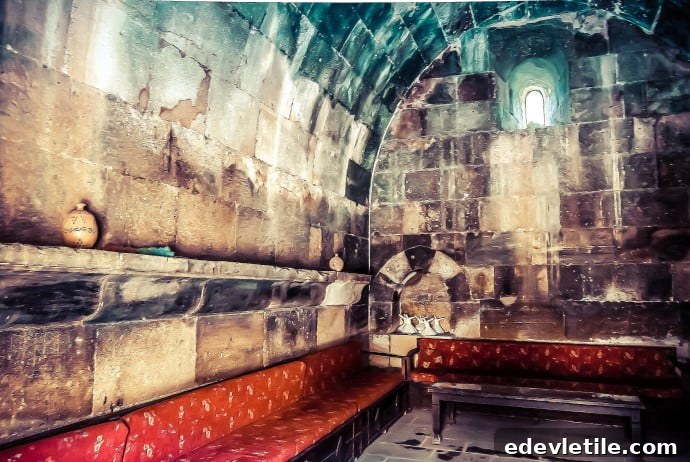
Uniquely, the chamber above the ornate entrance functioned as a masjid—an auxiliary prayer space for travelers—whereas in many caravanserais the prayer area was central in the courtyard. Opposite the main entrance is another ornate doorway leading into a dim hall with an arched domed ceiling; this is the space where the Sema, the Whirling Dervish ritual, is performed. When illuminated at night, the interior’s architectural details become even more striking.
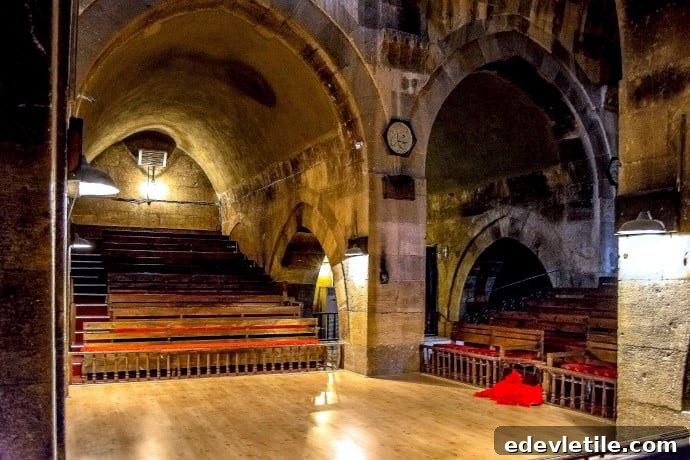
Touring Saruhan and Other Caravanserais of Cappadocia
A thorough walk through Sarihan takes around 20–30 minutes, making it a convenient stop if you are exploring the Avanos area. For travelers wanting deeper insight into caravanserai architecture, Sultanhani and Ağzıkarahan are among the best-preserved examples and well worth the effort. These sites lie farther from urban centers and are easiest to reach by car or as part of a private tour arranged through local guides who offer transport and evening Sema performance tickets.
Visiting caravanserais reveals a layer of Anatolian history that blends trade, faith, and architecture. Whether you arrive for a daytime stroll or an evening Sema, these stone-walled complexes offer a vivid connection to the region’s past and the networks that shaped it.