Laodicea and the Seven Churches of Revelation: History & Meaning
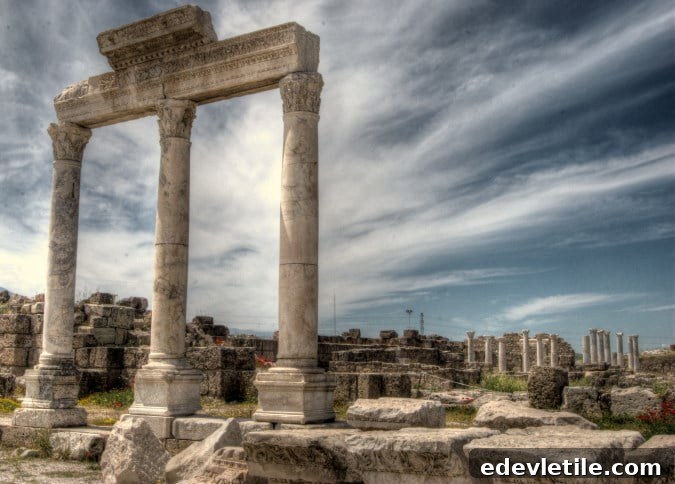
Laodicea was a place I had long wanted to visit in the Aegean region of Turkey. Known as one of the Seven Churches of Revelation mentioned in the New Testament, Laodicea prospered as a major trading centre in antiquity. The surrounding plains were ideal for grazing, and the city became particularly well known for its wool industry.
Turkey’s rich Biblical history is impossible to overlook. During my travels I learned more about the roles of Saint John and Saint Paul in the region. Saint John wrote the letters of Revelation—also called the Apocalypse—and addressed them to seven Roman churches, praising strengths and calling out weaknesses. Laodicea, like Ephesus, received one of these letters. Although the letters are often referred to as addressed to “churches,” they were written to the cities and to the Christian communities living in them.
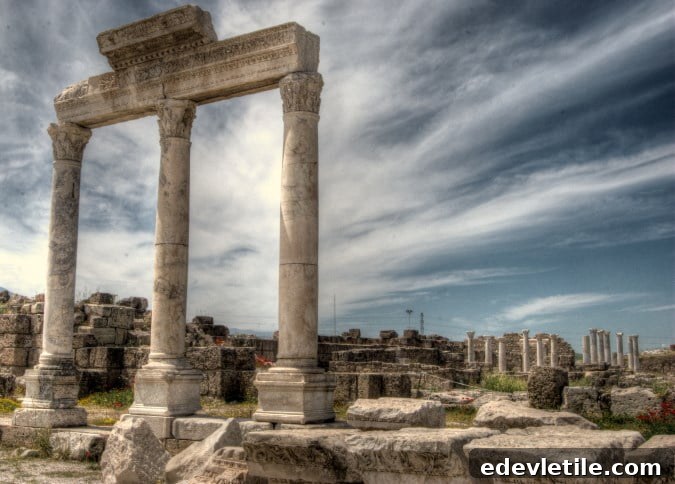
I had inspected Laodicea years earlier but postponed a visit because transport options seemed irregular and few tour operators include Laodicea on standard itineraries. So I was thrilled when, while returning from Pamukkale in Denizli, my guide casually suggested a stop at Laodicea.
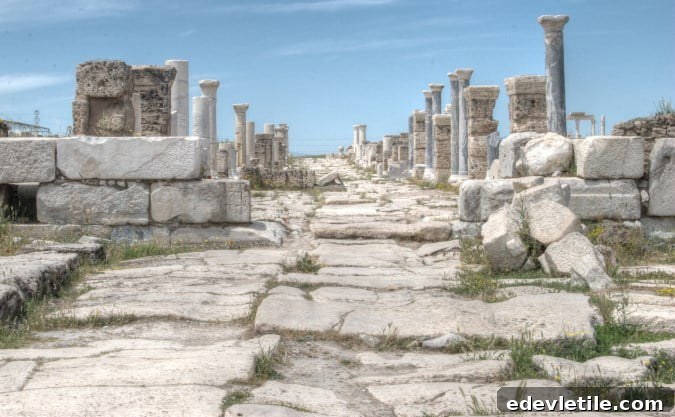
I jumped at the chance. I hadn’t realized Laodicea was so close to Pamukkale, and apart from a few independent visitors, the site was nearly deserted. Walking through a largely empty ancient city with a knowledgeable local guide felt special—like stepping into history alone.
History of Laodicea in Denizli, Turkey
Laodicea’s roots go back to the Hellenistic period. My guide in Denizli explained that when ancient planners chose locations for cities, they typically considered six practical factors:
- Proximity to trade routes
- Fertile plains for agriculture
- Elevated ground for defense
- Reliable water sources
- Local building stone
- Healthy air circulation
Laodicea satisfied all these criteria, and its position on trade networks brought considerable wealth. Still, the message from Saint John in Revelation was stern.
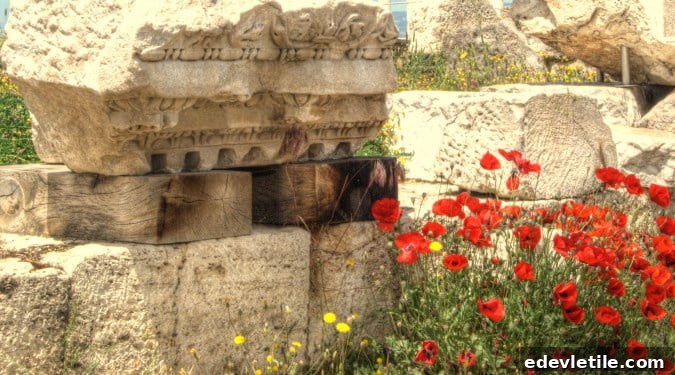
Letter from Saint John to Laodicea – (Revelation 3:15–16)
“I know thy works, that thou art neither cold nor hot: I would thou wert cold or hot. So then because thou art lukewarm, and neither cold nor hot, I will spue thee out of my mouth. For thou sayest, I am rich, and increased with goods, and have need of nothing; and knowest not that thou art wretched, and miserable, and poor, and blind, and naked.”
John criticises Laodicea’s spiritual complacency, contrasting their wealth with the lukewarm water that arrived from nearby thermal sources at Pamukkale. Though initially rebuked for being “neither hot nor cold,” the community later became a significant centre for Christianity.
Visiting Laodicea Today
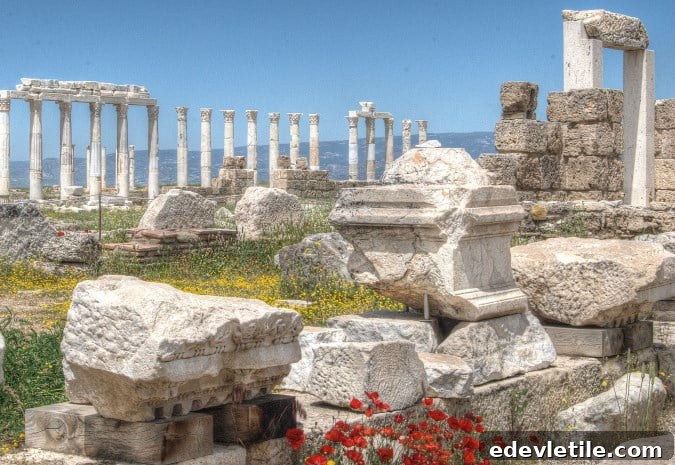
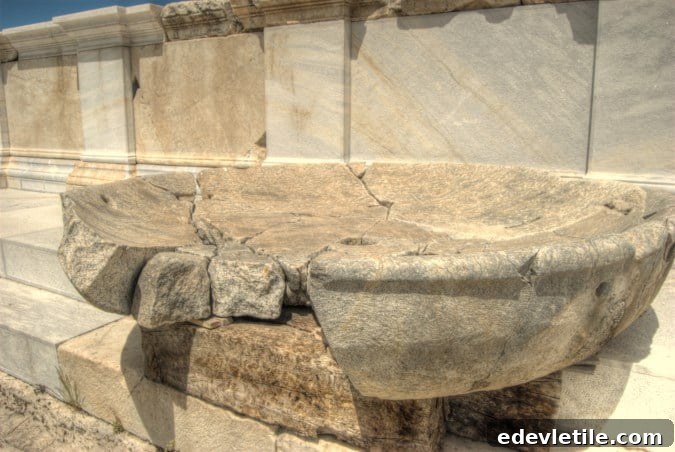
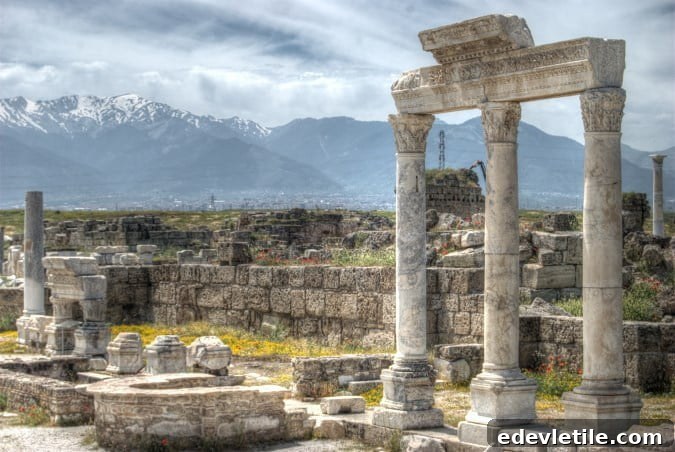
May proved an ideal time to visit: vibrant red poppies dotted the ruins and added colour to the ancient stones. We explored the agora, walked through sections of the market street and saw the stadium. One notable feature was the nymphaeum, a decorated monument constructed to supply fresh water and associated with nymphs in Greek mythology.
The Temple of Athena
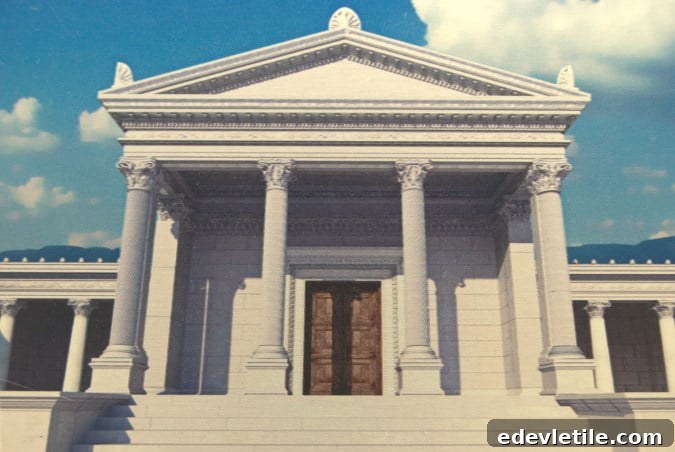
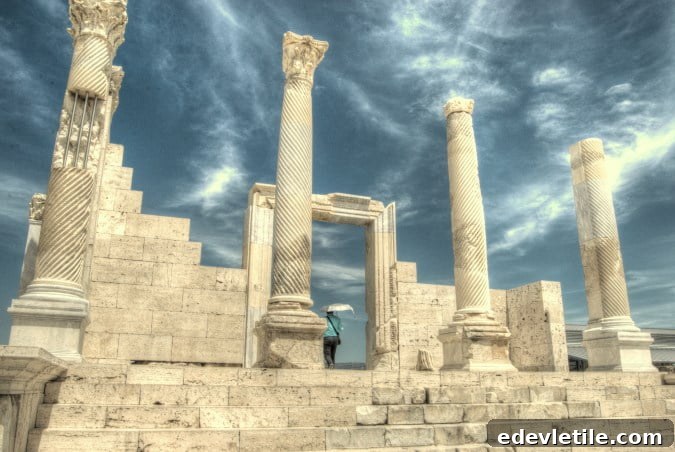
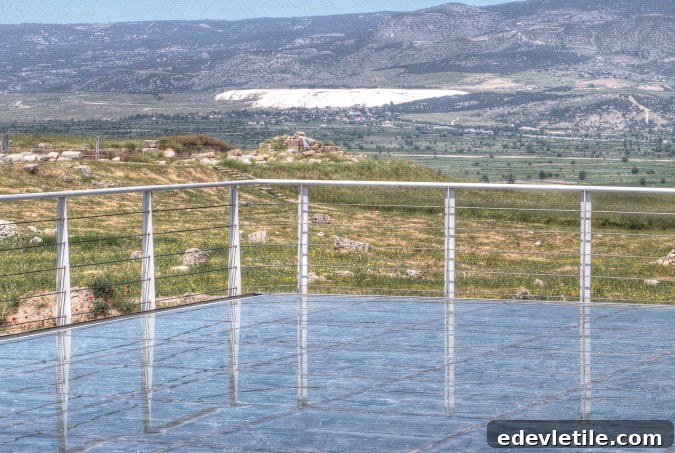
Archaeologists identified the temple site only in recent years, and ongoing excavations have revealed substantial remains. A set of seven stone steps flanked by large columns leads to the temple area, which today has no roof or standing walls. Visitors can view the original foundations from a glass platform that protects the ruins while allowing a clear perspective on the layout below.
From the temple area the white travertine terraces of Pamukkale are visible on the horizon, a striking contrast to the ancient city’s stonework.
The Decline of Laodicea
Scholars debate the exact causes of Laodicea’s decline. Some point to a major earthquake in the 4th century as the start of the city’s downturn; others cite invasions and destruction during the 13th century. Regardless, only a portion of Laodicea has been excavated so far, and archaeologists expect further discoveries as work continues. It’s likely that future digs will reveal more of the city’s public buildings, streets and private homes.
For now, Laodicea remains a compelling and under-visited site, offering visitors a quiet, evocative glimpse of a city that once held great regional influence. With several other churches of Revelation still to see across Turkey, a return visit to Laodicea will certainly be on my list when new discoveries come to light.