Bodrum Castle Visitor Guide: Essential Tips & Practical Info
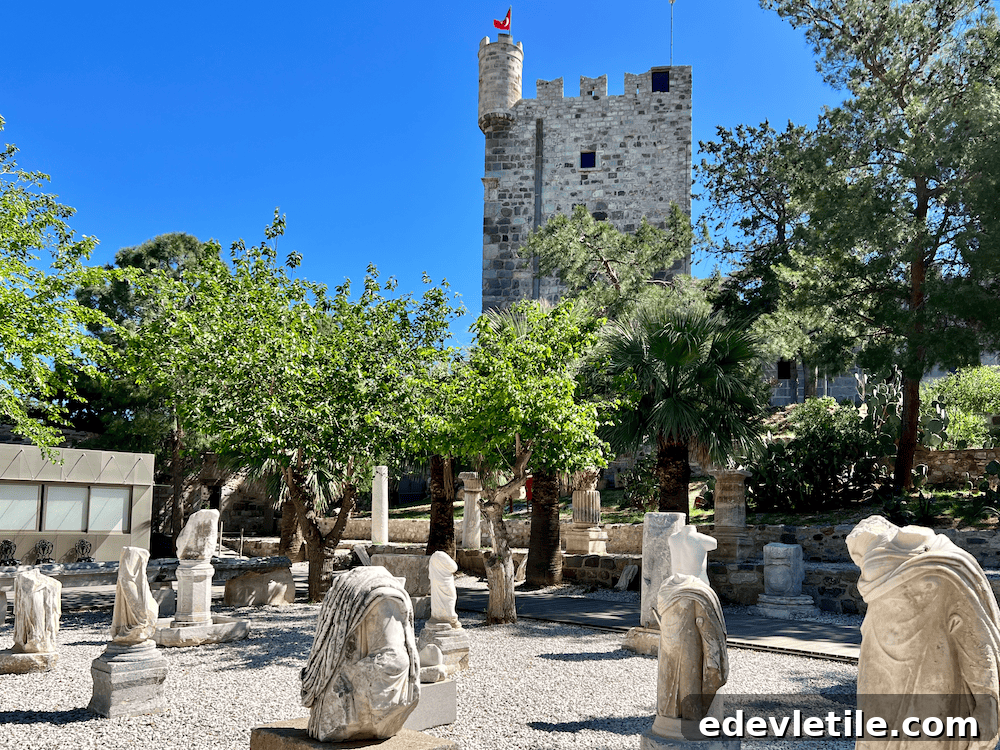
If you’re planning a trip to Bodrum and browsing travel guides, you’ve almost certainly seen Bodrum Castle featured prominently.
Often considered the top attraction in Bodrum, the castle—known in Turkish as Bodrum Kalesi or the Castle of Saint Peter—dates back over 500 years and has witnessed Genoese, Byzantine, and Ottoman rule.
More than a historical monument, Bodrum Castle offers many things to do: walk along the ramparts, explore the 14 exhibits with shipwreck finds and artifacts, climb the towers, and visit the Underwater Archaeology Museum. You can easily spend several hours here.
If that sounds like a lot, this guide will help: it covers practical details like opening hours and ticket prices, the castle’s history, a step-by-step walkthrough of highlights, and useful tips to plan your visit.
Bodrum Castle Opening Hours, Price & Travel Tips
Bodrum Castle Location
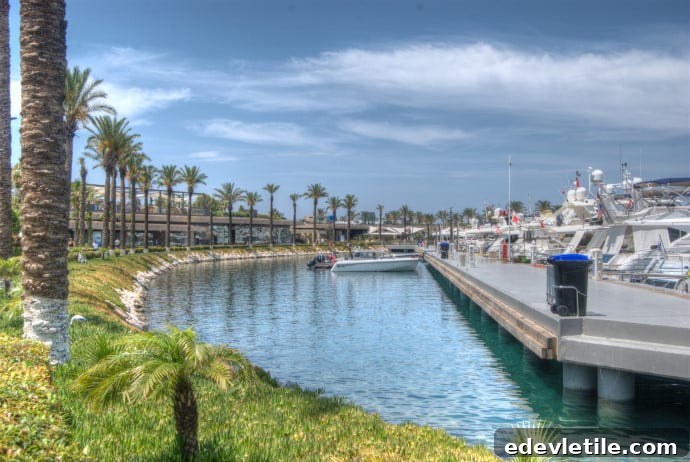
Bodrum Castle sits in the heart of Bodrum beside the marina, making it an easy walk from the town center.
Bodrum Castle Hours of Operation
During the high season (April to October) the castle is open from 8:30 to 18:30.
In the low season (November to March) opening hours are 8:30 to 16:30.
The ticket office closes 30 minutes before the site closes. For a relaxed visit that includes the museums and exhibits, allow at least two hours. The castle is open daily.
Bodrum Castle Entrance Fee
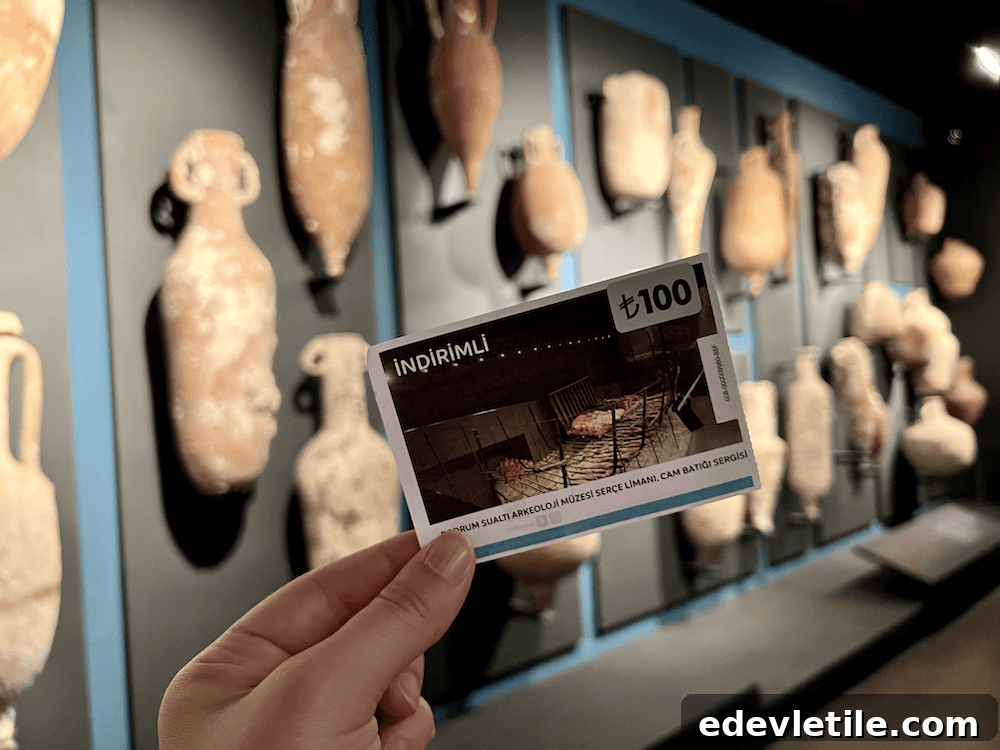
As of October 2024, the entrance fee is 23 EUR (approximately 840 TL). This price generally includes castle entry, an audio guide on request, and access to the Underwater Archaeology Museum.
If you hold an Aegean MuseumPass, admission is typically free.
*Ticket prices can change due to inflation and other factors. For the latest rates contact the castle ticket office before you visit.
Facilities at Bodrum Castle
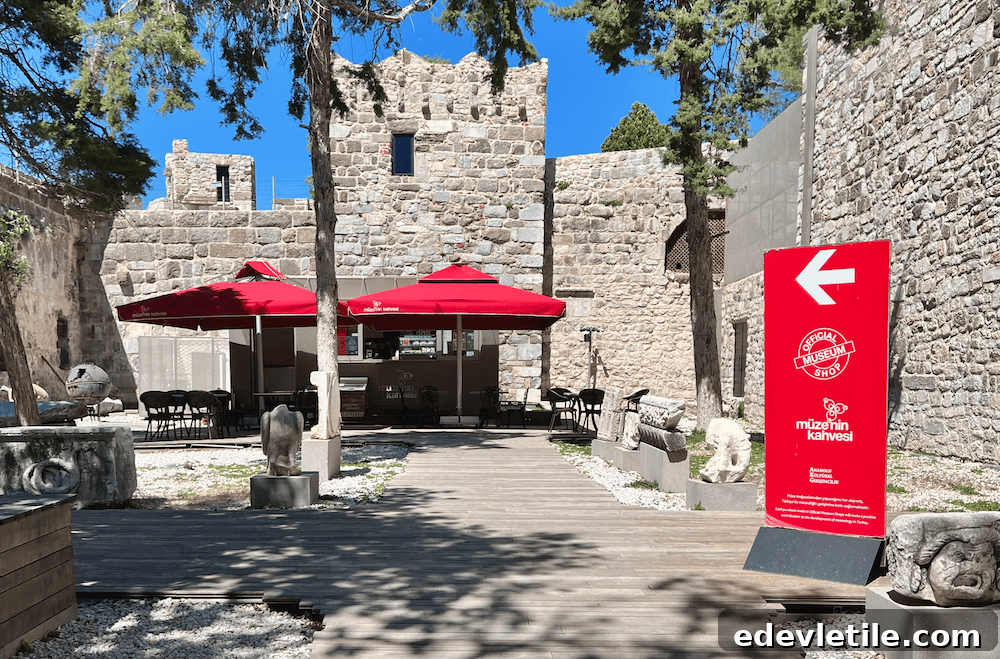
Facilities include restrooms, small cafés selling drinks and snacks, and a gift shop near the exit. Informational placards are placed throughout the site to explain exhibits and history.
Bodrum Castle Travel Tips
It’s best to visit in the morning to avoid the afternoon heat and crowds. Early visitors often have quieter access to the viewpoints and exhibits.
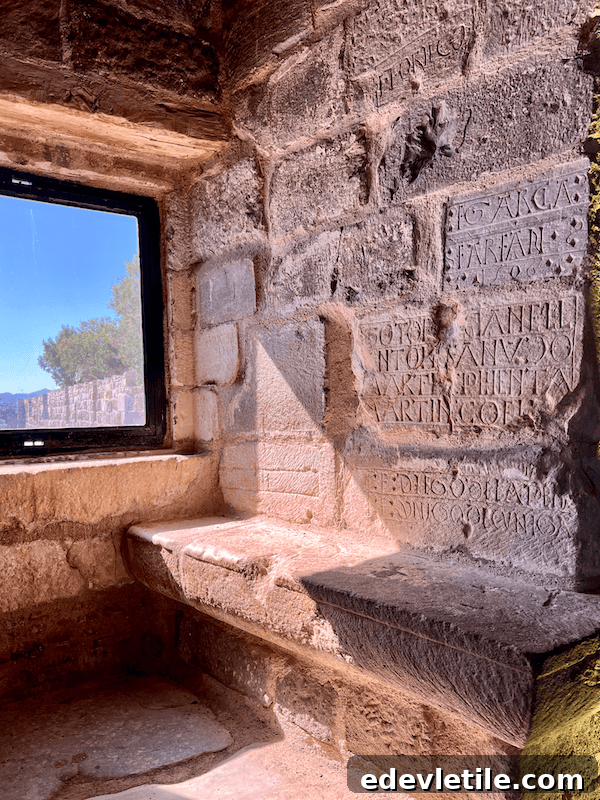
Wear comfortable, sturdy shoes. The circuit inside the castle involves roughly 2–3 km of walking on uneven stone, steep steps, and narrow staircases.
Bring sun protection and water. Many areas are exposed to direct sun, so a hat, sunscreen, and hydration will make your visit more comfortable.
Expect to spend between one and four hours depending on how many exhibits you explore. A typical relaxed visit including museums and photo stops takes around two to three hours.
Consider booking a guided walking tour if your time in Bodrum is limited. A guided tour provides historical context and helps you see the most important parts efficiently.
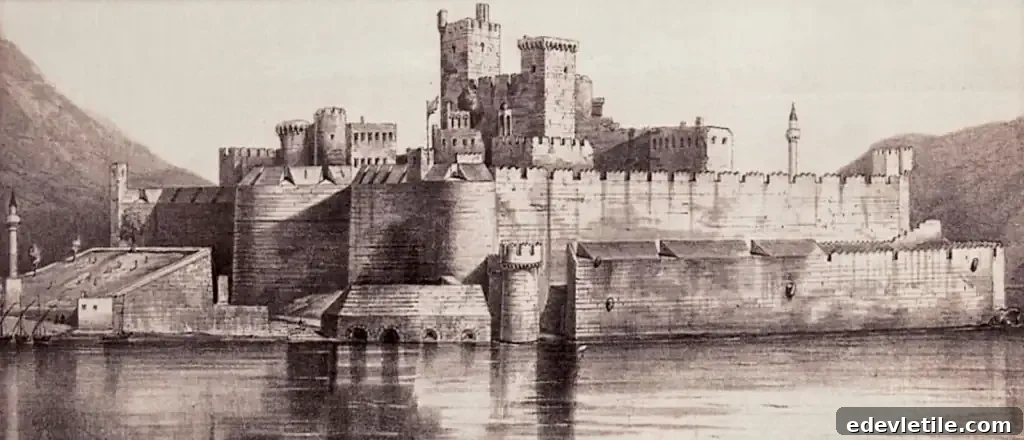
History of Bodrum Castle
A brief look at the castle’s past deepens appreciation for the site. Originally called the Castle of St. Peter, it was built as a fortress between 1406 and 1523 by the Knights of St. John (the Knights Hospitaller). Construction lasted more than a century and involved knights from several countries.
The towers reflect that multinational work: the French, German, Italian, English, and Spanish Towers are named for the groups that contributed to building them.
The Ottomans captured the fortress in 1532, and it served as a garrison and prison from the mid-1500s until 1895. The castle suffered damage during World War I and was largely abandoned around 1915.
Restoration began in the 1960s under the Turkish government, and the site was transformed into the Bodrum Museum of Underwater Archaeology. The museum is only part of the castle complex—the 14 exhibits are spread throughout the site.
What To Do at Bodrum Castle: A Walkthrough
Below is a walkthrough of the main areas and exhibits to help you navigate the castle efficiently while catching the highlights and historical points of interest.
Map of Bodrum Castle
The map above, taken soon after entering the castle, helps orient you as you follow this walkthrough.
The Gateway Tower: Cannons, Views, and Coat of Arms
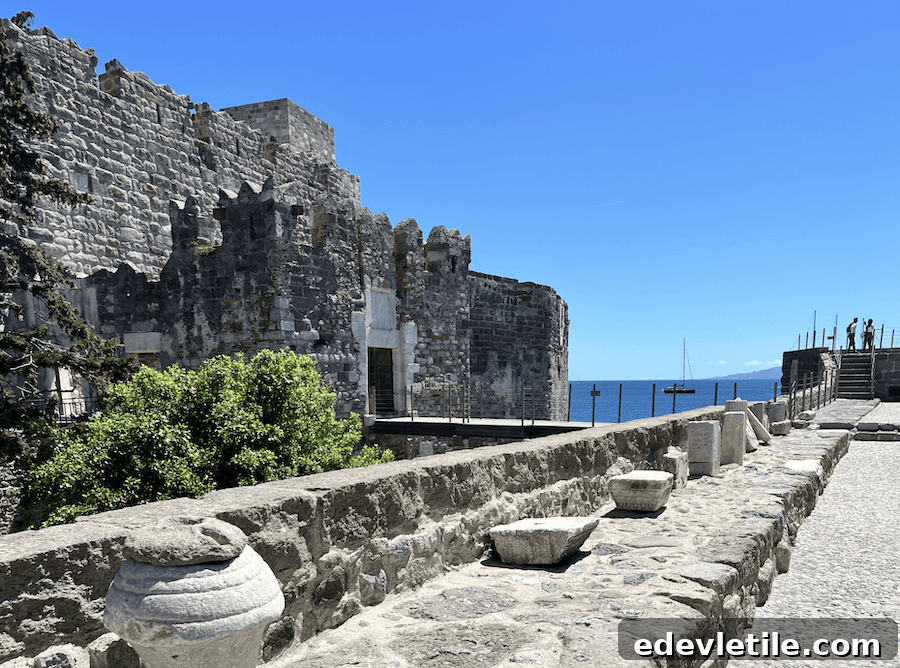
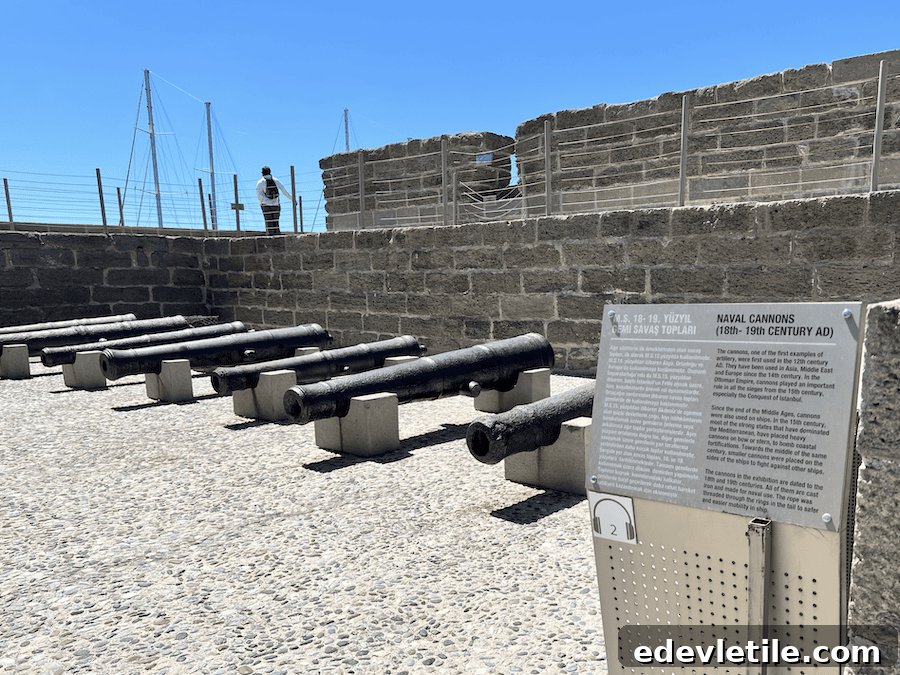
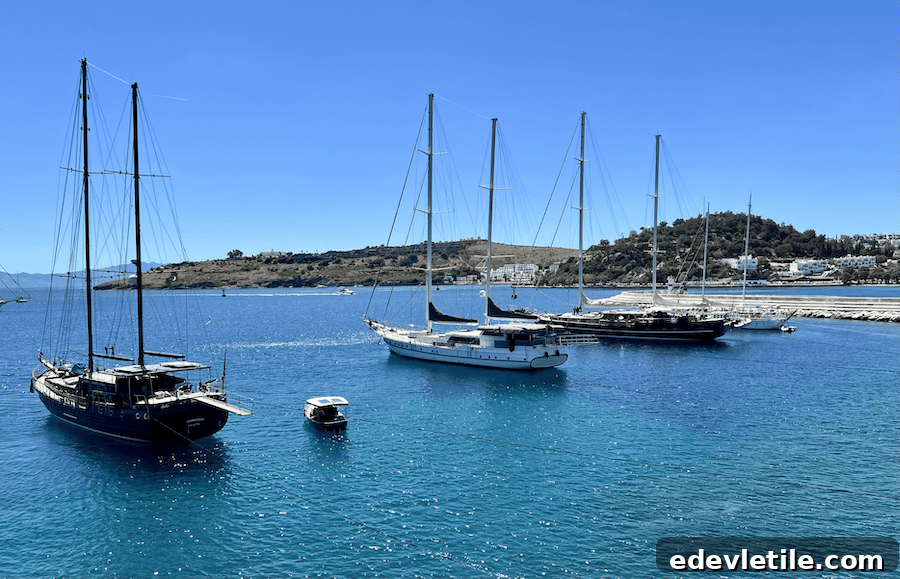
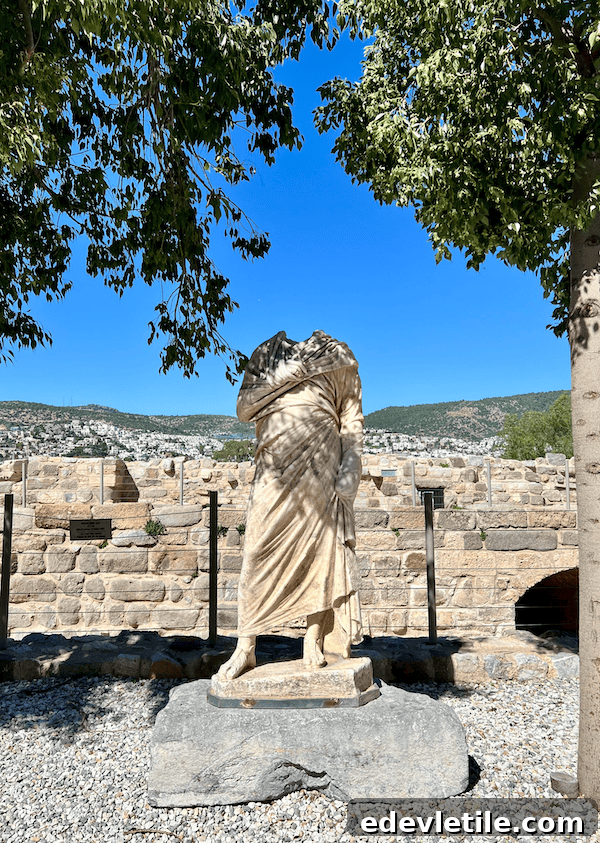
After entry you’ll find an open-air area leading to a corridor with a small cannon exhibit and archaeological displays of marble statues and columns. A short climb reaches a viewing platform with lovely views of Bodrum Marina and the Aegean; on clear days Kos island is visible.
A reconstructed stone bridge—originally a drawbridge—leads into the main castle and the Gateway Tower. Look for carved coats of arms above archways and read nearby placards for context. A corridor forks to the amphora exhibit and onward to the castle interior.
The Garden: Hamam, Chapel, Artifacts, and a Cafe Break
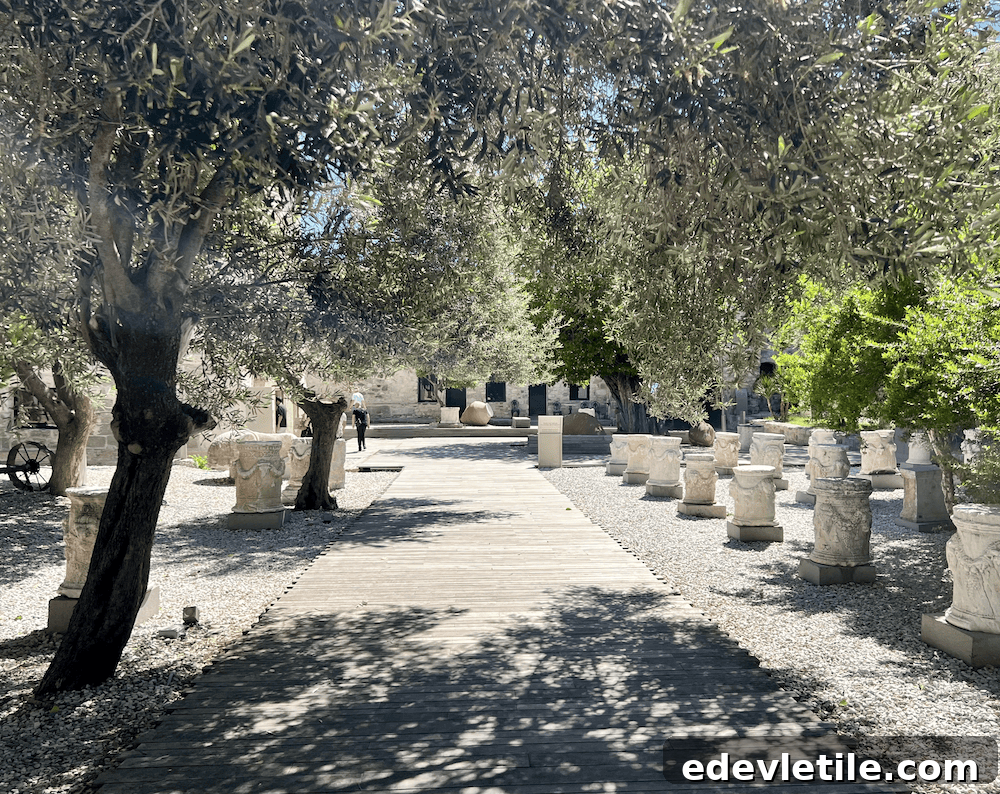
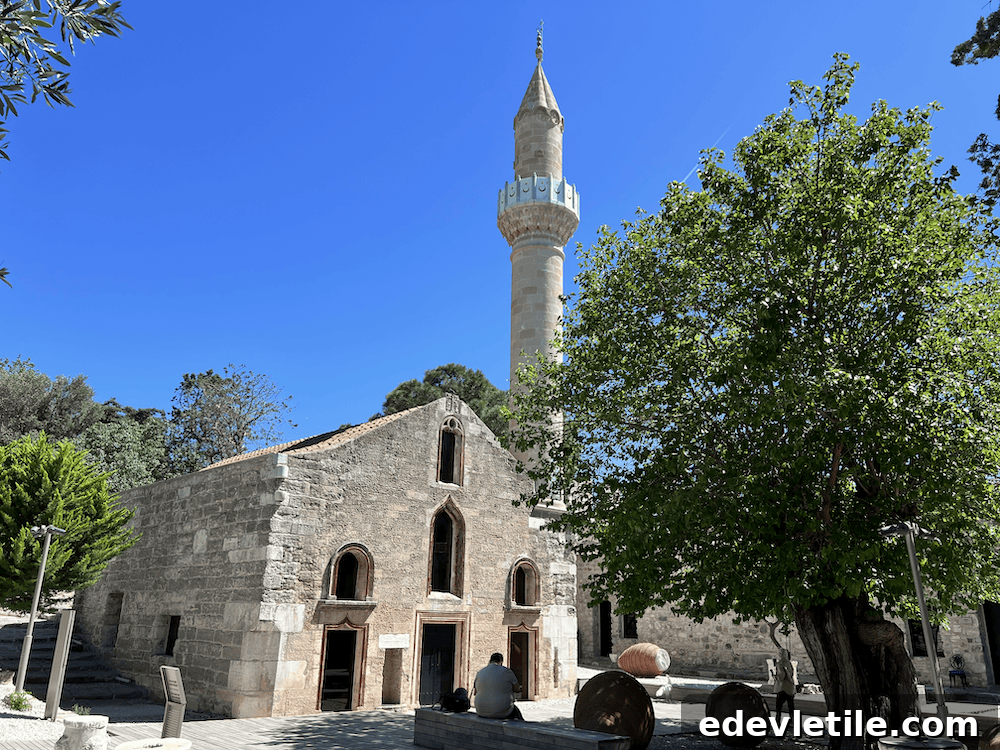
Beyond the doors you’ll enter a peaceful open-air garden with a chapel-mosque, marble altars, a small cafe, and resident peacocks and turtles.
The Chapel Mosque began as a chapel built by the Knights of St. John and was later converted into a mosque after Ottoman capture. Inside, a glass floor reveals original excavated ruins below. Marble altars with motifs of bulls, fruits, and wreaths date from the Carian period (around 330–30 BC) and were used as tomb markers.
A cafe at the far end provides a quiet place to rest before continuing to upper levels and other exhibits.
Learn More About Underwater Life at the Underwater Archaeology Museum
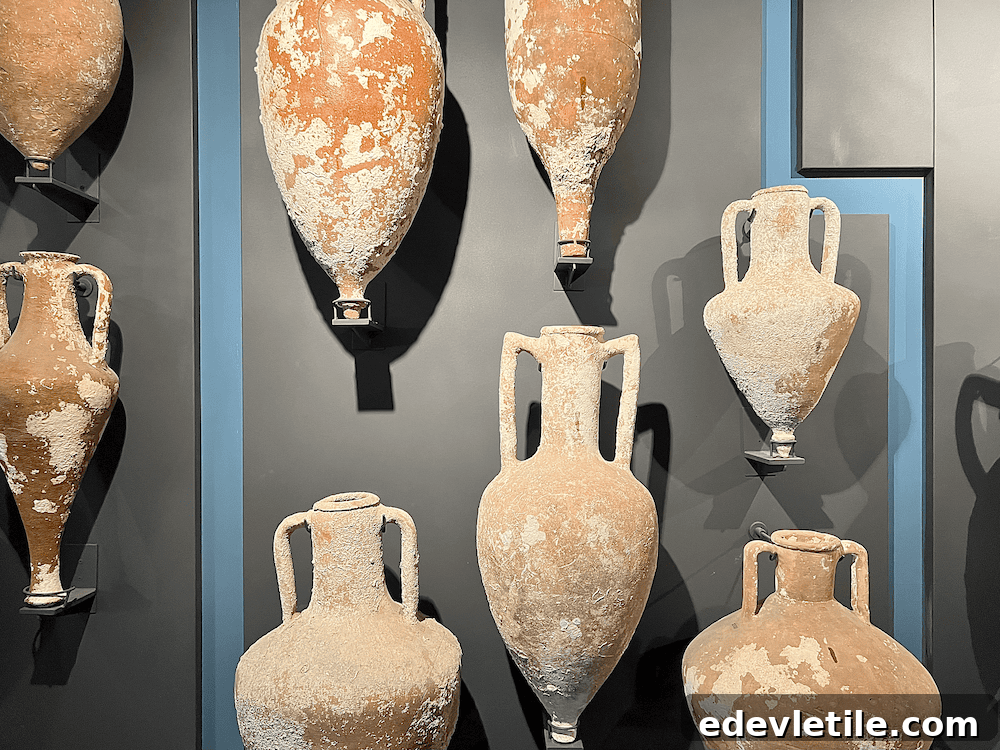
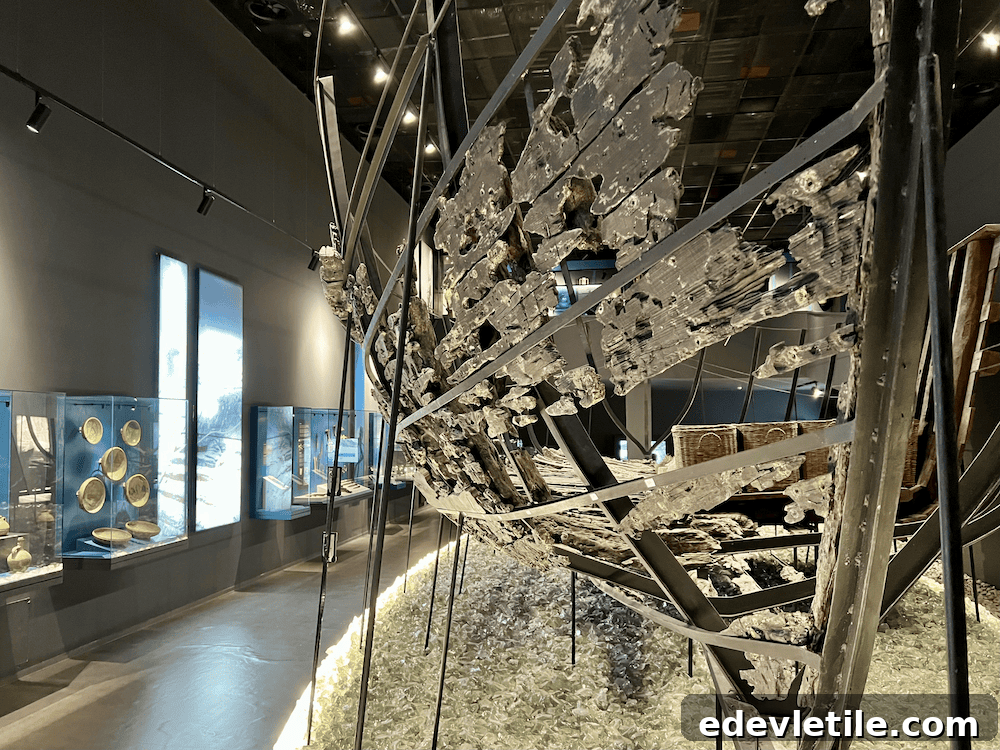
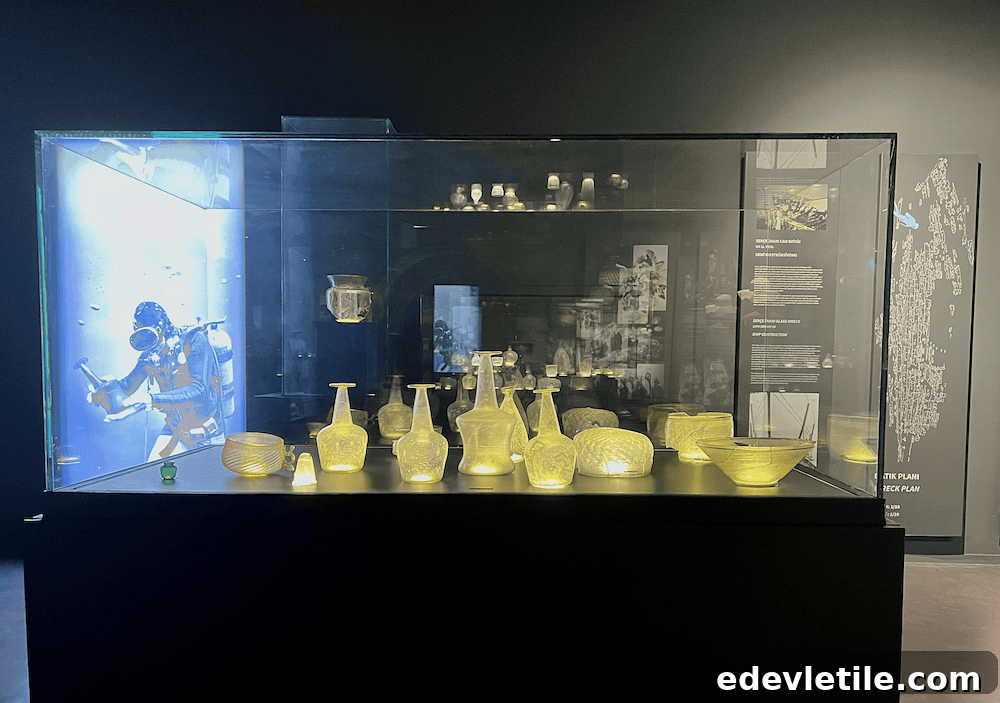
The Museum of Underwater Archaeology, housed in a castle building, displays artifacts recovered from the Aegean Sea: amphoras, glassware, metal objects, and large shipwreck reconstructions. It is one of the largest museums of its kind and includes video presentations that explain excavation work and findings.
After the museum, continue outside to explore additional open-air exhibits and the shipwreck halls.
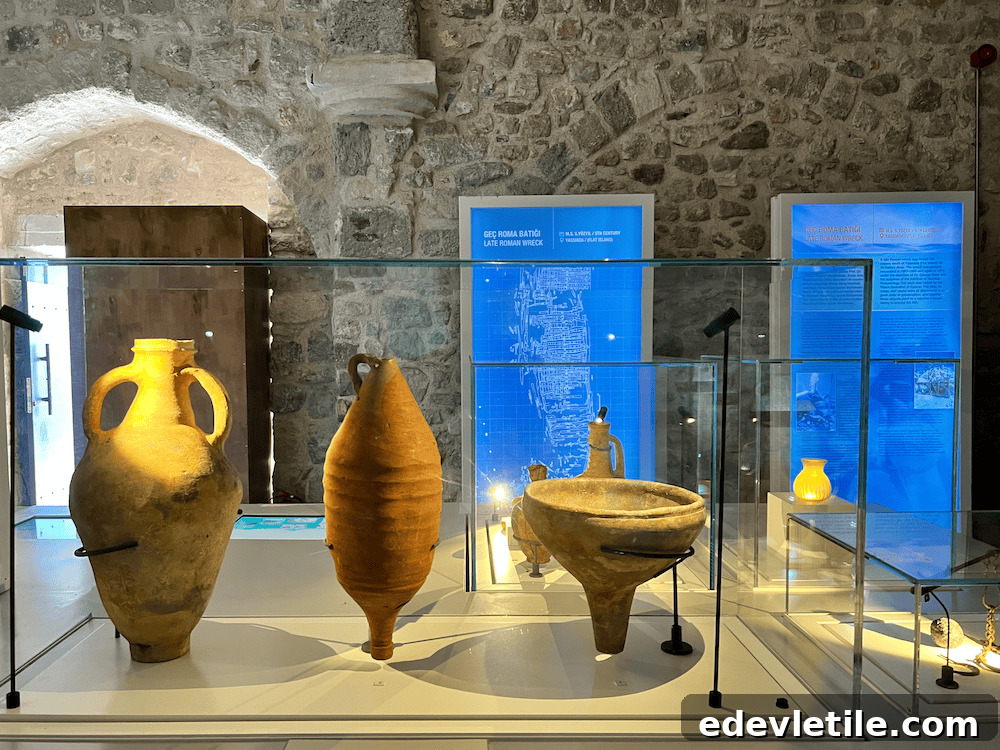
Marvel at the Artifacts of the Yassi Ada Shipwreck Hall
Near the archaeology museum you’ll find an open area with many marble artifacts. The Yassi Ada Shipwreck Hall displays finds from the waters around Yassi Ada, an island known for hazardous reefs and numerous historic shipwrecks. Exhibits include maps, recovered cargo and objects, and explanations of how these wrecks occurred.
From here follow the path up toward the top of the castle where the five towers are located.
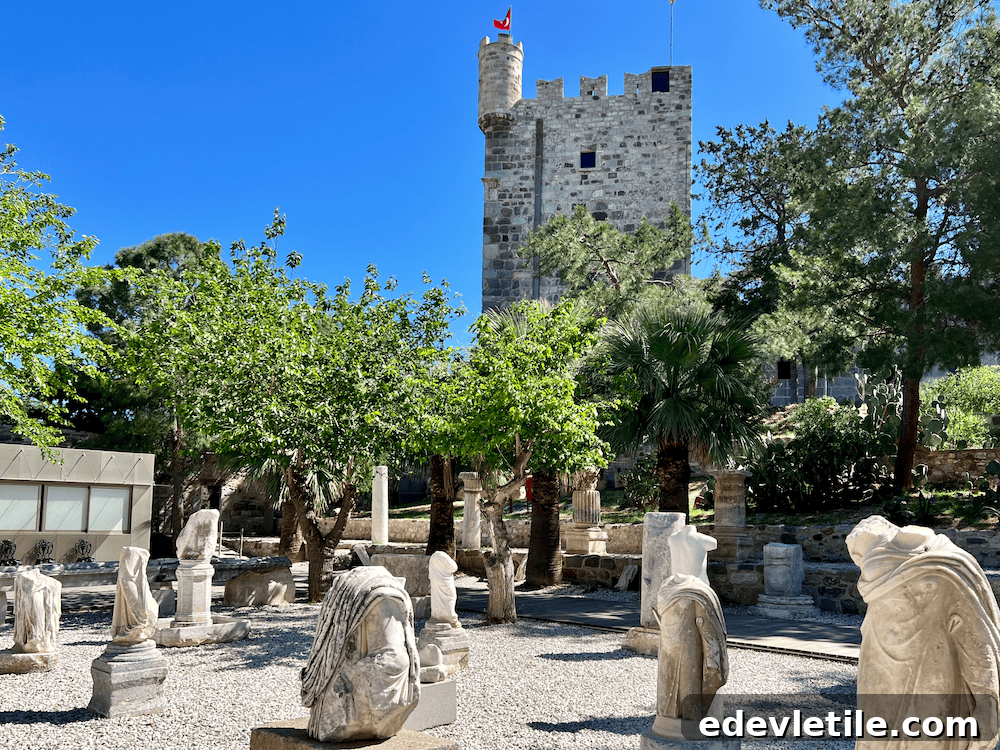
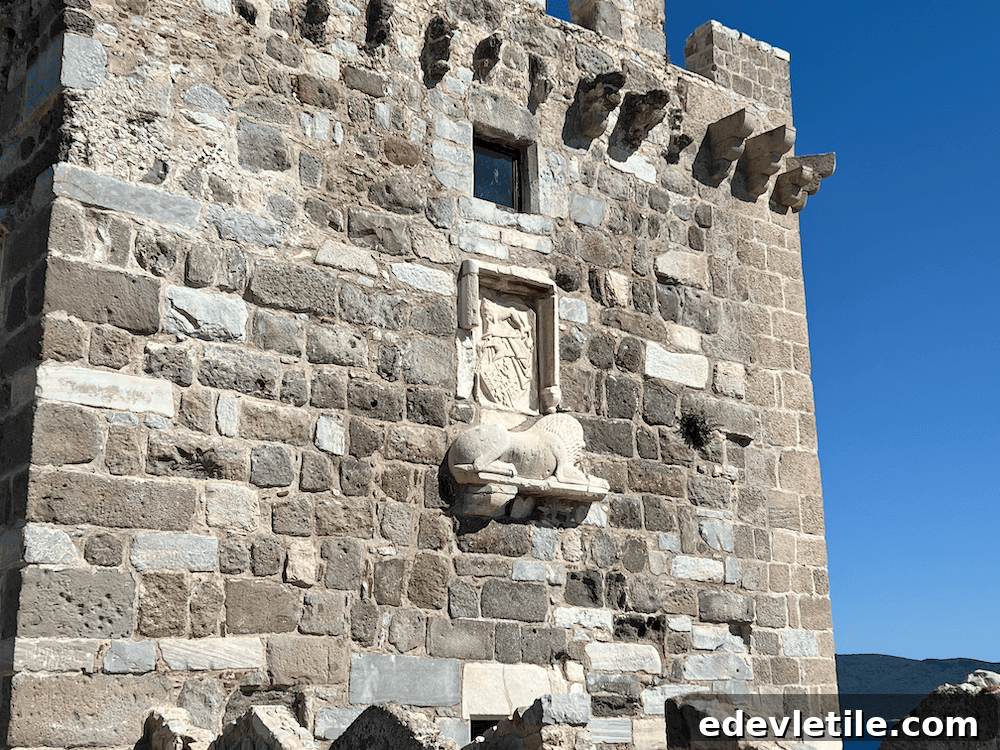
Climb The Five Towers of Bodrum Castle
The top section features benches, statues, and access to the five towers—French, German, Italian, English, and Spanish—each named after the countries that contributed to construction. Each tower contains a distinct exhibit:
- The Spanish Tower houses the Tektaş shipwreck exhibition.
- The German Tower focuses on the Bozukkale Archaic shipwreck.
- The Italian Tower displays early Bronze Age finds and necropolis material.
- The French Tower presents the Müsgebi necropolis and exhibits about Pedasa; it is the tallest tower at nearly 50 meters.
- The English Tower features an exhibit on the Knights of Saint John, including a life-size mannequin in knight armor.
When you finish, signs lead to the exit near a gift shop, café, and restrooms. We hope this walkthrough helps you plan a rewarding visit to Bodrum Castle.
Bodrum and Beyond
If you’re extending your stay in Bodrum, there are many related travel guides, itineraries, and tips available that cover where to stay, day trips, and ferry connections to nearby islands.
BODRUM BLOG POSTS
🧿 Bodrum Travel Guide: Everything You Need to Know
🧿 Where to Stay in Bodrum: 10+ Best Areas & Neighborhood Guide
🧿 13+ Amazing Bodrum Day Trips
🧿 Bodrum to Kos Day Trip: A Step-by-Step Travel Itinerary
🧿 Bodrum to Kos Ferry Guide